India has taken a decisive step to close one of the longest-running capability gaps in its military aviation history. After nearly 20 years of aborted tenders, cancellations, and procedural deadlock, the Indian government has cleared a $1 billion plan to acquire six Boeing 767-based aerial refuelling aircraft for the Indian Air Force (IAF). The approval marks a critical turning point in a saga that has repeatedly exposed the strategic cost of delayed procurement, particularly in a domain as central as air-to-air refuelling.
The decision, cleared on January 26, 2026, moves the program into its most advanced phase yet. It authorizes the pursuit of converted Boeing 767 Multi-Mission Tanker Transport (MMTT) aircraft, based on second-hand commercial airframes and upgraded by Israel Aerospace Industries (IAI). Once final cost negotiations are concluded, the proposal is expected to move swiftly toward contract signature, with the first aircraft targeted for delivery around 2030.
This approval is not merely another acquisition milestone. It represents a structural correction to a chronic weakness that has constrained Indian air operations across peacetime training, long-range deployments, and high-end contingency planning for almost two decades.
A Two-Decade Procurement Failure Finally Breaks
India’s requirement for additional aerial refuelling aircraft dates back to 2006, when the IAF first issued a request for proposals to supplement its limited fleet of Russian-origin Il-78 tankers. What followed was a cycle of selections and cancellations that became emblematic of India’s defense procurement paralysis. The Airbus A330 MRTT was shortlisted multiple times, including in 2009 and again later in the 2010s, only for each process to collapse before contract award.
Over the years, changing cost benchmarks, shifting procurement rules, and concerns over lifecycle expenses repeatedly derailed progress. Meanwhile, the operational requirement never disappeared. Instead, it intensified as India’s fighter fleet expanded in complexity and range while its refuelling capacity remained static.
The newly cleared Boeing 767 conversion plan deliberately avoids reopening a full competitive tender. By selecting a conversion-based solution using mature commercial airframes, India has opted for a pragmatic path designed to minimize cost escalation, shorten timelines, and reduce bureaucratic friction. In effect, the government has chosen execution over perfection.
Why the Boeing 767 MMTT Fits India’s Needs
The B767 Multi-Mission Tanker Transport is not a theoretical platform. It is already in operational service, most notably with Colombia, which inducted its IAI-converted “Jupiter” 767 tanker in 2010. The aircraft’s appeal lies in its balance between capability, flexibility, and cost control.
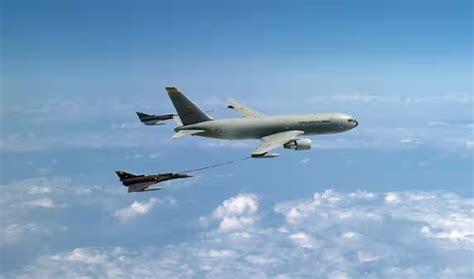
In tanker configuration, the IAI MMTT can be equipped with both flying boom and hose-and-drogue refuelling systems. This dual capability is strategically significant for the IAF, which operates a diverse mix of aircraft with differing refuelling requirements, including Russian-designed fighters, Western transports, and airborne early warning platforms. Legacy tankers constrained by a single refuelling method have long limited interoperability during joint and multi-role missions.
Beyond refuelling, the platform can be rapidly reconfigured for cargo transport, troop movement, or passenger missions, allowing it to serve as a true multi-mission asset. This flexibility ensures that the aircraft are not idle during periods of lower refuelling demand, improving overall fleet utilization.
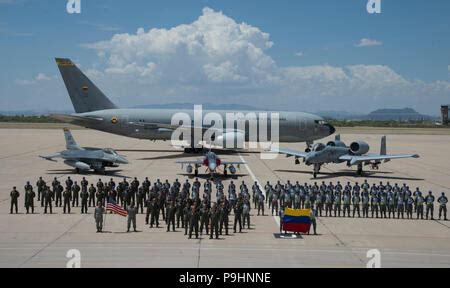
Crucially, the choice of the Boeing 767 leverages a globally supported commercial airframe with an extensive maintenance and logistics ecosystem. For India, this reduces long-term sustainment risk compared to niche or bespoke military designs.
Conversion Over New-Build: A Strategic Cost Decision
India’s selection of converted aircraft over newly built tankers reflects a clear cost-benefit assessment. While platforms like the A330 MRTT offer greater fuel offload capacity, they also come with significantly higher acquisition and lifecycle costs. For a requirement centered on replacing an aging fleet on a one-for-one basis, the 767 conversion offers sufficient capability without the financial burden of a heavier aircraft class.
The program structure also aligns with India’s industrial participation goals. Israel Aerospace Industries will lead the conversion effort, integrating refuelling systems, mission avionics, and structural modifications. At the same time, Hindustan Aeronautics Limited (HAL) is expected to receive offset-linked work, while certain refuelling components will be manufactured domestically.
This arrangement allows India to strengthen its aerospace industrial base without turning the acquisition into a protracted indigenous development program. The emphasis is firmly on timely capability delivery.
Replacing the Il-78: A Fleet at the End of Its Rope
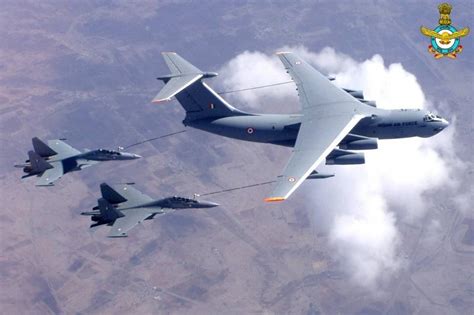
At the heart of the tanker crisis lies the IAF’s Il-78MKI fleet, acquired from Uzbekistan in 2003–2004. Numbering just six aircraft, the fleet has struggled with chronic serviceability issues for years. At one point, reported availability fell to around 49 percent, driven by spare parts shortages and complex maintenance demands associated with Russian-origin systems.
With such a small fleet, even minor availability losses translate directly into operational constraints. Training cycles are disrupted, long-range exercises become harder to sustain, and surge capacity during crises is sharply limited. Attempts to extend the Il-78’s service life have yielded diminishing returns, making replacement unavoidable rather than optional.
The planned induction of six Boeing 767-based tankers is designed to replace the Il-78 capability on a one-for-one basis, restoring nominal fleet strength while delivering a generational leap in reliability and interoperability.
Leasing Was a Warning, Not a Solution
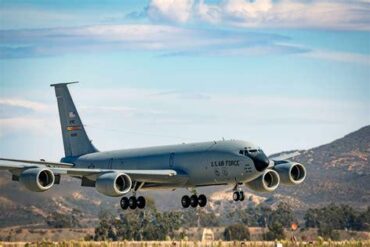
India’s recent reliance on leasing further underscored the urgency of the problem. In 2025, the IAF leased a KC-135 Stratotanker from private operator Metrea to support training and limited operational tasks. While useful as a stopgap, the arrangement highlighted fundamental limitations.
The aircraft is flown by foreign crews, restricting its use during high-end conflict scenarios and placing inherent constraints on sovereignty and availability. A single leased tanker also does little to address a systemic shortfall affecting fleet-wide planning.
Rather than serving as a long-term answer, the lease functioned as a stress test—demonstrating how thin India’s refuelling margin had become. The newly approved acquisition aims to permanently eliminate dependence on such interim fixes.
Strategic Reach and Operational Flexibility
Aerial refuelling is not a niche capability. It is a force multiplier that directly shapes how air power is generated, sustained, and projected. For India, with its vast geography and extended areas of strategic interest, tanker availability influences everything from air defense patrol endurance to overseas deployments and maritime strike operations.
Additional tankers allow fighters to remain on station longer, reduce dependence on forward basing, and provide commanders with greater flexibility in mission timing and routing. In high-tempo scenarios, refuelling aircraft become as critical as the fighters they support.
The approval of six additional tankers therefore has an impact that ripples across the entire force structure, even though the aircraft themselves rarely attract public attention.
Tankers and the Fighter Squadron Shortfall
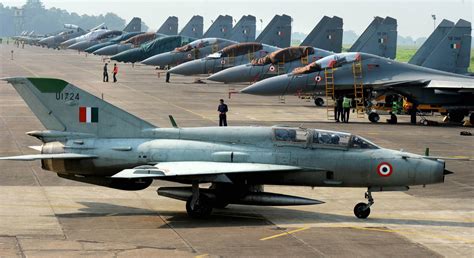
The tanker decision also intersects with another persistent challenge: the IAF’s fighter squadron deficit. With approximately 29 operational squadrons against an authorized strength of 42.5, India faces a numerical gap that will take years to close through new inductions alone.
Enhanced refuelling capacity cannot replace missing squadrons, but it can extract more operational value from existing assets. Longer sorties, sustained patrols, and flexible redeployment help offset numerical shortfalls by improving effective coverage and responsiveness.
In this context, the tanker acquisition is not a standalone support program. It is a force-multiplier investment that partially compensates for broader structural constraints.
A Quiet but Consequential Turning Point
After nearly two decades of delays, false starts, and procedural resets, India’s clearance of the Boeing 767 tanker plan stands out precisely because of its restraint. There is no sweeping transformation promised, no revolutionary platform unveiled. Instead, the decision delivers something more valuable: certainty.
By choosing a proven conversion approach, aligning industrial participation without overreach, and focusing on timely replacement of an aging fleet, India has finally broken free from a procurement loop that had become strategically untenable. If executed as planned, the induction of six Boeing 767 MMTT aircraft from 2030 onward will restore a critical enabler of air power and close one of the Indian Air Force’s most persistent capability gaps.
In defense planning, success is often measured not by ambition, but by delivery. After twenty years of waiting, India’s tanker saga has finally moved from intention to inevitability.