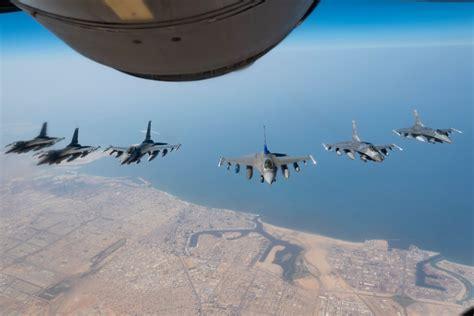
The United States has formally approved a $330 million Foreign Military Sales (FMS) package to bolster Taiwan’s air force sustainment capabilities, focusing on critical non-standard spare parts and technical services. Routed through the Taipei Economic and Cultural Representative Office (TECRO) in Washington, the deal underscores Washington’s enduring commitment to Taiwan’s self-defense under the Taiwan Relations Act, even as geopolitical strains in the Indo-Pacific deepen.
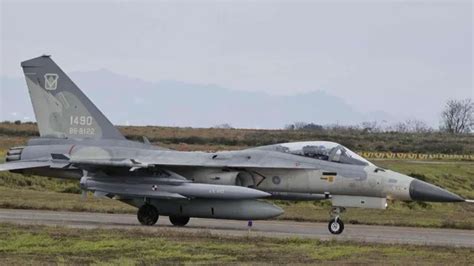
This package—distinct in that it does not include new aircraft platforms—targets the maintenance and readiness of Taiwan’s existing F-16, C-130 Hercules, and Indigenous Defense Fighter (IDF) Ching-Kuo fleets. It represents an operational sustainment boost intended to fortify Taiwan’s air defense posture rather than to escalate regional tensions.
Strategic Focus: Sustainment Over Expansion
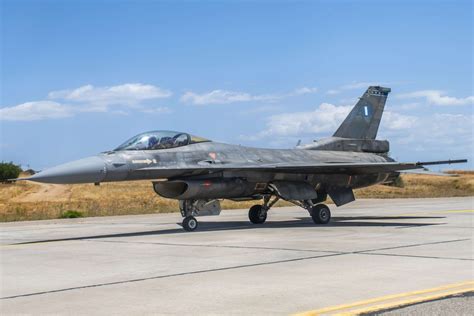
Rather than expanding Taiwan’s aerial combat fleet, the package zeroes in on hard-to-source components, repair-and-return cycles, and specialized technical assistance—all of which are vital to maintaining a high aircraft availability rate. These include radar modules, engines, power systems, mission computers, and structural sub-assemblies that are often excluded from standard military supply chains due to their obsolescence or custom configuration.
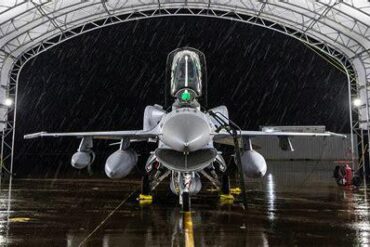
The F-16 Fighting Falcon, particularly its F-16V variant, remains the backbone of Taiwan’s air defense. Outfitted with the AN/APG-83 AESA radar, these aircraft can track multiple targets with enhanced jamming resistance, a vital trait for survivability under electronic warfare conditions. Any disruption to the associated supply chain—like cooling modules or radar processing units—can sharply reduce mission-ready aircraft, prompting airframe cannibalization and endangering deterrence capacity.
C-130 Hercules: Tactical Lift in a Constrained Environment
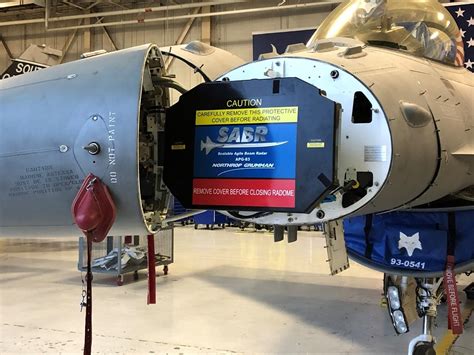
Equally indispensable is the C-130 Hercules, Taiwan’s primary tactical transport aircraft, capable of navigating short, semi-prepared airstrips—perfect for its rugged island geography. The platform’s ability to move troops, ammunition, or SAM units to forward positions becomes more pronounced under degraded runway scenarios or natural disasters. Critical spare parts, particularly in hydraulic systems and avionics, are notoriously difficult to procure through standard military channels.
Indigenous Defense Fighter: Sustainment of a Unique Asset
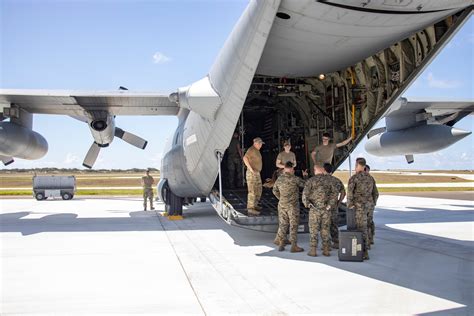
The IDF Ching-Kuo, developed by Taiwan’s Aerospace Industrial Development Corporation (AIDC), represents a domestic innovation. It incorporates the GD-53 radar, derived from the AN/APG-67, and a digital fly-by-wire control system, requiring dedicated actuator components and tailored software support. These unique characteristics make the aircraft’s sustainment ecosystem heavily reliant on non-standard parts, many of which are not interchangeable with U.S. or NATO systems, necessitating this bespoke package.
Operational Impact: Availability as Deterrence
Though spare parts rarely make headlines, their strategic effect is profound. By securing consistent supply flows, Taiwan can minimize downtime, reduce cannibalization of its combat fleet, and maintain a high sortie rate—crucial for air policing and rapid-response missions over the Taiwan Strait. The F-16V’s AESA radar and IDF’s GD-53 both contribute to a Recognized Maritime Picture (RMP), feeding data into joint U.S.-Taiwan C2 networks and reinforcing coalition interoperability.
The C-130 fleet ensures mobility for airborne assets, enabling logistical agility in response to Chinese maneuvers—whether through munitions repositioning, forward deployment of drones, or detachment movement in response to cross-strait developments.
Industrial and Political Ramifications
From an industrial standpoint, the deal strengthens Taiwan’s Base Industrielle et Technologique de Défense (BITD) through partnerships with U.S. firms and AIDC, though no formal offset agreement is currently included. Still, future offsets remain a possibility, which could further entrench cooperation and expand Taiwan’s self-sufficiency in maintenance and retrofits.
On the diplomatic front, the U.S. maintains that this is not an escalation, but rather a continuity-driven sustainment strategy, aimed at ensuring Taiwan’s existing force readiness. Yet, the strategic messaging is clear: Washington supports Taiwan’s resilience without openly provoking Beijing, framing this as a technically necessary, but politically cautious, decision.
Mainland China is expected to label the move as foreign interference, but its practical impact lies in long-term operational durability—a factor that is less visible but decisively influential in sustained airpower contests.
Conclusion: Quiet Upgrades, Loud Signals
Though not headline-grabbing hardware, the approval of this $330 million package sends a resounding message through logistics and operational capacity. As Taiwan faces an increasingly assertive China, the emphasis on combat readiness over expansion may prove a more strategic and sustainable path forward—ensuring aircraft are ready not just to fly, but to fight and survive in contested airspace.
By quietly reinforcing Taiwan’s aerial endurance, this package delivers capability where it counts most: in the cockpit, on the tarmac, and at the tip of the spear.