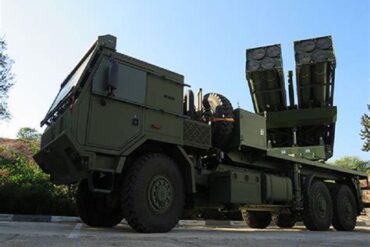
The United States has approved a $930 million Foreign Military Sale (FMS) package to Sweden that will significantly enhance the Nordic nation’s long-range strike capabilities while deepening its operational integration with NATO’s precision-fire architecture across Northern Europe. The deal centers on the acquisition of the M142 High Mobility Artillery Rocket System (HIMARS) and a suite of advanced Guided Multiple Launch Rocket System (GMLRS) munitions, representing one of the most consequential artillery procurements since Sweden formally joined the alliance.
The approval, announced by the U.S. Department of State on March 10, 2026, underscores Washington’s continued commitment to strengthening NATO’s defensive posture along its northern flank. For Sweden, the purchase signals a doctrinal transformation—shifting toward highly mobile, network-integrated long-range fires capable of supporting multinational operations across Scandinavia, the Baltic region, and the broader European theater.
In practical military terms, the agreement delivers not only advanced weapons systems but also the digital command infrastructure required to integrate Swedish artillery into NATO’s joint fire-control networks. That combination of launchers, precision munitions, targeting systems, and logistical support creates a force multiplier capable of reshaping battlefield dynamics across Northern Europe.
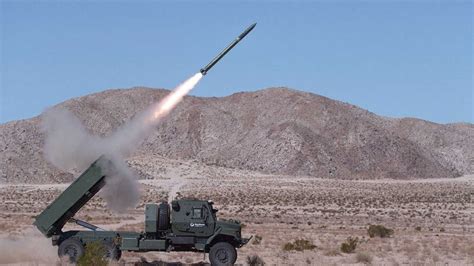
Sweden’s HIMARS Acquisition Signals Major Expansion of Long-Range Precision Fires
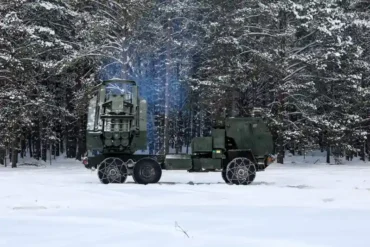
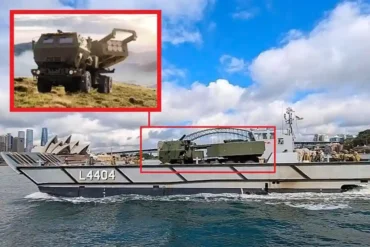
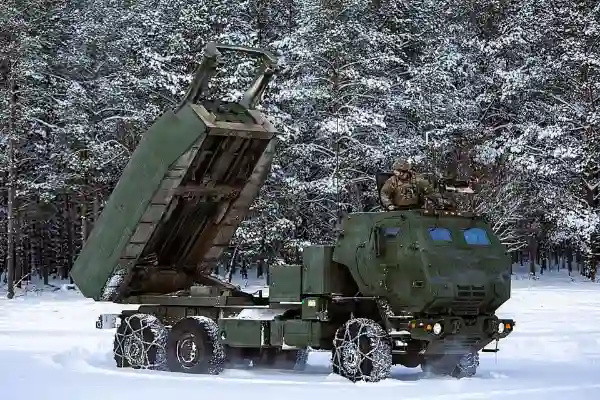
At the heart of the proposed package are 20 M142 HIMARS launchers, a highly mobile rocket artillery system widely regarded as one of the most effective long-range strike platforms in modern ground warfare. Built by Lockheed Martin, the wheeled launcher provides rapid deployment capability while delivering precision strikes against high-value targets.
HIMARS gained global recognition through its operational effectiveness in recent conflicts where mobility, precision, and survivability proved decisive against traditional artillery systems. Unlike heavier tracked rocket artillery platforms, the HIMARS launcher operates from a 6×6 wheeled truck chassis, allowing rapid relocation after firing—a tactic often referred to as “shoot-and-scoot.”
This operational agility dramatically reduces vulnerability to counter-battery fire, making the system particularly suited for modern battlefields saturated with sensors and surveillance technologies. Sweden’s geography, characterized by large forested areas, long coastlines, and dispersed infrastructure, makes mobility a central element of national defense strategy. HIMARS fits that requirement perfectly.
The approved package also includes a sophisticated array of munitions, enabling Swedish forces to conduct precision strikes at varying ranges and against diverse target types.
GMLRS and Extended-Range Rockets Deliver Deep Strike Capability
The effectiveness of HIMARS lies largely in the versatility of its ammunition. The Swedish request includes several variants of Guided Multiple Launch Rocket System (GMLRS) rockets designed for precision targeting.
The package contains:
- 35 M31A2 GMLRS unitary rocket pods
- 35 M30A2 GMLRS alternative warhead pods
- 35 M403 Extended Range GMLRS pods
- 35 M404 Extended Range GMLRS unitary pods
- 20 ATACMS missile pods
Standard GMLRS rockets have operational ranges exceeding 70 kilometers, providing accurate strikes against command centers, supply depots, air defense systems, and troop concentrations. These guided rockets rely on GPS-assisted inertial navigation, allowing them to achieve remarkable accuracy compared with traditional unguided artillery rockets.
The addition of Extended Range GMLRS (ER-GMLRS) dramatically expands Sweden’s operational reach. Announced by the U.S. Army in early 2026, ER-GMLRS variants can strike targets at distances approaching 150 kilometers. This extended range effectively doubles the engagement envelope available to HIMARS operators.
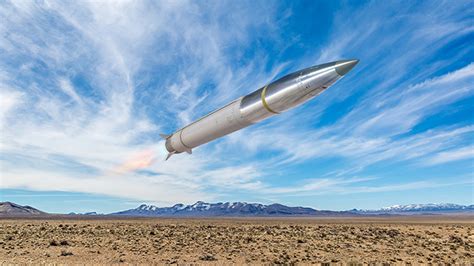
This deeper strike capability changes the strategic geometry of the battlefield. Military planners gain the ability to target logistics hubs, command nodes, and staging areas far behind front lines, forcing adversaries to disperse their assets and complicating operational planning.
ATACMS Adds Strategic Reach to Sweden’s Arsenal
In addition to the GMLRS family, the sale includes 20 pods of the Army Tactical Missile System (ATACMS). Unlike rocket pods that fire multiple smaller projectiles, each ATACMS pod carries a single ballistic missile designed for longer-range strikes against critical targets.
ATACMS missiles can strike targets hundreds of kilometers away depending on variant configuration. While the majority of day-to-day operational use will rely on GMLRS rockets, ATACMS provides Sweden with the ability to engage high-value strategic targets at significantly greater distances.
This layered approach to long-range fires allows Swedish forces to conduct:
- Tactical battlefield strikes using GMLRS
- Operational-level disruption using ER-GMLRS
- Strategic precision attacks using ATACMS
Such flexibility ensures that the HIMARS system functions as more than a conventional artillery platform—it becomes a multi-range precision strike system capable of influencing conflicts across several operational levels.
Digital Fire Control Systems Enable NATO Interoperability
Weapons alone do not create battlefield advantage; information and coordination are equally critical. Recognizing this reality, the approved sale includes 24 International Field Artillery Tactical Data Systems (IFATDS) along with advanced communications equipment and GPS receivers.
IFATDS serves as the digital brain of modern artillery units. The system integrates targeting data from multiple sources—such as reconnaissance drones, radar systems, and forward observers—before rapidly calculating firing solutions for artillery batteries.
The result is an interconnected battlefield where targeting information flows quickly between allied units.
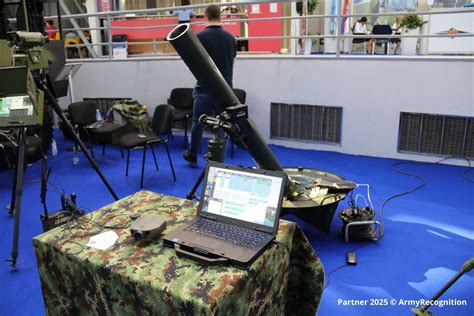
For Sweden, this technology enables seamless participation in NATO’s joint fires network, allowing Swedish artillery units to coordinate strikes alongside U.S., British, German, and other allied forces. In practical terms, a target identified by one NATO unit could be engaged within minutes by a Swedish HIMARS battery hundreds of kilometers away.
That level of integration dramatically increases operational efficiency and strengthens alliance deterrence.
Sweden’s NATO Membership Accelerates Military Modernization
Sweden officially became NATO’s 32nd member on March 7, 2024, marking the end of decades of military neutrality. The decision reshaped security dynamics across Northern Europe, particularly in the Baltic region where NATO and Russian forces operate in close proximity.
Joining the alliance triggered a wave of defense modernization programs designed to ensure Sweden could contribute effectively to collective defense operations. The HIMARS acquisition represents one of the most significant elements of that transformation.
Sweden’s armed forces already possess a highly capable defense structure built around advanced aircraft such as the Saab JAS 39 Gripen, modern submarines, and sophisticated surveillance capabilities. However, long-range precision artillery had remained a relatively limited component of Swedish ground forces.
The HIMARS deal fills that gap while aligning Sweden’s artillery doctrine with NATO standards.
The result is a military force increasingly capable of operating as a fully integrated component of NATO’s defense architecture.
Strategic Implications for NATO’s Northern Flank
The Nordic and Baltic regions have emerged as critical strategic zones in Europe’s security landscape. Control of maritime routes in the Baltic Sea, access to the Arctic region, and proximity to Russia’s northwestern military districts make the area particularly sensitive from a defense perspective.
By equipping Sweden with HIMARS, NATO gains another mobile precision-strike asset capable of supporting operations across a wide geographic area. The system’s mobility allows rapid redeployment across Sweden’s extensive territory, from southern bases near the Baltic coast to northern regions bordering the Arctic Circle.
In a potential crisis scenario, HIMARS units could:
- Provide fire support for allied ground forces
- Disrupt enemy logistics routes
- Strike missile launch sites or air defense systems
- Support defensive operations across the Baltic region
The presence of additional long-range precision artillery also strengthens deterrence. Adversaries must account for the possibility that critical infrastructure or command nodes could be targeted quickly and accurately by NATO forces.
Lockheed Martin’s Role in the Expanding HIMARS Ecosystem
The HIMARS platform has become one of the most sought-after artillery systems among NATO and allied nations. Manufactured by Lockheed Martin in Grand Prairie, Texas, the system’s export success reflects the growing importance of precision fires in modern warfare.
Several European countries—including Poland, Romania, Estonia, and Latvia—have already integrated HIMARS into their defense structures. Sweden’s adoption further expands the system’s presence across the continent, creating a network of allied operators using common equipment and compatible munitions.
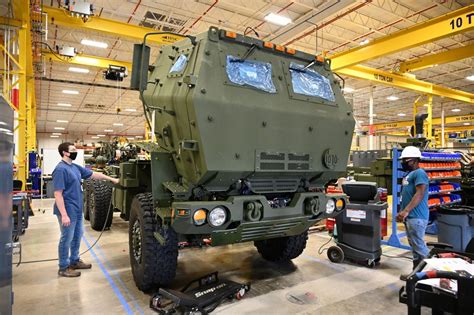
This shared equipment ecosystem offers practical advantages. Training programs, logistics chains, spare parts, and maintenance infrastructure can be coordinated across NATO members, reducing operational costs and improving readiness.
Standardization also simplifies joint exercises and multinational deployments.
A New Era of Precision Artillery in Northern Europe
The approval of the $930 million HIMARS package for Sweden represents far more than a routine arms sale. It illustrates how NATO is evolving to meet modern security challenges by integrating advanced precision-strike capabilities across its member states.
By combining mobile launch platforms, extended-range guided rockets, advanced targeting systems, and NATO-compatible communications networks, Sweden gains a powerful new artillery capability capable of influencing operations far beyond its borders.
For the alliance as a whole, the acquisition strengthens the northern defensive line stretching from the Arctic to the Baltic Sea. Rapidly deployable precision fires will play an increasingly important role in maintaining deterrence and ensuring that NATO forces can respond quickly to emerging threats.
In the shifting landscape of modern warfare—where mobility, accuracy, and networked coordination define battlefield success—the HIMARS system has become a symbol of a new artillery doctrine. Sweden’s adoption of that capability marks another step in the ongoing transformation of NATO’s northern firepower.