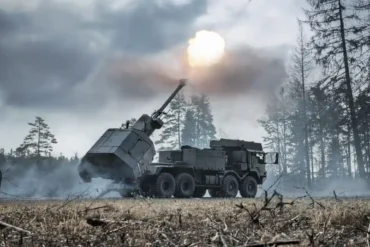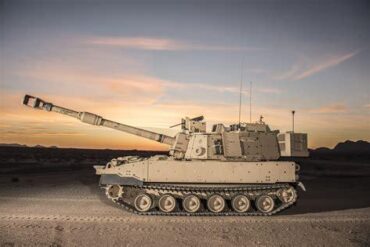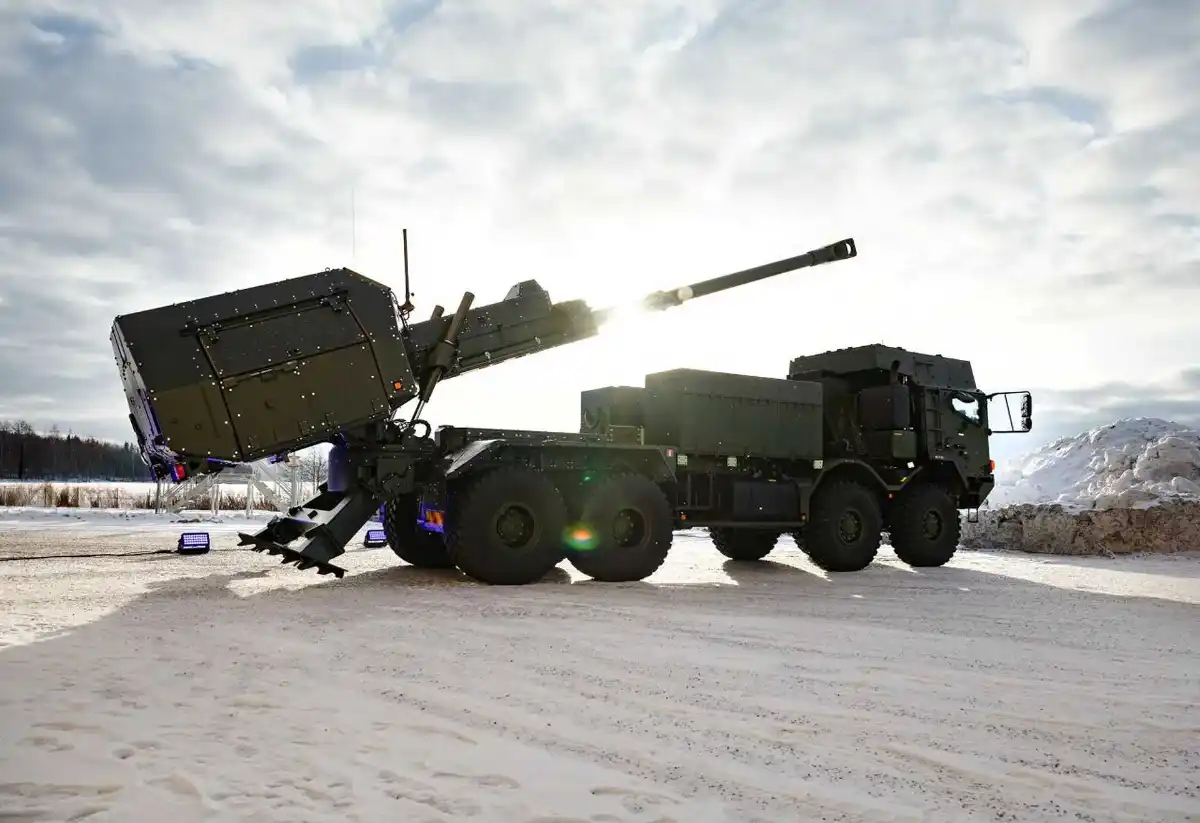
BAE Systems has formally rolled out the first newly manufactured Archer 155mm self-propelled howitzer built specifically for the Swedish Army, marking a decisive step in Sweden’s artillery modernization and industrial revival. Unveiled in late January 2026 at BAE Systems Bofors facilities, the vehicle represents the restart of national Archer production after years of reliance on existing inventories. More than a ceremonial milestone, this rollout signals a technical and doctrinal evolution, highlighted by the shift to the MAN HX2 8×8 military truck chassis, a move designed to future-proof Sweden’s long-range firepower within a NATO-aligned framework.
The new Archer is the first unit from a 48-system production batch ordered by the Swedish Defence Materiel Administration (FMV) under a contract signed in September 2023. That agreement, announced during DSEI 2023 in London, was valued at several billion Swedish kronor and aimed to rapidly rebuild Sweden’s artillery strength following the transfer of previously fielded Archer systems to Ukraine. Crucially, the contract covers entirely new-build platforms, not refurbished vehicles, ensuring full lifecycle support, industrial continuity, and design refinements informed by recent combat experience.
Sweden’s decision to restart Archer production carries strategic weight. Artillery has re-emerged as a central instrument of modern warfare, shaped by counter-battery radars, long-range precision munitions, and pervasive drone surveillance. For Stockholm, rebuilding a credible, mobile, and survivable artillery force is inseparable from its role as NATO’s newest member and from its responsibility to reinforce deterrence in the Baltic Sea region and the High North.
From Volvo A30D to MAN HX2: A Strategic Chassis Transition
The original Archer concept was built on the Volvo A30D 6×6 articulated hauler, a rugged civilian-derived platform adapted for military service. That chassis delivered excellent off-road mobility in Sweden’s forests, snowfields, and soft ground, and it helped establish Archer’s reputation as a highly agile wheeled howitzer. Over time, however, its limitations became increasingly apparent. Payload growth was constrained, protection upgrades were difficult to integrate, and the platform was less aligned with NATO-standard military logistics fleets.
The adoption of the MAN HX2 8×8 directly addresses these constraints. Purpose-built for military use, the HX2 features a reinforced frame, higher gross vehicle weight rating, and a driveline optimized for sustained operations under heavy loads. It supports modular ballistic and mine protection kits, enhanced crew survivability, and significantly greater onboard electrical power generation. This expanded power capacity is critical for modern artillery systems, enabling advanced sensors, digital fire-control architecture, and future growth options such as counter-UAS integration or extended-range precision munitions.
Just as important, the MAN HX2 is widely used across NATO and partner nations, simplifying logistics, training, and sustainment during multinational operations. For Sweden, this shift reflects a deliberate alignment with alliance standards while retaining a uniquely national artillery capability.
Archer’s Core Strength: Automation, Speed, and Precision
At the heart of the system remains the 155mm L52 gun, paired with one of the most sophisticated automated loading systems in service today. Archer can fire up to eight rounds per minute, carrying sufficient onboard ammunition for multiple fire missions without immediate resupply. The system fully supports Multiple Rounds Simultaneous Impact (MRSI), allowing several projectiles fired at different trajectories to strike a target at nearly the same moment, overwhelming enemy defenses.
Range performance remains a defining advantage. With extended-range ammunition, Archer exceeds 40 kilometers, while precision-guided rounds such as M982 Excalibur push effective engagement distances beyond 50 kilometers. These capabilities place Archer firmly in the category of long-range precision fires rather than traditional area artillery.
What truly differentiates Archer is its near-total automation. All gun laying, loading, firing, and stowage are conducted from within the armored cab. The crew never needs to exit the vehicle during a fire mission, a decisive advantage on a battlefield saturated with drones and counter-battery sensors. Time from halt to first round is typically under 30 seconds, and the system can relocate immediately after firing. This rapid shoot-and-scoot profile dramatically reduces exposure to return fire and has become a baseline requirement in modern high-intensity conflict.
How Archer Compares in the Global Artillery Landscape
Within the crowded field of modern self-propelled artillery, Archer occupies a distinct niche. France’s CAESAR system is renowned for strategic mobility and combat-proven reliability, but it relies on a semi-automated loading process that exposes crew members during firing. Germany’s RCH 155, mounted on the Boxer 8×8, matches Archer’s automation and protection but is heavier, more complex, and considerably more expensive, with implications for deployability and sustainment.
Tracked systems such as South Korea’s K9A1 Thunder offer exceptional durability and sustained firepower but come with higher logistical demands and reduced road mobility. Archer, by contrast, combines high automation, low crew requirements, rapid road movement, and excellent tactical agility, making it particularly effective for dispersed operations across wide areas.
These attributes align closely with the realities of contemporary warfare, where survivability depends less on armor thickness and more on speed, precision, and integration into digital command-and-control networks.
Lessons Learned and Quiet Refinements
BAE Systems has acknowledged that the new Swedish production batch incorporates lessons learned from allied operational use, including systems supplied to Ukraine. While specific details remain classified, industry sources point to refinements in fire-control software, improved reliability of the autoloader during sustained firing cycles, and enhanced interoperability with digital battlefield management systems.
These incremental upgrades matter. Modern artillery effectiveness is increasingly determined by system resilience under stress, software stability, and seamless data exchange rather than headline specifications alone. In this sense, the newly built Swedish Archers are widely regarded as the most mature and refined configuration of the system to date.
Strategic Implications for Sweden and NATO
For the Swedish Army, the rollout of the first MAN HX2-based Archer marks the transition from recovery to renewal. With serial production now underway, deliveries of the remaining systems are expected to continue through the latter half of the decade, culminating in full operational capability once all 48 howitzers are fielded and crews fully trained.
From a broader perspective, Archer will form the backbone of Sweden’s long-range fires capability, reinforcing NATO’s northern flank and enhancing deterrence in a region of growing strategic competition. The system’s mobility, precision, and survivability make it particularly suited for the Baltic Sea littoral, where rapid repositioning and integration with allied forces are essential.
The January 2026 rollout confirms that Sweden’s artillery revival is no longer theoretical. It is a tangible, industrially grounded program that blends proven firepower with a modern, NATO-aligned platform designed for the demands of future high-intensity warfare. In an era where artillery once again shapes the battlefield, the newly built Archer stands as a clear statement of Sweden’s intent to remain a credible, technologically advanced military power.