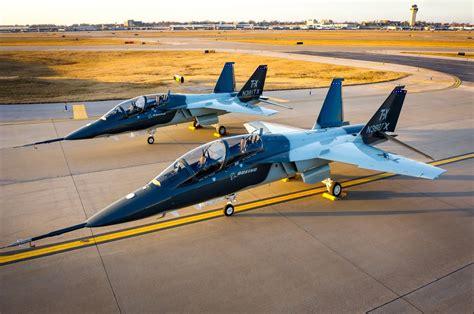
As the Royal Air Force (RAF) enters a pivotal moment in its training transformation, discussions have emerged around a high-profile industry collaboration that could redefine the future of British pilot development. Sources indicate that Boeing, Saab, and BAE Systems are exploring a potential partnership to supply a replacement for the aging Hawker Siddeley Hawk T1, a trainer that has served the RAF since the 1970s.
The move arrives at a crucial juncture. The Hawk T1, once a symbol of airpower and finesse, is set for retirement by 2030 and has already been phased out from front-line duties. Its replacement is not just a matter of filling a training gap—it’s a question of retaining national aerospace capability, redefining modern training doctrines, and aligning with NATO’s fifth-generation readiness.
The Hawk T1’s Long Shadow Over RAF Training
When introduced, the Hawker Siddeley Hawk T1 brought a revolutionary change in fast-jet pilot training. Its simplicity, agility, and adaptability made it the backbone of the RAF’s advanced training syllabus and the mount of the world-famous Red Arrows. But by 2022, operational constraints and technological obsolescence hastened its early retirement from combat-related training.
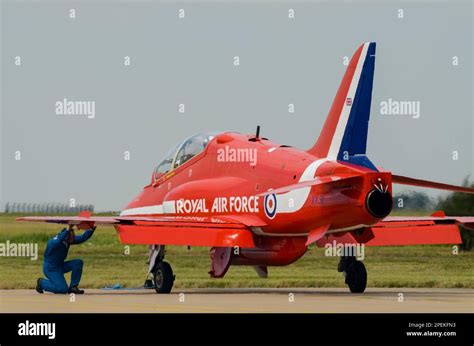
The jet’s retirement—brought forward from 2025—signaled a broader shift in defense strategy. The RAF began prioritizing synthetic environments and simulation-based training. However, the Hawk’s continued use by the Red Arrows underscores the absence of a suitable replacement that can meet both performance and symbolic expectations.
In light of this, insiders now point to the possibility of a multinational proposal spearheaded by Boeing and Saab, with BAE Systems potentially anchoring the UK element of production and integration.
The T-7A Red Hawk: A Next-Gen Candidate
At the heart of these discussions lies the T-7A Red Hawk, developed jointly by Boeing and Saab for the United States Air Force (USAF). Designed to succeed the venerable T-38 Talon, the Red Hawk made its maiden flight in 2023 and has been lauded for its technological sophistication and modular adaptability.
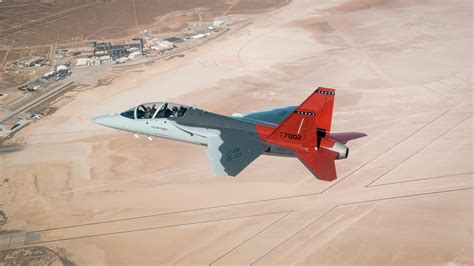
Unlike legacy trainers, the T-7A boasts:
- Advanced Fly-by-Wire Controls for enhanced maneuverability and safety.
- All-Glass Cockpit Displays providing seamless transition to frontline fighters.
- Embedded Mission Training Systems enabling complex scenario simulation.
- Modular Open Architecture, allowing upgrades and role adaptations.
The design even features stadium seating, giving instructors optimal visibility over student pilots. This single detail illustrates the depth of consideration behind its training utility.
The T-7A represents a paradigm shift—a platform built not as a scaled-down fighter, but as a training ecosystem. It supports long-term adaptability for future RAF and NATO training requirements. If adapted for the UK, its benefits could be further magnified by a BAE-led localization strategy.
Strategic Benefits of a UK-Based Partnership
Should the Boeing-Saab-BAE coalition solidify, the industrial and strategic advantages could be transformative for Britain’s defense ecosystem.
First, it would reinforce BAE’s production continuity, safeguarding skilled jobs and preserving the UK’s sovereign aerospace capability post-Typhoon production. The T-7A’s modular build lends itself to multi-nation assembly, with Saab currently producing the aft fuselage—this could be expanded to include UK-based assembly lines, avionics integration, and testing.
Secondly, the partnership could deliver substantial cost efficiencies. By leveraging an already developed airframe, the RAF could bypass years of R&D spending. Meanwhile, the design’s digital twin infrastructure—pioneered in the Red Hawk program—would enable RAF trainers to train across real, virtual, and constructive (RVC) domains, fully aligned with NATO’s vision of integrated air combat.
Competition in the Jet Trainer Arena
However, the T-7A does not exist in a vacuum. The jet trainer market is intensely competitive, with other contenders vying for the RAF’s attention:
- Leonardo M-346 Master: A twin-engine jet widely adopted across Europe, offering high maneuverability and NATO-standard avionics.
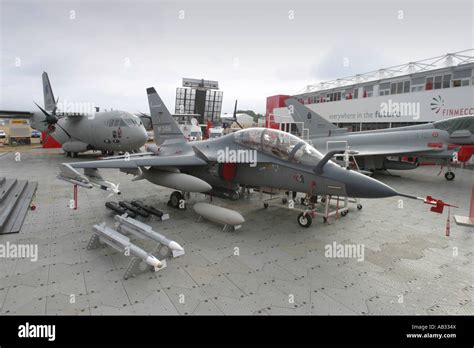
- KAI T-50 Golden Eagle: A proven single-engine design, co-developed with Lockheed Martin, currently used in South Korea, Indonesia, and the Philippines.
- Aeralis Modular Jet: A British upstart promising revolutionary modularity—not only in avionics but also in airframe, wings, and powerplant. However, the lack of a flying prototype has raised questions over its timeline and risk profile.
Each platform offers compelling advantages, but none so far combine the operational maturity, digital integration, and interoperability pedigree of the T-7A.
BAE’s Domestic Leverage and Political Considerations
BAE’s participation cannot be understated. Beyond its technical acumen, BAE serves as a political bridge. Its involvement would ensure substantial UK industrial input—an imperative in today’s defense procurements. With BAE handling the British production and systems adaptation, the RAF would benefit from a tailored version of the Red Hawk meeting its specific needs, while ensuring that UK tax money flows back into the national economy.
Additionally, BAE’s global export networks could open broader sales opportunities across NATO and Commonwealth nations. A UK-endorsed Red Hawk could eventually serve as a “Euro-Atlantic Standard” for pilot training, much like the Hawk T1 once did.
Signals from Stakeholders
So far, Boeing and Saab have kept silent on speculation, with Saab merely labeling media reports as “rumors.” However, BAE’s official remark—”Training remains an important pillar of our air sector strategy”—hints at deeper involvement. The phrase underscores not only interest but strategic alignment. It suggests ongoing internal evaluations or even preliminary planning for involvement in a future bid.
The UK Ministry of Defence has yet to release any tender or public request for proposals, but industry watchers note that preliminary discussions often occur behind closed doors before any formal competition begins. With the Hawk’s final service date set for 2030, the window to design, adapt, test, and certify a new trainer is already narrowing.
Interoperability and NATO-Readiness
In a post-Brexit defense climate, Britain is seeking to reaffirm its role within NATO’s integrated air power doctrine. A Red Hawk variant customized for the RAF could serve as a cornerstone for cross-Atlantic and pan-European training interoperability.
Furthermore, RAF pilots training on a T-7A derivative would experience a learning environment aligned with their US and NATO counterparts. The potential exists for shared training curriculums, joint exercises, and even collaborative squadron deployments—mirroring ongoing alignment between Eurofighter nations.
The digital infrastructure of the T-7A also supports live-virtual-constructive training—a cornerstone of future NATO doctrine. Whether simulating dogfights, integrating AI-driven enemy tactics, or deploying into synthetic warzones, the Red Hawk platform could help prepare RAF pilots for 21st-century air combat far more effectively than legacy trainers ever could.
Looking Ahead: Timeline & Possibilities
If this tripartite collaboration solidifies, the RAF could begin trials with a British-adapted T-7A by the late 2020s. Initial stages would likely involve:
- Evaluation of USAF Red Hawk configurations
- Development of UK-specific avionics and software packages
- BAE-led adaptation for RAF logistics, maintenance, and doctrine
Should all go to plan, full operational capability (FOC) could be achieved shortly after the Hawk T1’s formal retirement—securing continuity in training without operational gaps.
Given the UK’s experience with the F-35 Lightning II program, where BAE plays a crucial role in production and sustainment, the model for multinational cooperation is already well established. The Red Hawk could be the next chapter in that transatlantic success story.
Conclusion
The prospect of Boeing, Saab, and BAE Systems collaborating on a new RAF jet trainer marks a significant evolution in Western airpower strategy. As the Hawk T1 nears the end of its illustrious service life, the need for a capable, modern, and interoperable replacement is urgent.
With the T-7A Red Hawk already proven and adaptable, and with BAE capable of anchoring domestic production and political support, this potential partnership may offer the RAF not just a new aircraft—but a new paradigm for training the air warriors of the future.