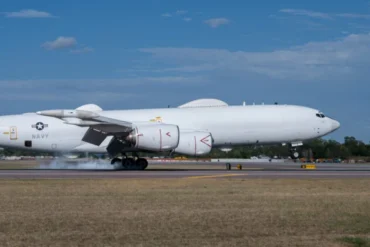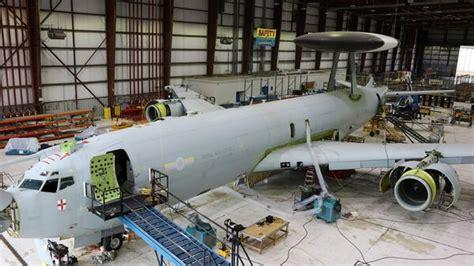
The U.S. Navy’s plan to convert a former Royal Air Force E-3D Sentry aircraft into a dedicated trainer for its E-6B ‘Doomsday’ jets has been formally abandoned, ending a multi-year effort aimed at easing operational pressure on America’s aging airborne nuclear command fleet. The decision, made public through a quietly posted contract notice, brings an anticlimactic end to what was once seen as a cost-effective and strategic transatlantic collaboration.
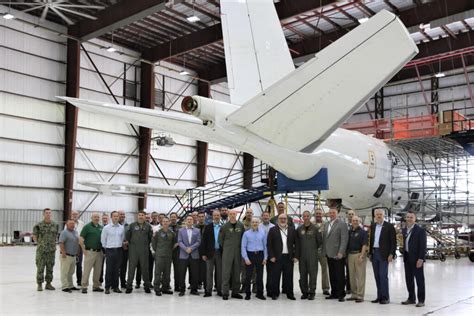
In May 2024, Northrop Grumman was awarded a contract worth just under $3 million for the harvesting of usable parts and final disposal of the aircraft designated TE-6B, originally Royal Air Force E-3D Sentry AEW1, tail number 170508. The Navy had purchased this jet in 2021 for conversion into a training platform, a move that initially promised to reduce operational wear on the mission-critical E-6B Mercury fleet.
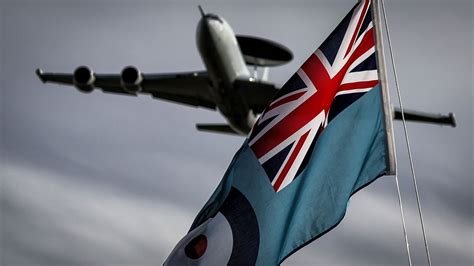
Abandoned Conversion: TE-6B’s Abrupt Demise
Naval Air Systems Command (NAVAIR) had already invested $16.376 million into acquisition and initial modification work. But according to the newly released notice, the aircraft will never take to the skies in its new role. Instead, Northrop Grumman, the sole vendor with access to proprietary TE-6B technical data, will strip the plane for parts before it is dismantled.
The Navy’s 2022 statements had indicated that modification work was underway, which included the removal of the radar dome and aerial refueling probe to mirror the E-6B’s physical profile. But no further conversion milestones were publicized, and by March 2024, no new funding was requested in the FY2025 defense budget for completing the project. Despite this, the sudden disposal order has raised questions about project oversight, cost-effectiveness, and future training plans.
Why the TE-6B Was Needed
The E-6B Mercury fleet, derived from the Boeing 707 platform, performs two of the United States’ most sensitive national security roles:
- TACAMO (Take Charge and Move Out): Transmits nuclear launch orders to Ohio-class submarines, even while submerged, using ultra-long trailing wire antennas.
- ABNCP (Airborne National Command Post or “Looking Glass”): Mirrors strategic command capabilities of ground-based nuclear forces, including the ability to initiate Minuteman III ICBM launches.
With just 16 E-6Bs supporting both the Navy and Air Force’s nuclear command structure, preserving their operational readiness is critical. Each training flight costs valuable flight hours, airframe cycles, and significantly impacts aircraft availability. The TE-6B was envisioned as a training-only surrogate, projected to save 600 flight hours and 2,400 landings annually.
Technical Roadblocks and Diverging Architectures
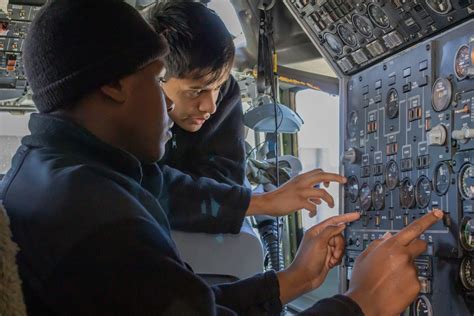
While the E-3D and E-6B share common Boeing 707 airframes, their internal systems diverge significantly. The E-6B has undergone decades of avionics, communication, and cockpit upgrades, many of which are incompatible with the RAF’s former E-3D standard.
- Aerial refueling system incompatibilities: E-6Bs use boom refueling, while E-3Ds relied on probe-and-drogue.
- Cockpit configuration: The E-6B’s digital suite is drawn from 737 and 777 commercial platforms.
- Mission equipment differences: The E-6B’s strategic communication arrays and secure datalink systems differ fundamentally from the E-3D’s radar-focused systems.
Despite initial plans to refit the E-3D airframe into a close visual and functional replica of the Mercury, these technical gaps may have proven too wide—or too costly—to bridge effectively.
Aging Fleet Pressures and Persistent Readiness Issues
The E-6B Mercury jets, originally delivered as E-6As in the late 1980s, are the last Boeing 707-based aircraft ever built. Today, the platform faces growing challenges:
- Parts obsolescence due to aging systems no longer in production.
- Increased maintenance hours, which rose 9% between 2010 and 2019, according to a Government Accountability Office (GAO) report.
- Declining mission-capable rates, hitting readiness even as strategic threats grow.
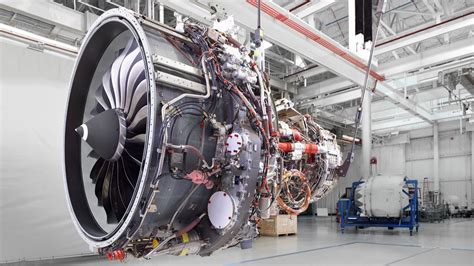
These aircraft use CFM56 high-bypass turbofan engines, more fuel-efficient than the older TF33 engines on current U.S. Air Force E-3 Sentry aircraft, which are now being retired in favor of the E-7 Wedgetail. Nevertheless, the E-6B’s 1980s-era systems and structural fatigue make it increasingly expensive to keep the fleet mission-ready.
Strategic Context: The Looming E-130J Replacement
The Navy has already initiated a new program to replace the E-6B’s TACAMO mission with a platform based on the C-130J Super Hercules, dubbed E-130J. Northrop Grumman is currently managing the development of this future nuclear command aircraft.
- Three E-130Js are planned for FY2027
- Six more in FY2028, signaling a phased transition
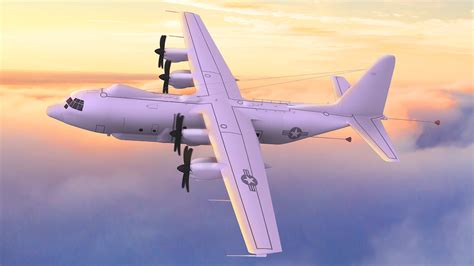
Though the E-130J is aimed at supporting the TACAMO role, it’s still unclear if it will also take over the Looking Glass function or whether that responsibility will shift to the Air Force’s upcoming E-4C SAOC aircraft—a modified Boeing 747 platform.
Until then, the E-6B remains irreplaceable. Its availability and crew proficiency are not just routine maintenance goals but matters of strategic deterrence.
A Gap in Flight Training Capability
One of the TE-6B program’s main promises was to provide live in-flight training without risking high-demand Mercury jets. This included training for:
- Pilot proficiency under high-stakes conditions
- System operator familiarity with airborne communication systems
- Emergency scenario response drills
The Navy had considered leasing commercial aircraft and using simulators as interim solutions before selecting the RAF E-3D in 2021. Despite simulator advancements, real flight training remains irreplaceable for mission-critical readiness.
Whether an alternate training aircraft will be sought, either through future acquisitions or private contractors like KALS LLC, remains an open question. An April 2025 pilot training contract announcement gave no details on what platforms might be used, leaving the Navy with limited in-flight options.
RAF’s E-3D Legacy and Global Transfers
The Royal Air Force operated seven E-3Ds, acquired in the early 1990s. Persistent maintenance challenges plagued the fleet, and by December 2020, only three were serviceable. When the RAF officially retired the platform, the U.S. Navy and the Chilean Air Force each acquired three of the decommissioned jets.
The Chileans successfully fielded their Sentries by 2022. The Navy, however, is now stripping one for parts.
Implications and Future Outlook
The decision to dismantle the TE-6B reflects broader budget prioritization and platform modernization pressures within the U.S. military. It underscores how aging fleets, increasing global threats, and shifting technology baselines are converging in a way that leaves little room for stopgap solutions—even ones already paid for.
As the E-6B fleet continues aging and as critical missions persist, training capability must evolve. Whether through contractor-supported flights, simulators, or a new dedicated airframe, the Navy must find a sustainable path forward to ensure the continued credibility of the nation’s airborne nuclear command infrastructure.
In the interim, the burden remains on the Mercury fleet, flying missions no other aircraft can perform, now without the support of a dedicated trainer once hoped to reduce its strain.