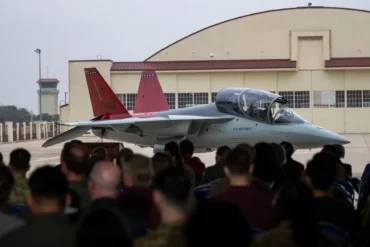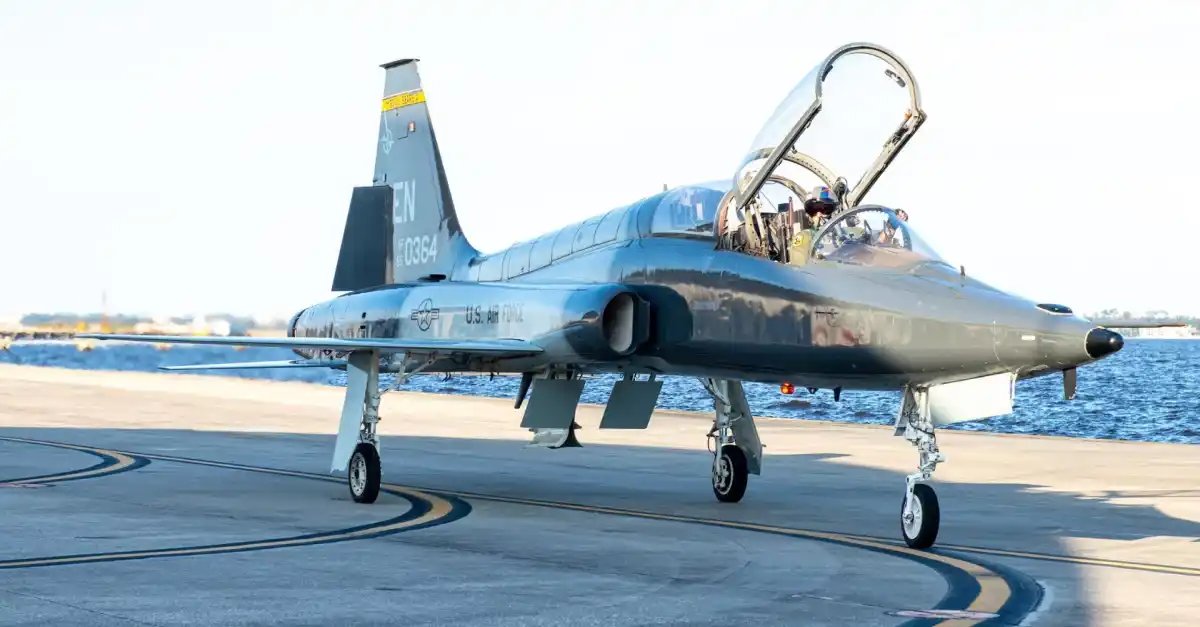
The U.S. Air Force has begun a sweeping overhaul initiative to extend the operational life of the T-38 Talon, ensuring the iconic supersonic trainer remains in service well into the 2030s. The first aircraft has now arrived at Fleet Readiness Center Southeast (FRCSE) in Jacksonville, marking the facility’s official induction as a secondary depot under the Talon Repair, Inspection, and Maintenance (TRIM) program. This shift helps distribute the workload previously shouldered almost entirely by Joint Base San Antonio–Randolph and reinforces the Air Force’s commitment to maintaining a steady pipeline of new fighter and bomber pilots during the transition to the T-7A Red Hawk.
The arrival of the first Talon at FRCSE represents more than depot diversification. It underscores a strategic response to industrial timelines, budget pressures, and fleet readiness challenges. By adding the Navy-run Jacksonville depot to the TRIM network, the Air Force aims to keep roughly 270 T-38s flying for another five to ten years. That buffer is vital as the service navigates T-7A production, infrastructure development, and software integration—complex processes that cannot be accelerated without risk.
FRCSE’s new role was formally approved after Naval Air Systems Command (NAVAIR) designated the site as a secondary T-38 depot earlier in the year. The approval followed intensive planning and equipment production, including more than 180 custom tools, jigs, and support systems tailored to the Talon’s tight airframe geometry and demanding life-extension procedures.
The Jacksonville depot carries a natural advantage: decades of experience maintaining the F-5 Tiger II, a close relative of the T-38. The two airframes share structural lineage and overlapping maintenance practices, allowing technicians to translate practical knowledge while meticulously controlling configuration differences. This heritage shortens the learning curve and speeds up the depot’s transition into full operational tempo without sacrificing precision.
The T-38 is a compact but uncompromising aircraft. Powered by two General Electric J85 turbojets capable of more than 3,800 pounds of thrust with afterburner, the Talon is engineered for high-energy maneuvering and supersonic training. Its thin wings and slender fuselage generate the agility needed for fighter preparation, but they also impose significant structural stress over decades of heavy utilization. TRIM overhauls dig deep into these fatigue-prone areas, restoring components and reinforcing airframes exposed to thousands of high-intensity training hours.
For generations of U.S. fighter pilots, the T-38 has been the bridge between foundational training and frontline platforms like the F-16 Fighting Falcon, F-15 Eagle, and B-series bombers. Its flight envelope allows students to practice formation discipline, energy management, tactical rejoins, and the fundamentals of air combat maneuvering. Any disruption in T-38 availability would immediately bottleneck pilot production, affecting everything from global deterrence to allied training cycles.
FRCSE expects to induct a second Talon before year’s end and scale up to six aircraft annually once procedures mature. While modest in volume, this output serves as a crucial pressure valve that prevents overloading JBSA–Randolph and strengthens redundancy across the maintenance enterprise. Each overhaul represents the culmination of months of planning, precise equipment fabrication, and extensive qualification work by Navy and Air Force teams.
The broader implication is clear: extending the T-38’s life buys time. It cushions the arrival of the T-7A, stabilizes pilot training throughput, and preserves industrial know-how at a moment when geopolitical demand for experienced aviators is rising. From Europe to the Indo-Pacific, a dense and resilient pilot pipeline is central to U.S. and allied airpower credibility.
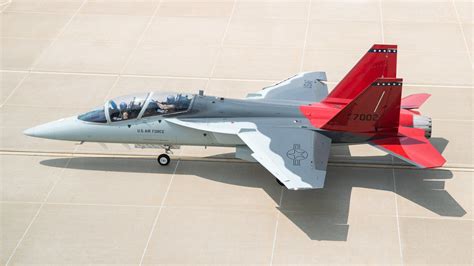
By leveraging both Air Force and Navy depot assets—and even incorporating NASA’s experience where applicable—the United States is reinforcing the training ecosystem that underpins its high-intensity aviation capability. The TRIM program is not just a maintenance campaign; it is a strategic safeguard ensuring the next generation of combat aviators receives uninterrupted, high-quality training as global competition intensifies.