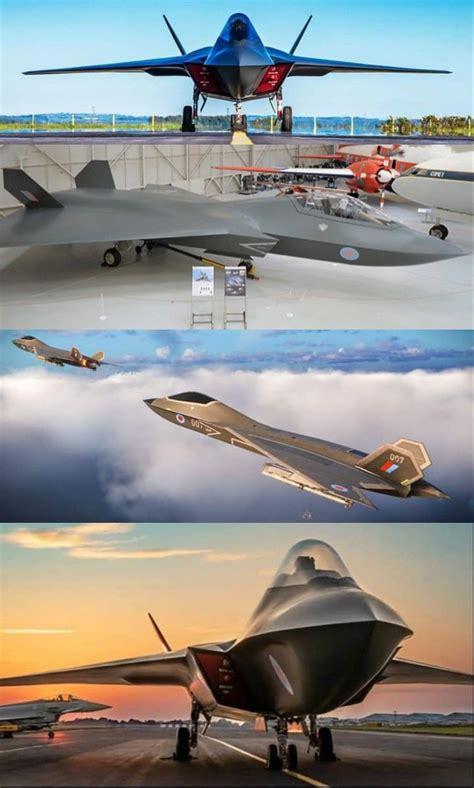
The coming decade will redefine military aviation more dramatically than any period since the dawn of stealth technology in the late Cold War. Air combat in the 2030s will no longer revolve around isolated fighter jets engaging in traditional dogfights. Instead, future battlespaces will become deeply networked ecosystems where crewed stealth aircraft, autonomous drones, artificial intelligence, electronic warfare systems, and space-based sensors operate as a unified combat web.
The fighter jets leading this transformation are not merely faster or stealthier versions of today’s aircraft. They represent a complete philosophical shift in how air superiority is achieved. Range now matters as much as maneuverability. Data fusion has become more valuable than raw speed. Electronic dominance increasingly outweighs traditional firepower. The aircraft that will define the next decade are designed to command entire constellations of unmanned systems while penetrating the most heavily defended airspace on Earth.
Global military planners are racing toward this future at astonishing speed. The United States is accelerating sixth-generation development programs after China demonstrated increasingly sophisticated stealth prototypes. European nations are consolidating industrial power into multinational fighter projects designed to maintain strategic independence. Meanwhile, China is mass-producing affordable stealth aircraft capable of overwhelming adversaries through sheer numerical pressure.
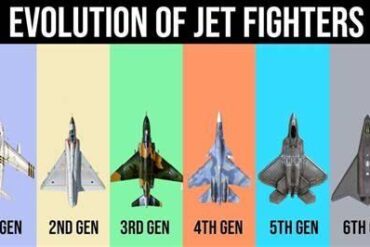
The 2030s will therefore mark the first era in aviation history where sixth-generation fighters coexist with mature fifth-generation fleets at scale. Together, they will form layered air combat architectures unlike anything previously seen.
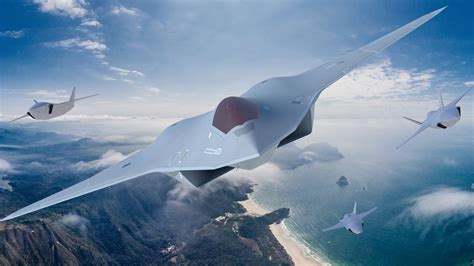
F-47 Next Generation Air Dominance Will Become America’s Ultimate Air Superiority Weapon
The Boeing F-47 Next Generation Air Dominance platform is expected to become the single most advanced crewed fighter aircraft ever constructed. Developed as the centerpiece of the United States Air Force’s future air dominance strategy, the aircraft is engineered to survive and dominate in environments where even modern stealth fighters may struggle.
Unlike previous generations of tactical aircraft, the F-47 is not designed solely around maneuverability or kinetic combat. Its true strength lies in survivability across the entire electromagnetic spectrum. Modern radar systems no longer rely on traditional detection methods alone. Infrared tracking, passive radio frequency sensors, multispectral surveillance satellites, and AI-assisted targeting networks have dramatically complicated stealth operations. The F-47 addresses this challenge through what defense analysts increasingly describe as “stealth plus-plus.”
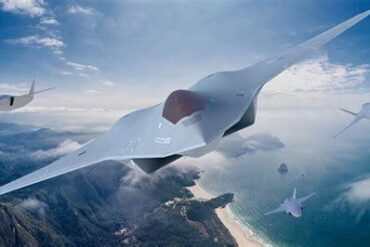
The aircraft is widely expected to feature a tailless blended wing-body configuration optimized for extremely low observability. This design philosophy mirrors concepts previously seen on strategic bombers like the B-2 Spirit and B-21 Raider, sacrificing some traditional agility in exchange for vastly superior survivability. In practical terms, the F-47 may be able to penetrate heavily defended Chinese or Russian airspace without ever being reliably tracked.
Its operational role also marks a revolutionary departure from legacy fighters. The F-47 will function as the quarterback of an integrated combat ecosystem composed of Collaborative Combat Aircraft drones, electronic warfare assets, satellites, and supporting fifth-generation fighters. Rather than fighting alone, it will orchestrate the battlespace in real time, assigning targets, directing unmanned escorts, and managing electronic attacks against enemy defenses.
The aircraft’s extended combat radius is equally significant. Future Pacific conflicts would involve enormous distances across contested maritime regions where tanker aircraft themselves could become vulnerable targets. The F-47’s anticipated range allows deep penetration operations without relying excessively on aerial refueling infrastructure.
Cost remains a critical factor. The F-22 Raptor’s limited production run became a cautionary tale about creating a fighter so expensive that meaningful fleet numbers became impossible. The F-47 program aims to avoid repeating that mistake by incorporating modular systems architecture, reduced maintenance demands, and adaptable mission software capable of rapid modernization.
If successful, the F-47 will become the backbone of American air superiority through the 2040s and beyond.
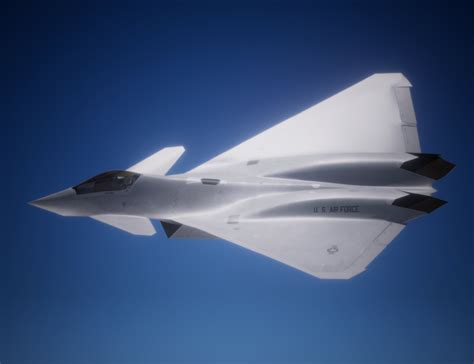
BAE Tempest And The Global Combat Air Program Are Reshaping European Air Power
Europe and Japan are pursuing an equally ambitious vision through the Global Combat Air Program, commonly associated with the BAE Systems Tempest concept. The multinational initiative combines the aerospace expertise of the United Kingdom, Italy, and Japan into a single sixth-generation platform intended to rival American and Chinese developments.
The significance of GCAP extends beyond the aircraft itself. For participating nations, the program represents a strategic declaration of technological sovereignty. Many governments increasingly fear overdependence on foreign defense suppliers amid rapidly shifting geopolitical alliances. By developing an indigenous sixth-generation fighter ecosystem, partner nations ensure long-term industrial independence while preserving advanced aerospace manufacturing capabilities domestically.
The Tempest concept reflects this broader ambition. Engineers are designing an aircraft that operates as a “system of systems” rather than a standalone fighter. Artificial intelligence integration sits at the center of the project. Pilots may eventually command autonomous drone swarms capable of reconnaissance, electronic warfare, suppression of enemy air defenses, and even direct strike operations.
One of the most intriguing aspects of GCAP is its emphasis on adaptive technology architecture. The fighter is expected to incorporate rapidly upgradeable software environments similar to modern cloud computing ecosystems. This allows the aircraft to evolve continuously rather than becoming technologically stagnant after entering service.
Its sensor fusion capabilities may surpass even today’s fifth-generation leaders. Advanced radar arrays, passive sensors, electronic surveillance suites, and distributed infrared systems will combine into a single operational picture delivered instantly to pilots and supporting assets. In future air warfare, the side that sees first and processes information fastest may win before missiles are ever launched.
Rolls-Royce is also developing next-generation propulsion systems designed to generate enormous electrical power. This matters because sixth-generation aircraft are increasingly expected to employ directed-energy weapons and highly sophisticated electronic warfare systems requiring unprecedented onboard energy generation.
Japan’s involvement adds another critical dimension. Facing a rapidly modernizing Chinese military and increasing regional tensions in the Pacific, Tokyo requires a long-range stealth platform capable of defending vast maritime territories. Japanese aerospace firms bring valuable expertise in advanced electronics, precision manufacturing, and miniaturized sensor technologies that could significantly enhance the final aircraft.
By the mid-2030s, the Tempest may become the defining sixth-generation platform outside the United States.
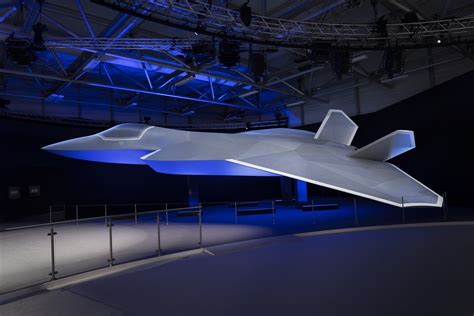
China’s Shenyang J-35 Could Shift The Balance Of Power In The Indo-Pacific
While Western programs attract enormous attention, China’s Shenyang J-35 may ultimately become the fighter with the greatest geopolitical impact simply because of scale. The aircraft is designed to provide the People’s Liberation Army Air Force and PLA Navy with a mass-produced stealth platform capable of challenging American dominance throughout the Indo-Pacific region.
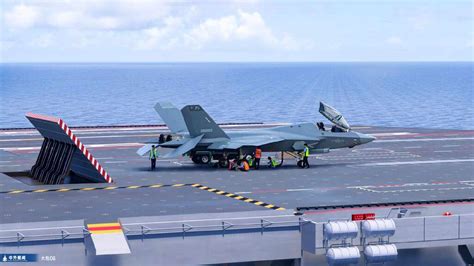
The J-35 differs fundamentally from the Chengdu J-20. Whereas the J-20 primarily emphasizes long-range air superiority and interceptor missions, the J-35 is intended as a versatile multirole aircraft optimized for both land-based and carrier operations. In many ways, it serves as China’s answer to the F-35 Lightning II.
Its affordability could prove strategically decisive. Western stealth aircraft programs often prioritize maximum technological sophistication regardless of cost, resulting in smaller fleets. China appears to be pursuing a different strategy: producing stealth aircraft in large enough quantities to saturate enemy defenses and maintain operational pressure during prolonged conflicts.
Estimates suggest the J-35 may cost significantly less than comparable Western fighters while still incorporating advanced stealth shaping, sensor fusion, and network-centric warfare capabilities. If China successfully manufactures several hundred examples by the early 2030s, regional military balances could change dramatically.
Naval aviation represents another critical factor. The aircraft is specifically tailored for operations aboard China’s new Type 003 Fujian aircraft carrier equipped with electromagnetic catapult launch systems. This technology allows heavier launch weights, enabling fighters to carry more fuel and weapons than ski-jump-equipped carriers permit.
That development transforms China’s maritime reach. Carrier-based J-35 squadrons operating alongside long-range anti-ship missiles, submarines, and land-based airpower create a layered anti-access strategy capable of threatening opposing naval forces far from the Chinese mainland.
The aircraft’s networking capabilities are perhaps even more important than its stealth profile. Modern Chinese doctrine increasingly emphasizes integrated kill chains linking aircraft, drones, naval vessels, missile batteries, and surveillance satellites into unified targeting architectures. The J-35 is expected to serve as an airborne node within this broader combat network.
Rather than simply engaging enemy fighters, it will contribute to overwhelming adversaries through synchronized multidomain operations.
The F-35 Lightning II Will Become The Backbone Of Western Air Warfare
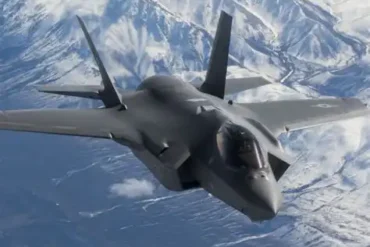
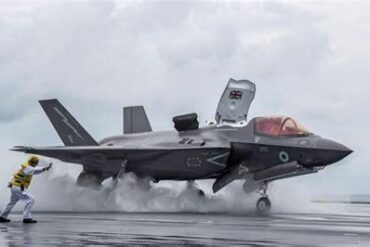
No fighter aircraft will shape the 2030s more broadly than the Lockheed Martin F-35 Lightning II. Although newer sixth-generation platforms will attract headlines, the F-35’s massive global presence ensures it will remain the operational backbone of Western airpower for decades.
The aircraft’s importance stems from scale, interoperability, and continuous evolution. By the mid-2030s, thousands of F-35s will operate across allied nations spanning North America, Europe, the Middle East, and the Indo-Pacific. No previous stealth fighter has ever achieved such widespread adoption.
This global fleet creates an unprecedented coalition warfare capability. Allied air forces flying the same aircraft can seamlessly share targeting data, mission planning information, sensor feeds, and tactical updates across secure networks. In future conflicts, this connectivity could provide overwhelming operational advantages.
The Block 4 modernization package dramatically expands the aircraft’s capabilities. Enhanced computing power, improved electronic warfare systems, expanded weapons compatibility, and upgraded sensors effectively transform the fighter into an airborne command-and-control platform.
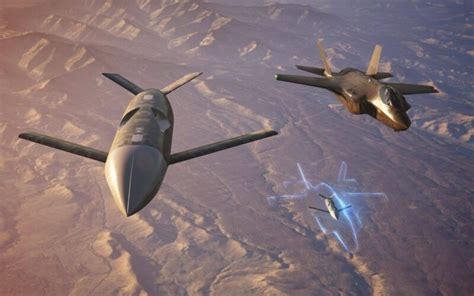
Its role as a drone controller may prove especially transformative. The F-35 is expected to direct Loyal Wingman drones and Collaborative Combat Aircraft carrying missiles, jamming systems, reconnaissance payloads, or decoys. These unmanned systems will absorb risk while extending the fighter’s combat effectiveness far beyond its physical airframe.
Electronic warfare enhancements are equally critical. Future conflicts will involve aggressive attempts to blind enemy radars, disrupt communications, corrupt targeting systems, and manipulate digital networks. The upgraded F-35 will possess increasingly sophisticated abilities to dominate this invisible electromagnetic battlefield.
Critics frequently focus on the aircraft’s compromises. Compared with dedicated air superiority fighters, the F-35 sacrifices some agility and raw performance in pursuit of multirole versatility. Yet this flexibility is precisely why it will remain indispensable. Modern warfare rarely allows specialized aircraft to operate independently. Nations need platforms capable of conducting strike missions, intelligence gathering, electronic warfare, close air support, and air defense suppression within a single integrated framework.
The F-35 fulfills that requirement more effectively than any aircraft currently in production.
Its sheer ubiquity also complicates adversary planning. Potential opponents cannot simply prepare for isolated encounters with small numbers of elite stealth fighters. They must account for the possibility of hundreds of interconnected F-35s operating simultaneously across multiple theaters.
The Upgraded F-22 Super Raptor Refuses To Fade Away
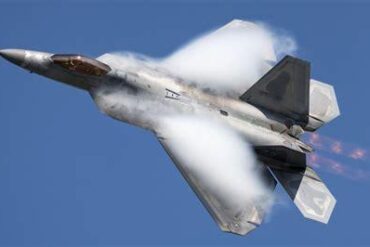
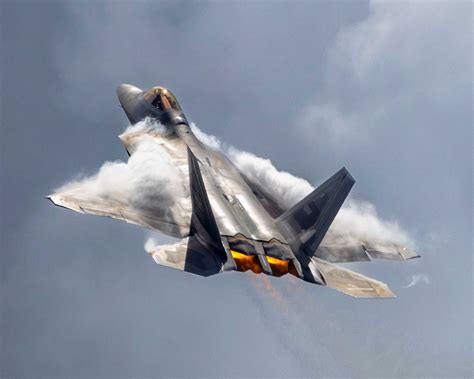
The Lockheed Martin F-22 Raptor was originally expected to retire around the beginning of the next decade. Instead, evolving geopolitical realities and delays affecting sixth-generation programs have granted the aircraft an extended operational life that could stretch into the 2040s.
That extension is not merely about maintaining numbers. The upgraded “Super Raptor” initiative is transforming the world’s first operational stealth fighter into an even more dangerous platform.
When the F-22 entered service, it revolutionized air combat through unmatched radar stealth, supercruise capability, and extraordinary agility. Even today, many analysts still regard it as the most dominant air superiority fighter ever built. However, the aircraft was designed during the 1990s, and its original avionics architecture increasingly struggles against modern digital warfare requirements.
The Super Raptor modernization effort addresses those limitations aggressively. Legacy hardware is being replaced with open-systems architecture built around commercially derived technologies that simplify upgrades while reducing maintenance costs. Enhanced networking allows the aircraft to share information more efficiently with F-35s, drones, satellites, and future sixth-generation systems.
Stealth improvements are particularly noteworthy. Early stealth aircraft focused heavily on radar cross-section reduction, but modern detection technologies extend across multiple spectrums including infrared and passive tracking methods. Experimental coatings and multispectral stealth materials tested on some Raptors may significantly reduce visibility against these emerging threats.
Weapons integration also ensures continued relevance. The AIM-260 Joint Advanced Tactical Missile promises substantially greater range and improved survivability compared with the aging AIM-120 AMRAAM. In beyond-visual-range combat, missile performance increasingly determines victory long before pilots ever see one another.
The F-22 retains another major advantage rarely discussed outside defense circles: pilot confidence. American pilots consistently praise the aircraft’s situational awareness, acceleration, and combat handling characteristics. In air combat, human factors still matter enormously despite growing automation.
Most importantly, the Super Raptor provides a critical bridge between generations. Until sixth-generation fleets reach meaningful operational scale, upgraded F-22s will continue serving as elite air dominance assets capable of confronting advanced threats immediately.
The aircraft that once symbolized the future of air warfare may soon become the veteran guardian ensuring the next generation survives long enough to mature.
The 2030s Will Redefine What A Fighter Jet Actually Is
The defining fighter jets of the 2030s share one common characteristic: none of them operate alone anymore. The age of isolated dogfighters is ending. Future air combat revolves around interconnected combat ecosystems where information dominance, autonomous collaboration, electronic warfare, and stealth integration matter more than traditional metrics like top speed.
Sixth-generation aircraft such as the F-47 and Tempest are designed to orchestrate entire battlespaces rather than simply participate in them. Fifth-generation workhorses like the F-35 and upgraded F-22 will provide mass, persistence, and operational flexibility. China’s J-35 demonstrates how industrial scale and network integration may challenge Western technological advantages directly.
Together, these aircraft are shaping a new era where the most powerful weapon in the sky may no longer be the missile under a wing, but the invisible web of data connecting every aircraft, drone, sensor, and commander into a single intelligent fighting force.