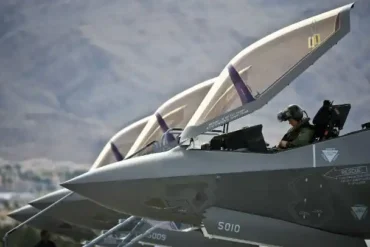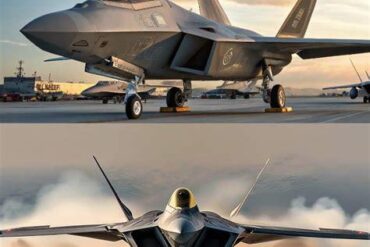
The F-35 Lightning II stands as the pinnacle of modern air combat not simply because it is stealthy or fast—but because it delivers a level of situational awareness that no other fighter, past or present, has achieved. This aircraft, built from the ground up with advanced sensing, data fusion, and network-centric warfare in mind, functions as the eyes, ears, and brain of the battlefield. It isn’t just another jet—it’s a combat system in the sky.
Unmatched Investment, Unrivaled Capability
Unlike European or Russian aircraft, the F-35 benefits from decades of sustained U.S. defense investment, pouring billions into development and continued modernization. As Justin Bronk of RUSI noted, no other country can match the sheer scale and duration of America’s military aviation funding. This financial dominance allows the U.S. to iterate rapidly, implement upgrades like TR-3 computing enhancements, and stay far ahead in sensor capabilities and mission software.
Countries like Finland and Switzerland, after evaluating platforms such as the Eurofighter Typhoon, Saab Gripen E, and Rafale, ultimately selected the F-35—not only for its stealth but for the digital superiority it offers. In Canada’s evaluation, the F-35A scored an astounding 95% vs. 33% for the Gripen E, signaling an undeniable edge.
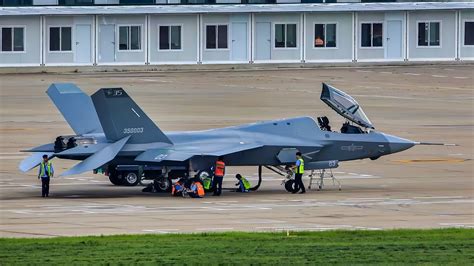
The “God’s Eye View”: AN/APG-81 AESA Radar
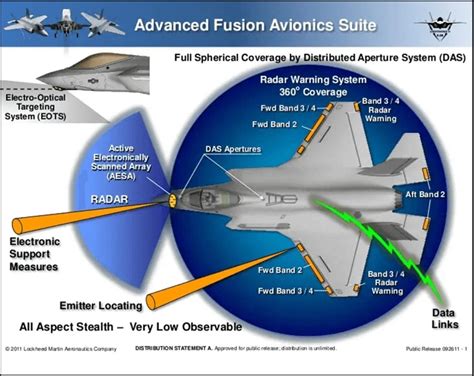
At the core of the F-35’s extraordinary situational awareness lies the AN/APG-81 AESA radar, developed by Northrop Grumman. This Active Electronically Scanned Array doesn’t just scan for targets—it creates a living, three-dimensional battlespace map. By employing thousands of solid-state transmit/receive modules, it can simultaneously track air and ground targets with exceptional precision and speed.
This radar supports a wide range of mission profiles, including air-to-air and air-to-surface targeting, and plays a key role in electronic warfare (EW) and intelligence gathering. The AN/APG-81 complements the F-35’s stealth characteristics by operating passively when needed, reducing the chance of detection.
A Fusion of Sensors: See Everything, Be Seen by None
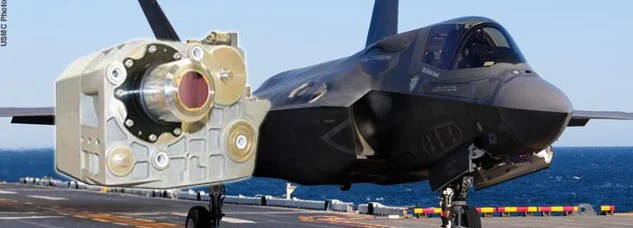
The F-35’s sensory supremacy doesn’t end with radar. Its Electro-Optical Targeting System (EOTS), embedded directly into the airframe, provides infrared tracking, laser designation, and high-resolution imaging. Combined with the Distributed Aperture System (DAS)—a 360-degree array of six infrared cameras—the F-35 can detect and track aircraft, missiles, and launch events automatically, even outside visual range.
Where legacy fighters depend heavily on AWACS or ground control for targeting data, the F-35 generates its own battlespace intelligence. Crucially, its passive sensors allow it to gather enemy radar emissions without broadcasting its position, giving it a distinct edge over Russian jets like the Flanker series, which still rely on PESA radars that act like detectable beacons.
The Brain Behind the Jet: Sensor Fusion and TR-3 Upgrades
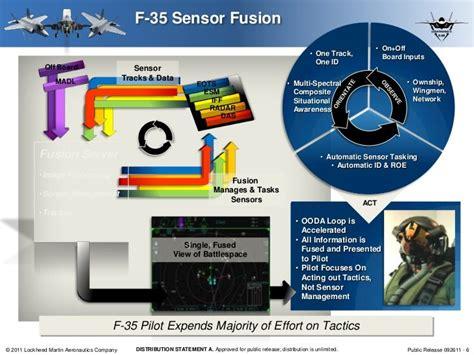
Sensor fusion is what turns the F-35 into a thinking machine. Rather than dumping a mass of raw data on the pilot, the aircraft’s onboard computers—soon to be upgraded with Technology Refresh 3 (TR-3)—automatically collect, interpret, and display only the most relevant tactical information.
This includes:
- Automatic target identification and classification
- Threat prioritization
- Merging of duplicate signals for a cleaner tactical picture
- Dynamic display of only what the pilot needs to see in that moment
This allows pilots to focus less on interpretation and more on action. The interface is deliberately simplified—clear symbology, unified displays, and reduced workload—so the pilot can make decisions faster and with greater confidence.
Electronic Warfare Superiority: AN/ASQ-239 Suite
The F-35’s AN/ASQ-239 EW suite provides it with cutting-edge capabilities for self-protection, jamming, and threat geolocation. Integrated tightly with the radar and other sensors, this system is not only reactive but predictive—identifying and mitigating threats before they can become lethal.
Whether facing modern SAMs, enemy aircraft, or radar-guided missiles, the F-35 can mask its presence, spoof incoming signals, and deny adversaries the chance to target it effectively. In today’s multi-domain battlespace, electronic invisibility is often more powerful than speed.
MADL and Link-16: A Networked Combat Node
Modern warfare is no longer a contest of platforms but of information ecosystems. The F-35, with its Multifunction Advanced Data Link (MADL) and Link-16, acts as a communication and coordination hub. It securely shares its sensor data with:
- Other F-35s in the battlespace
- Legacy 4th-generation fighters like the F-15, F-16, and Typhoon
- Surface ships and ground-based air defense systems
- AWACS, drones, and satellite networks
This interoperability allows the F-35 to serve as the intelligence core of any coalition force. Even when surrounded by less advanced allies, it elevates the entire force’s effectiveness.
The Airborne Quarterback: Orchestrating the Fight
The F-35 is often described as a quarterback, not just because it commands attention, but because it coordinates and leads the entire team on the field. It can:
- Act as a forward sensor for non-stealth fighters
- Direct unmanned systems in real-time
- Share enemy positions with naval and land-based strike units
- Seamlessly integrate with NATO and allied platforms
This capability is especially valuable for smaller nations who can afford only a single fighter platform. Nations like Norway, Finland, and Switzerland use the F-35 to cover roles previously requiring multiple aircraft types—air superiority, strike, ISR, and EW—from one cockpit.
A Platform Built to Grow
Even after delivering over 1,200 units worldwide, the F-35 is far from complete. Lockheed Martin continues to enhance the platform with block upgrades, new software, and integration with emerging tech like loyal wingman drones. In the near future, the F-35 will direct semi-autonomous platforms, sending them ahead of the manned flight group to scout, jam, and strike.
Its modular open systems architecture (MOSA) ensures that future capabilities—whether AI-assisted targeting or new hypersonic weapons—can be integrated without structural overhauls.
Force Multiplier for the 4th Generation
While legacy fighters still serve valiantly, their full potential is unlocked when paired with the F-35. In the UK Royal Air Force, for example, the Typhoon handles brute force engagement, while the F-35B acts as the stealthy assassin, locating and striking targets the Typhoon can’t see.
This synergy reflects the new doctrine of combined generational tactics. Rather than discarding older aircraft, modern militaries use the F-35 to expand their relevance. Fourth-generation aircraft become more lethal, survivable, and efficient when directed by F-35 data links.
Why It Wins Every Time
Whenever the F-35 has competed head-to-head with other platforms—Rafale, Gripen E, F/A-18 Super Hornet, Eurofighter, Flanker—it has won. This isn’t due to marketing hype but combat relevance. The aircraft isn’t judged on top speed or raw thrust; it’s judged on whether it can:
- Survive the first encounter
- Detect the enemy before being detected
- Complete the mission without external support
- Share critical data in real-time
In all of these metrics, the F-35 comes out ahead. The only reason some countries avoid it is geopolitical, not technical—such as protecting domestic aerospace industries or reluctance to rely too heavily on U.S. defense logistics.
Conclusion: Dominance Through Information Superiority
The F-35 is not the fastest jet. It does not have the longest range or the highest ceiling. But it sees the most, shares the most, and fights the smartest. In a battlespace where milliseconds can mean life or death, where visibility determines victory, the F-35’s unsurpassed situational awareness is its deadliest weapon.
It is, in every sense, the embodiment of fifth-generation warfare—an aircraft that doesn’t just survive the future of combat, but defines it.