In a bold move to bolster the operational capabilities of its rotorcraft fleet, the U.S. Special Operations Command (USSOCOM) has awarded a potential $471.6 million contract to Sierra Nevada Corporation (SNC) to develop, produce, and support the Degraded Visual Environment Pilotage System (DVEPS)—a groundbreaking avionics solution designed to revolutionize helicopter flight in degraded visual environments (DVE).
This long-term agreement is set to dramatically enhance situational awareness for pilots operating in conditions where conventional visual cues are lost due to dust, fog, smoke, snow, rain, and darkness. Helicopter missions in such environments are often fraught with hazards that threaten mission success and crew safety, particularly during critical takeoff and landing phases.
A Tactical Leap Forward in Aviation Safety
The DVEPS initiative reflects the Pentagon’s urgent need to modernize and adapt rotary-wing platforms to the unforgiving conditions of modern warfare. Missions undertaken by U.S. Army Special Forces and other USSOCOM units frequently take place in remote and austere regions—mountainous terrain, deserts, snow-covered fields—where visibility can plummet to zero in seconds.
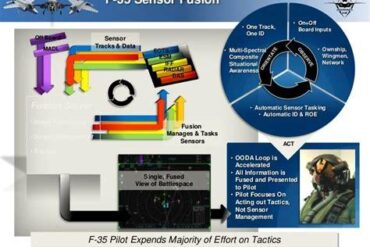
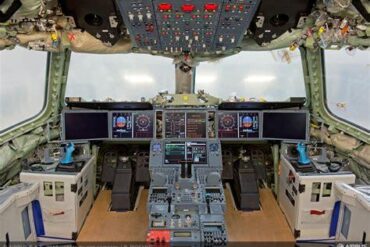
The DVEPS architecture is centered around advanced sensor fusion, which melds inputs from multiple sensors into a single, intuitive 3D spatial image projected directly into the pilot’s field of view. This system eliminates the traditional reliance on out-the-window visuals, replacing it with a sensor-generated synthetic environment that’s always visible, regardless of external conditions.
How DVEPS Works: Core Technologies and Capabilities
At its core, DVEPS synthesizes real-time data from a triad of high-performance sensors:
- Forward-Looking Infrared (FLIR): Captures heat signatures to identify terrain features and obstacles in total darkness or through obscurants like fog and smoke.
- Millimeter-Wave Radar: Penetrates heavy rain, snow, and other atmospheric interference to detect objects with high resolution.
- Light Detection and Ranging (LiDAR): Provides precise 3D mapping of the terrain ahead, especially useful for navigating narrow valleys or dense urban landscapes.
This multi-sensor fusion is processed in real-time by an advanced onboard mission computer, which assembles a unified virtual scene and feeds it into a helmet-mounted display (HMD) system. This ensures that pilots retain critical spatial orientation and obstacle awareness—even when visual reference points vanish.
Operational Context: Degraded Visual Challenges in Rotary-Wing Flight
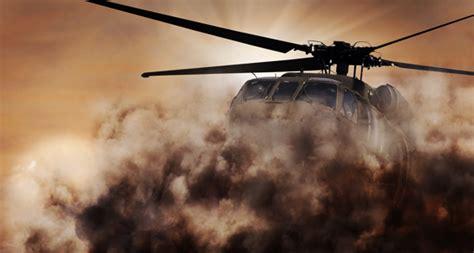
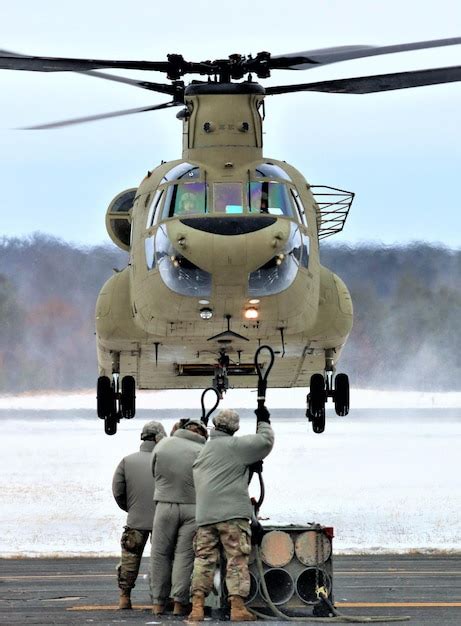
The U.S. military has long struggled with the phenomenon of brownouts and whiteouts, where the powerful downwash from helicopter rotors kicks up clouds of dust or snow, instantly erasing the pilot’s view of the ground. These conditions are the leading cause of rotorcraft mishaps in combat and tactical operations.
Such scenarios are particularly dangerous during vertical landings in confined zones, such as mountaintop LZs, urban rooftops, or forest clearings. Without visibility, pilots risk spatial disorientation, collision with unseen terrain features, or controlled flight into terrain (CFIT)—all deadly outcomes. DVEPS offers a life-saving alternative by generating a continuous, high-fidelity synthetic visual reference, regardless of atmospheric interference.
Mission Versatility and Platform Integration
Sierra Nevada’s DVEPS is engineered for seamless integration into key rotary-wing platforms widely used by Special Operations forces:
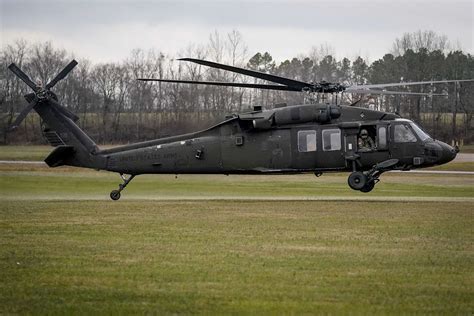
- UH-60 Black Hawk: The workhorse of U.S. Army aviation, used in transport, medevac, and assault missions.
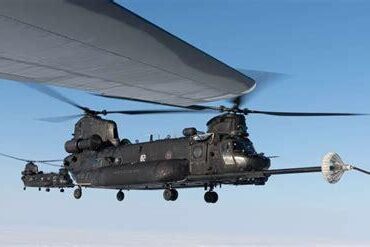
- CH-47 Chinook: Heavy-lift tandem rotor aircraft ideal for transporting troops and cargo in complex terrain.
- AH-64 Apache: The U.S. Army’s premier attack helicopter, requiring precision navigation in close air support and anti-armor roles.
This level of compatibility allows USSOCOM to standardize advanced pilotage capabilities across its rotorcraft fleet, enhancing interoperability and reducing training and maintenance burdens.
Sensor Fusion: More Than Just Hardware
What sets DVEPS apart is not just the diversity of its sensors, but the sophistication of its fusion algorithms. These algorithms continuously merge data from disparate sources, identify terrain contours, assess relative motion, and recognize potential hazards. By leveraging machine learning and obstacle avoidance intelligence, DVEPS enables pilots to execute landings with surgical precision—even when they cannot see the landing zone with the naked eye.
The mission computer also interfaces with aircraft navigation systems, ensuring terrain-following flight and generating warnings for near-field obstructions, such as power lines, tree canopies, and rocky outcrops. The result is a cockpit environment where risk is mitigated through real-time, sensor-informed decision-making.
A Multi-Year Commitment to Enhanced Capabilities
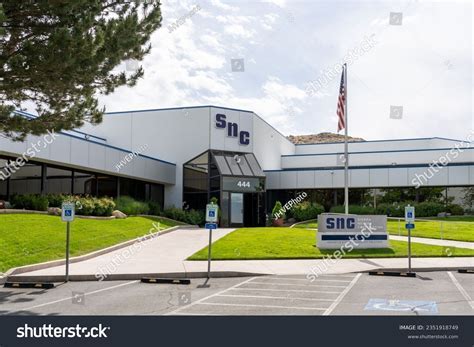
Under the terms of the new agreement, Sierra Nevada will deliver DVEPS units and sustainment support through June 2030, with options extending the contract to November 2030. The work will be conducted at Sierra Nevada’s facility in Sparks, Nevada, a hub for next-generation avionics development.
In addition to producing the avionics hardware, the contract includes contractor logistics support (CLS)—ensuring that deployed units remain functional, up-to-date, and combat-ready across various theaters of operation. Notably, the current production phase excludes the infrared camera lens sensor, possibly due to separate procurement streams or mission-specific modularity.
Strategic Implications for U.S. Special Operations
The fielding of DVEPS across the Special Operations aviation community aligns with broader strategic shifts in U.S. defense posture. In recent years, USSOCOM has placed increased emphasis on rapid insertion and extraction missions in denied or remote areas—operations where environmental unpredictability can become a tactical disadvantage.
By giving pilots the tools to effectively see through obscurants, navigate at low altitudes, and land without visual confirmation, DVEPS restores a vital tactical edge. This is especially critical in the era of peer adversaries, where electronic warfare, aerial denial, and GPS jamming are real and growing threats.
DVEPS contributes to survivability not just by improving flight safety, but also by enabling covert night operations, minimizing exposure to enemy fire, and reducing reliance on prepared airfields or daylight conditions.
Looking Ahead: DVEPS and the Future of Military Aviation
As military forces confront increasingly complex operational environments, systems like DVEPS represent the future of aviation safety and effectiveness. With emerging threats spanning from Arctic conditions to urban mega-cities, the ability to “see” without traditional sight becomes a non-negotiable requirement.
Sierra Nevada’s partnership with USSOCOM positions it at the forefront of this transformation, as the DVEPS project sets a benchmark for sensor-integrated synthetic vision in rotary-wing aviation. The system’s modularity also opens the door to future enhancements—such as integration with autonomous navigation systems, AI-assisted decision support, and real-time mission re-tasking.
As the Army and Special Operations forces continue to adopt next-generation vertical lift (NGVL) platforms, it is likely that systems like DVEPS will be foundational—not optional—components of the rotary-wing battlespace.
For more information on the Degraded Visual Environment Pilotage System, visit Sierra Nevada Corporation or USSOCOM.