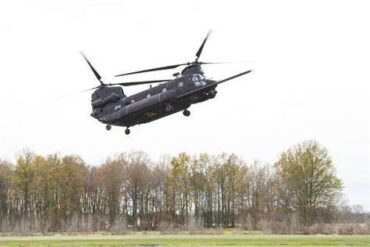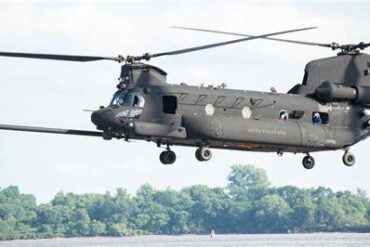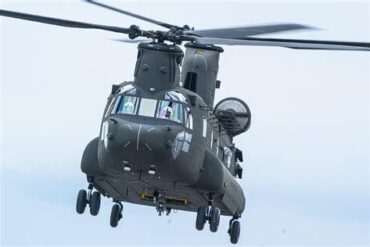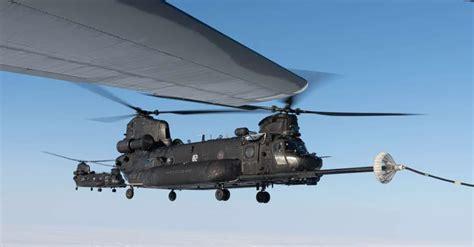
The MH-47G Chinook stands at the apex of military rotary-wing aviation, purpose-built to execute the most demanding and clandestine missions undertaken by the U.S. Army Special Operations Aviation Command (USASOC). Developed by Boeing, this special operations variant of the legendary CH-47 Chinook is a cornerstone of the 160th Special Operations Aviation Regiment (SOAR), also known as the “Night Stalkers.” Its versatility, endurance, and battlefield survivability place it among the most formidable vertical lift platforms in existence.
Origins and Role in Special Operations
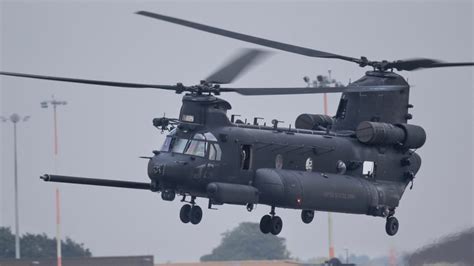
Derived from the CH-47 Chinook’s rugged airframe, the MH-47G was extensively re-engineered to meet the nuanced demands of special operations forces (SOF). First delivered in September 2014, the MH-47G is specifically designed for long-range, low-level, and all-weather missions, day or night. These include the transportation of troops, vehicles, equipment, and critical supplies, as well as civil and humanitarian aid missions in hostile or remote environments.
Its advanced avionics, aerial refueling capability, and tactical enhancements make it uniquely suited for missions requiring deep penetration into enemy territory, rapid infiltration and exfiltration of SOF units, and sustained operations in denied or austere regions. It remains unmatched in heavy-lift support under combat conditions.
Next-Generation Design and Airframe Enhancements
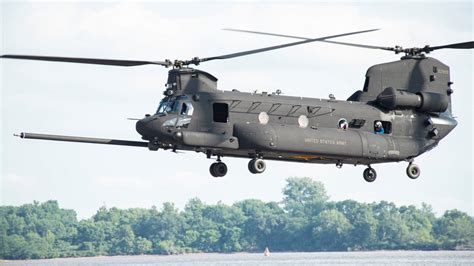
The MH-47G features a monolithic, machine-framed fuselage, engineered for structural integrity and reduced weight. Long-range auxiliary fuel tanks are integrated into the frame, dramatically extending operational range. An extendable aerial refueling probe enables mid-air refueling from fixed-wing tankers, pushing the boundaries of its mission radius to 630 km.
Internally, the helicopter is equipped with a rear loading ramp that supports the rapid deployment and retrieval of troops, vehicles, and supplies. Along the fuselage’s port side, a gunner’s window and firing port offer defensive firepower and situational awareness. The aircraft can also be outfitted with Special Operations mission kits, including:
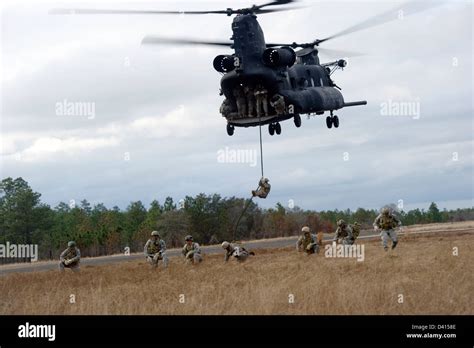
- Fast Rope Insertion Extraction System (FRIES)
- Special Patrol Insertion and Extraction System (SPIES)
- Rope ladders and rescue hoists
- Personnel Location System (PLS)
These features make the MH-47G a multi-domain enabler, offering tactical flexibility in land, maritime, and urban operational environments.
Physical Specifications and Load Capacity
The fuselage measures 15.9 meters in length and 4.8 meters in width. When the rotors are fully extended, the aircraft spans an imposing 30.18 meters. It is capable of operating at a maximum gross takeoff weight of 24,494 kg, while delivering a useful payload of up to 11,340 kg—a testament to its immense lift capability and robust design.
This heavy-lift capacity allows it to transport light armored vehicles, artillery systems, fuel pods, and fully equipped SOF teams, making it indispensable for mission-critical resupply and force projection.
Advanced Avionics and Situational Awareness Systems
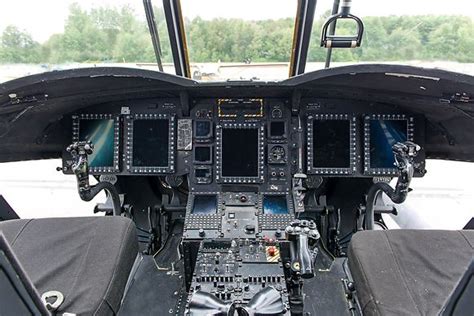
Central to the MH-47G’s superiority is its digitally integrated cockpit, designed for full compatibility with night vision goggles (NVG) and optimized for pilot efficiency under stress. The cockpit houses two pilots in a side-by-side configuration, enhanced with the following key systems:
- Five liquid crystal multi-function displays (MFDs)
- Two control display units (CDUs)
- Digital moving map system
- Forward-looking infrared (FLIR) sensor
- Electro-optical camera under the nose
- Multi-mode radar for terrain tracking
The avionics suite is powered by the Common Avionics Architecture System (CAAS), providing seamless integration of navigation, communication, and sensor systems. Additional systems include:
- GPS and inertial Doppler navigation
- Automatic target hand-off system
- Dual digital data buses
- Rockwell Collins LF automatic direction finder
These avionics allow the aircraft to operate below radar level in adverse weather, execute precision landings in near-zero visibility, and conduct synchronized multi-aircraft missions deep in hostile territory.
Cutting-Edge Communications Capabilities
The MH-47G is configured for joint and coalition force integration, equipped with:
- High-frequency (HF) radio
- Single-channel ground and airborne radio system (SINCGARS)
- Four UHF/VHF radios
- Blue Force Tracking system
- IFF transponder
- Digital inter-communication system (DICS)
These robust communication layers ensure real-time command and control, interoperability with other aircraft and ground units, and reliable coordination during high-risk, time-sensitive operations.
Armament and Defensive Countermeasures
In hostile environments, survivability is paramount. The MH-47G is armed with:
- Two M134 7.62mm electrically-operated miniguns
- Two M240 7.62mm belt-fed machine guns
These weapon systems are mounted strategically at the forward and rear crew stations, offering 360-degree coverage during insertion and extraction maneuvers.
For defense against guided threats, the MH-47G is equipped with a Common Missile Warning System (CMWS), a radio frequency countermeasures suite, and laser warning receivers. Additionally, XM216 dark flares provide enhanced deception against infrared-guided missiles, significantly increasing mission survivability.
High-Powered Engines and Performance Metrics
The twin-engine configuration comprises Honeywell T55-GA-714A turboshaft engines, each delivering an output of 3,529 kW. These engines are fitted with infrared exhaust suppressors, reducing the thermal signature and minimizing detectability by heat-seeking munitions.
With a fuel capacity of 7,828 liters, the MH-47G achieves a maximum speed of 315 km/h, enabling rapid ingress and egress from hostile zones. The aircraft’s range and speed allow it to outpace threats, complete deep strike logistics support, and evacuate personnel with extreme efficiency.
MH-47G Block II: Elevating Special Operations to the Future
In July 2018, Boeing was awarded a $26.9 million IDIQ contract for MH-47G Block II development. This was followed by a $194 million contract in June 2019 for the production and delivery of Block II airframes to USASOC. These upgraded models feature structural improvements, enhanced lift systems, and more efficient fuel handling technologies, further extending mission capabilities.
The modernization initiative aims to supply a fleet of 61 MH-47Gs, combining remanufactured airframes with new-build aircraft, ensuring the Night Stalkers remain equipped with cutting-edge capabilities.
Strategic Importance and Battlefield Impact
The MH-47G is not merely a transport asset—it is a force multiplier. Its combination of payload, speed, endurance, and combat survivability enables commanders to deploy SOF units with surgical precision. The aircraft’s quiet insertion technologies and wide-ranging battlefield interoperability contribute directly to the success of joint-force operations, both domestically and in international theaters.
Whether supporting counterterrorism missions in the Middle East, extracting hostages behind enemy lines, or delivering relief in disaster-struck regions, the MH-47G consistently demonstrates the capability to deliver lethality, agility, and humanitarian support wherever needed.
Conclusion: A Legendary Workhorse Reinvented for Shadow Missions
The MH-47G Chinook is a marvel of modern military aviation, carefully evolved from a logistics platform into a tactical SOF spearhead. Its capabilities are not just technical—they are strategic, enabling operations that shape global events in silence and with precision.
Backed by robust engineering, elite crew training, and continuous modernization, the MH-47G stands as a testament to what is possible when mission demands are met with uncompromising innovation. It is not just a helicopter—it is a symbol of elite reach, power projection, and unwavering resolve in the realm of special operations.