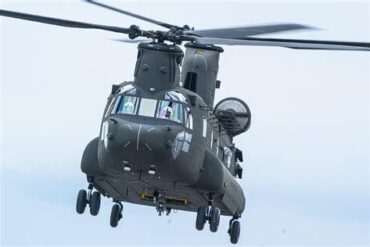
The Boeing CH-47 Chinook has served as the backbone of U.S. Army heavy-lift aviation for more than six decades. Since entering service in 1961, the tandem-rotor helicopter has transported troops, artillery, armored vehicles, humanitarian aid, and special operations forces across virtually every major conflict involving the United States. Few military aircraft have enjoyed such remarkable longevity while remaining operationally relevant.
Yet modern warfare is changing rapidly. The U.S. Army is increasingly preparing for conflicts spanning enormous distances, particularly throughout the Indo-Pacific, where speed, survivability, and operational reach matter just as much as raw lifting power. That strategic shift has sparked widespread discussion about the aircraft replacing the Chinook, even though no direct successor currently exists.
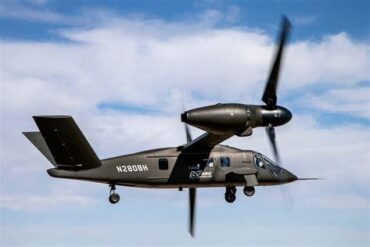
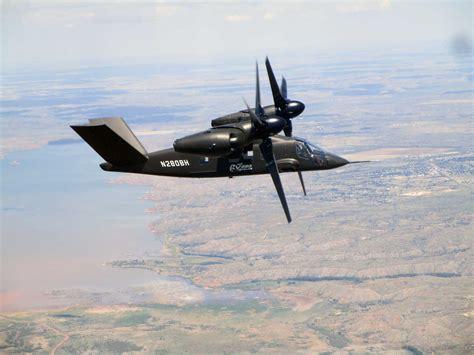
Rather than designing another heavy-lift helicopter, the Army appears to be embracing a different philosophy altogether. The centerpiece of that future is the Bell V-280 Valor, recently designated the MV-25, a revolutionary tiltrotor aircraft that combines helicopter flexibility with airplane-like performance. Although it cannot match the Chinook’s enormous payload, it delivers advantages that conventional helicopters simply cannot.
The result is not necessarily a one-for-one replacement, but rather an entirely new approach to vertical lift operations that could reshape Army aviation for decades.
Why The Chinook Still Has No Official Replacement
Despite persistent speculation, the U.S. Army has not launched a dedicated program to replace the CH-47 Chinook. Unlike the aging UH-60 Black Hawk, which is being succeeded through the Future Long Range Assault Aircraft (FLRAA) program, the Chinook remains firmly embedded within the Army’s long-term force structure.
There are good reasons for that decision. The Chinook continues to outperform every operational Western helicopter in heavy-lift missions. It can carry artillery pieces, light armored vehicles, engineering equipment, and large external cargo loads that no other rotorcraft currently in U.S. service can match. Its versatility has made it indispensable not only for conventional military operations but also for disaster relief, humanitarian assistance, and elite special operations missions.
Instead of pursuing a clean-sheet replacement, the Army has chosen to modernize the platform extensively. The newest CH-47F Block II introduces increased maximum gross weight, strengthened airframe components, upgraded rotor blades, an improved fuel system, and significantly more capable Honeywell T55-714C engines that produce greater power while consuming less fuel.
These improvements ensure that the Chinook remains highly relevant well into the 2030s and potentially beyond. Much like the famous B-52 bomber, the helicopter has proven so capable within its intended role that replacing it outright has become far more difficult than continually improving it.
The Strategic Shift Behind Army Aviation Modernization
The absence of a dedicated Chinook successor does not mean Army aviation is standing still. Instead, military planners are fundamentally rethinking how future air assault operations should be conducted.
Traditional helicopter doctrine emphasized carrying maximum payloads over relatively short distances. Future conflicts, however, may require aircraft to travel hundreds of nautical miles between isolated island chains while avoiding sophisticated enemy missile systems and radar networks.
Modern battlefields increasingly demand aircraft capable of operating faster, farther, and with greater survivability than legacy helicopters.
This strategic evolution is especially evident in planning for the Pacific theater. Vast stretches of ocean, dispersed islands, and limited infrastructure create logistical challenges unlike those encountered during decades of operations in Europe or the Middle East. Aircraft must deploy forces quickly across enormous distances while minimizing exposure to advanced integrated air defense systems.
These operational realities have shifted emphasis toward aircraft offering exceptional speed and range rather than simply maximizing cargo capacity.
Meet The Bell V-280 Valor: The Army’s Next-Generation Tiltrotor
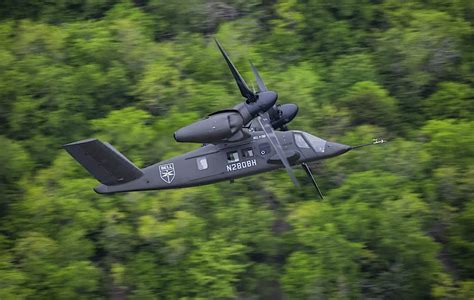
The Bell V-280 Valor emerged as the winner of the Army’s Future Long Range Assault Aircraft (FLRAA) competition, defeating competing concepts to become the future successor to the UH-60 Black Hawk.
Although the Valor is not officially replacing the Chinook, many analysts believe it could gradually assume missions currently performed by heavier helicopters, particularly those emphasizing rapid troop insertion over maximum cargo movement.
The aircraft represents a dramatic leap beyond conventional helicopter design.
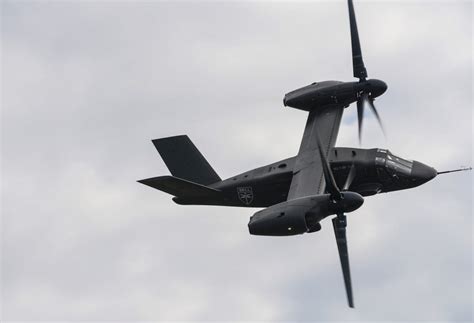
Unlike traditional rotorcraft, the V-280 uses tiltrotor technology, allowing it to take off and land vertically before rotating its propellers forward for efficient high-speed cruise. Once transitioning into airplane mode, it flies more like a turboprop aircraft than a helicopter, combining vertical flexibility with fixed-wing efficiency.
The concept itself is not new, having first appeared operationally with the Bell-Boeing V-22 Osprey. However, the Valor incorporates numerous engineering improvements intended to simplify maintenance while enhancing safety and reliability.
Perhaps the most significant difference lies in its drivetrain architecture. Whereas the V-22 rotates entire engine nacelles, the V-280 keeps its engines fixed while only the gearboxes and propellers rotate. This simpler arrangement reduces mechanical complexity, decreases maintenance requirements, lowers aircraft weight, and eliminates several potential failure points.
Bell also redesigned the transmission system, removing the complicated mid-wing gearbox required by the Osprey. Fewer moving components translate into easier servicing, improved reliability, and lower operating costs over the aircraft’s service life.
Performance That Conventional Helicopters Cannot Match
Where the V-280 truly distinguishes itself is performance.
Its maximum speed approaches 300 knots, with an efficient cruise speed around 280 knots. By comparison, the Chinook typically cruises at roughly 150 knots and reaches a maximum speed near 170 knots.
That extraordinary performance nearly doubles the operational tempo available to commanders.
Range improvements are equally dramatic. Under combat conditions, the Chinook generally operates within approximately 400 nautical miles before requiring refueling. The Valor extends that combat radius to roughly 800 nautical miles, effectively doubling operational reach without aerial refueling.
Its ferry range stretches beyond 2,000 nautical miles, enabling deployments across enormous geographic regions with relatively few fuel stops.
The aircraft also offers impressive climb performance, reaching approximately 4,500 feet per minute while operating at service ceilings around 25,000 feet.
Such capabilities dramatically reduce response times, allowing forces to arrive faster while spending less time vulnerable during transit.
Where The Chinook Still Dominates
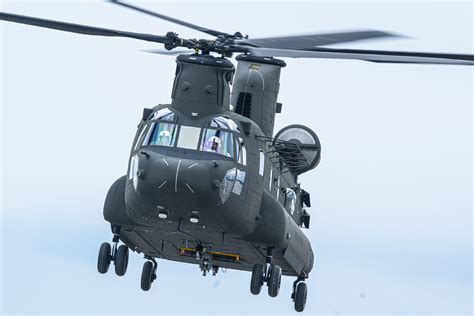
Despite its revolutionary capabilities, the V-280 cannot replace every Chinook mission.
Heavy lifting remains the Chinook’s defining strength.
The CH-47 can sling-load approximately 26,000 pounds, transporting vehicles, artillery, engineering equipment, fuel containers, or oversized cargo that few aircraft can handle.
The V-280’s external lifting capability is substantially lower at roughly 10,000 pounds.
That difference fundamentally changes mission planning.
Large engineering projects, bridge construction, armored vehicle transport, and massive logistics movements still require aircraft possessing enormous lifting capacity. Until another heavy-lift platform enters service, the Chinook remains unmatched in these roles.
Cargo volume presents another limitation. The Chinook’s spacious fuselage accommodates bulky equipment that simply cannot fit inside the Valor’s cabin, regardless of weight.
Consequently, the Army is unlikely to eliminate the Chinook solely because the Valor enters widespread service.
Instead, both aircraft may complement one another by performing missions aligned with their unique strengths.
Why Speed May Matter More Than Payload
Modern warfare increasingly rewards speed over brute strength.
During operations against advanced adversaries, helicopters flying slowly across contested airspace remain exposed to enemy fighters, long-range surface-to-air missiles, electronic warfare systems, and increasingly capable drones.
The faster an aircraft completes its mission, the shorter its exposure to hostile threats.
The Valor’s dramatically higher cruise speed compresses mission timelines while allowing commanders to launch assaults from significantly greater stand-off distances.
This operational flexibility complicates enemy planning and increases survivability for both aircraft and personnel.
Additionally, Bell incorporated reduced radar cross-section features and infrared suppression technologies into the design, making detection more difficult compared with conventional helicopters.
Combined with exceptional range, these features allow commanders to distribute forces across broader operational areas while remaining unpredictable.
Why The Indo-Pacific Could Define The Valor’s Success
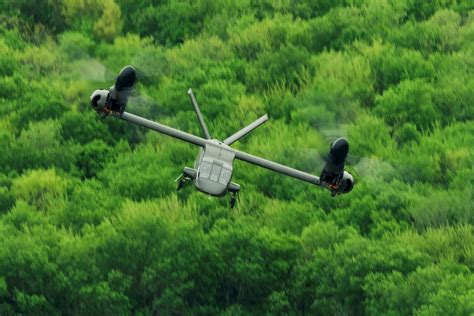
No theater illustrates the Valor’s advantages better than the Indo-Pacific.
Future military operations across the region may require forces to maneuver rapidly between islands separated by hundreds of miles of open ocean.
Traditional helicopters struggle under such conditions because their limited speed and range often require forward refueling bases or transport aboard larger ships.
The Valor changes that equation.
Its ability to launch vertically from austere landing zones before transitioning into airplane-speed cruise enables rapid movement across dispersed archipelagos while reducing dependence on extensive logistical infrastructure.
Should conflict occur around strategically important regions such as the South China Sea, commanders would possess far greater operational flexibility than legacy helicopter fleets could provide.
The aircraft’s long range also supports distributed operations, allowing smaller units to operate independently while remaining connected through rapid aerial mobility.
How The Valor Fits Into The Army’s Future Aviation Strategy
The V-280 represents only one component of a much broader transformation underway across Army aviation.
Future force design emphasizes highly mobile formations supported by autonomous systems, precision long-range weapons, artificial intelligence, and extensive unmanned aircraft integration.
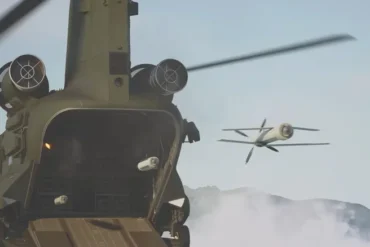
Drone swarms are expected to conduct reconnaissance, electronic warfare, and strike missions ahead of manned aircraft. Brigade-level units will increasingly deploy inexpensive autonomous systems capable of gathering intelligence while engaging enemy targets.
Initiatives focused on fielding thousands of low-cost, attritable drones reflect this changing philosophy.
Within this evolving ecosystem, fast crewed aircraft like the Valor become force multipliers rather than isolated transport platforms. Their ability to rapidly reposition troops, command elements, sensors, and precision weapons complements the Army’s broader modernization strategy.
Instead of relying solely on heavy helicopters transporting massive loads, future operations may prioritize speed, dispersion, and agility across widely separated battlefields.
Could The V-280 Eventually Replace The Chinook?
The answer is both yes and no.
Officially, the Bell V-280 Valor is replacing the UH-60 Black Hawk—not the CH-47 Chinook.
Operationally, however, the picture is more nuanced.
Many troop transport missions currently assigned to Chinooks could eventually migrate toward the faster tiltrotor aircraft, particularly in theaters where speed and range outweigh lifting capacity.
Yet heavy logistics remain a different challenge entirely.
No existing or planned aircraft currently matches the Chinook’s combination of payload, cargo volume, and battlefield versatility. Unless a future heavy-lift program emerges, the Army will almost certainly continue operating the Chinook alongside newer aircraft for many years.
Rather than witnessing a direct replacement, Army aviation appears headed toward a mixed fleet in which each platform performs specialized missions.
The Chinook continues moving the heaviest cargo.
The MV-25 Valor rapidly inserts forces across immense distances.
Together, they represent two complementary solutions tailored for very different operational demands.
The Future Of Heavy-Lift Aviation
Predicting the eventual fate of the Chinook remains difficult because technological innovation continues at an extraordinary pace. Advanced tiltrotors, autonomous cargo aircraft, and experimental concepts such as heavy seaplane transports may eventually alter military logistics in ways that are difficult to envision today.
For now, however, the Chinook remains one of the most capable helicopters ever built. Continuous modernization ensures it will remain indispensable for missions requiring unmatched lifting power, while the Bell V-280 Valor introduces a new era defined by unprecedented speed, extended reach, and improved survivability.
Instead of replacing one legendary aircraft with another, the Army is creating a more flexible aviation ecosystem where different platforms excel in different missions. The Chinook will continue carrying the heaviest loads, while the MV-25 Valor becomes the fast-moving spearhead of future air assault operations.
That combination reflects the realities of modern warfare: victory increasingly depends not only on how much equipment can be carried, but also on how quickly forces can arrive, how far they can travel, and how effectively they can survive in increasingly contested skies.