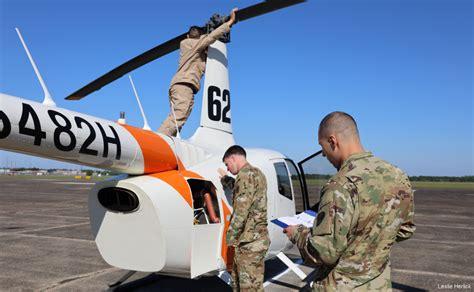
The United States Army is preparing for a major shift in how it trains future helicopter pilots. In a move designed to modernize instruction, reduce operational costs, and improve training efficiency, the Army has narrowed the Flight School Next competition to two finalists: Bell Aircraft Corporation and M1 Support Services. The initiative represents a strategic transition from government-operated flight training toward a partially outsourced training ecosystem, integrating advanced analytics, modern helicopters, and cutting-edge simulation technologies.
This transformation comes as the Army evaluates the future of its rotary-wing training pipeline at Fort Rucker, Alabama, the primary training hub for Army aviators. With aging training platforms nearing retirement and operational demands evolving rapidly, the Army is searching for a scalable system capable of preparing between 900 and 1,500 helicopter pilots annually while aligning with the realities of modern military aviation.
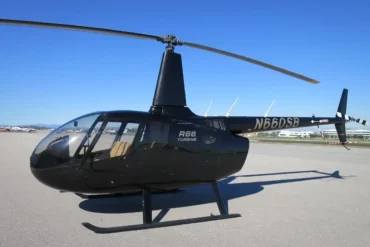
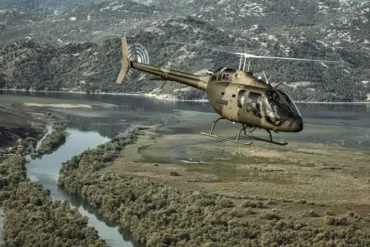
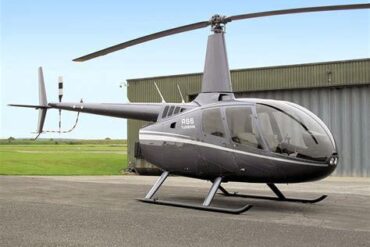
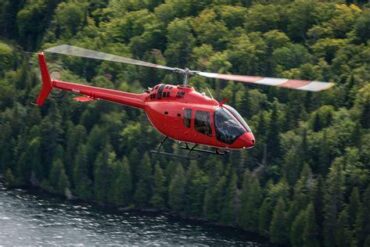
The decision to move forward with Bell and M1 followed the elimination of Lockheed Martin from the competition. What remains is a head-to-head contest between two very different philosophies: Bell’s integrated military training platform built around the 505 Jet Ranger X, and M1’s streamlined training model centered on the Robinson R66 NxG helicopter.
Why the Army Is Replacing Its Current Training Helicopters
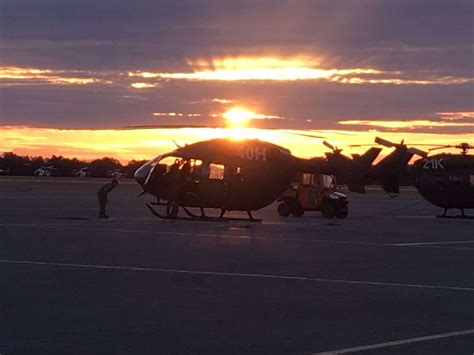
For decades, the Army’s primary helicopter training aircraft has been the Airbus UH-72A Lakota, a reliable but aging platform originally derived from the civilian Eurocopter EC145. While the aircraft has performed well in training roles, the broader training framework around it has remained largely unchanged since the late twentieth century.
The Army now faces two overlapping challenges. First, many of the helicopters used in training are approaching the limits of their operational service life, requiring increasing maintenance resources to keep them flightworthy. Second, the traditional training curriculum relies heavily on hour-based progression models, where students advance primarily based on accumulated flight hours rather than demonstrated mastery of specific skills.
Flight School Next aims to address both issues simultaneously. By outsourcing elements of the training pipeline, the Army expects to reduce operational costs and redirect funding toward emerging training technologies, including advanced simulators and data-driven performance tracking. Officials also envision a curriculum focused on proficiency-based progression, enabling high-performing students to advance faster while providing additional support to those who require more time to master key skills.
The transition to the new training model will occur gradually. In the first year, approximately 25% of incoming pilot candidates will train under the new system. By the fourth year, the program is expected to reach full implementation, with all new Army helicopter pilots beginning their training within the updated framework.
M1 Support Services and the Robinson R66 Training Concept
M1 Support Services enters the competition with a collaborative approach that combines several industry partners, including Robinson Helicopter Company, General Dynamics Information Technology, Quantum Helicopters, and the University of North Dakota Aerospace Foundation. Their proposal revolves around the Robinson R66 NxG, a turbine-powered helicopter designed to perform multiple training roles within a single platform.
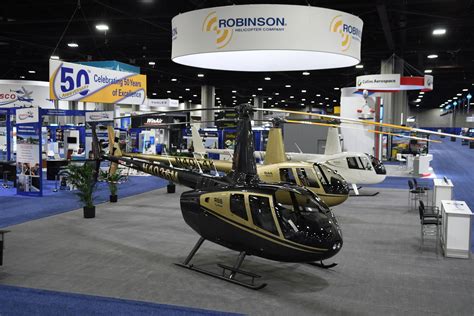
Unlike traditional training programs that rely on separate helicopters for primary and instrument training phases, M1 argues that the R66 can effectively perform both roles. This single-aircraft training model reduces logistical complexity and lowers operational costs while simplifying maintenance requirements.
The R66 platform is also integrated into a broader training framework built on data-driven analytics. Instead of adhering strictly to fixed training hour requirements, instructors can evaluate student performance using advanced metrics that measure proficiency across a range of flight skills. Students demonstrating strong aptitude can progress through the pipeline faster, while those requiring additional instruction receive targeted training support.
Early demonstration programs have already explored the potential of this model. In several pilot initiatives, trainees used Robinson helicopters to earn FAA Private Pilot and Instrument ratings before transitioning into military-specific flight training. The approach mirrors civilian aviation training methods while preserving the operational rigor required for military pilots.
M1’s proposal also benefits from its operational footprint at Fort Rucker. The company currently supports maintenance operations for more than 500 aircraft and manages approximately 400 daily training sorties, giving it extensive experience in the Army’s existing training environment.
Bell’s 505 Jet Ranger X: A Purpose-Built Military Trainer
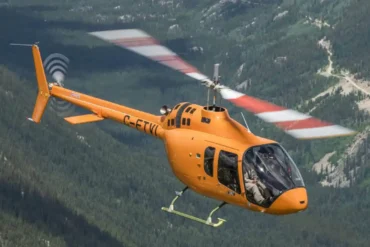
Bell’s competing proposal focuses on the Bell 505 Jet Ranger X, a modern light helicopter designed with training versatility in mind. The aircraft builds upon Bell’s long legacy in military aviation, which dates back to the early years of rotary-wing flight in the U.S. armed forces during the 1940s.
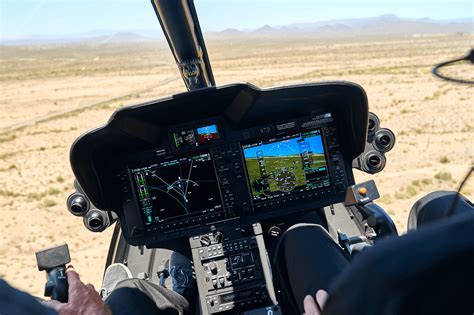
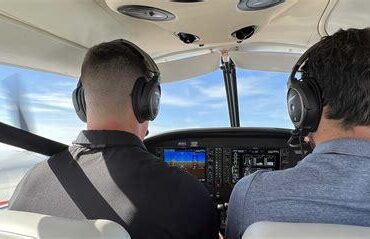
The 505 integrates glass cockpit avionics, digital navigation systems, and modern safety features while maintaining the hands-on flying characteristics necessary for teaching fundamental helicopter control. Bell positions the aircraft as an ideal bridge between civilian-style training helicopters and advanced combat platforms such as the Boeing AH-64 Apache.
One of the aircraft’s unique training features is its fly/idle switch, which allows instructors to simulate engine failures safely during flight. This capability enables students to practice emergency procedures without introducing unnecessary risk or increasing instructor workload during high-stress maneuvers.
Bell’s training solution extends far beyond the helicopter itself. The company has partnered with V2X, DigiFlight, Alpha-1 Aerospace, and TRU Simulation to develop an integrated training ecosystem combining live flight training with immersive simulation. TRU Simulation’s system includes a six-degree-of-freedom motion platform, replicating the physical dynamics of the 505 in virtual environments that allow students to rehearse complex procedures before entering the cockpit.
Bell also brings global experience to the program. The 505 Jet Ranger X is already used as a military training helicopter by several international operators, including the combat aviation branches of South Korea, Jordan, and the United Arab Emirates. This existing user base demonstrates the aircraft’s ability to support structured military training environments.
A New Era of AI-Enhanced Military Flight Training
Regardless of which proposal ultimately wins, the Flight School Next program signals a broader transformation in how the Army prepares helicopter pilots for modern combat environments. Both finalists are integrating Artificial Intelligence-powered virtual training systems, advanced simulators, and real-time analytics capable of monitoring pilot performance across thousands of training variables.

The redesigned curriculum will unfold in three major phases: Primary Flight Training, Instrument Flight Training, and Basic Combat Skills development. Each phase blends traditional flight instruction with digital simulation environments designed to accelerate learning while reducing training risk and aircraft wear.
For the Army, the stakes extend far beyond replacing a training helicopter. The service is attempting to build a next-generation aviation training pipeline capable of producing skilled rotary-wing pilots faster, more efficiently, and at lower cost. With the demand for aviation readiness continuing to grow across multiple operational theaters, the outcome of the Bell versus M1 competition could shape Army pilot training for decades to come.