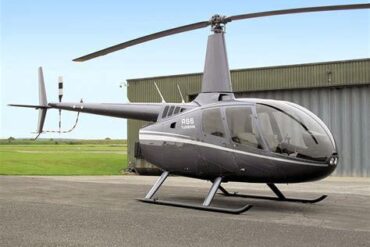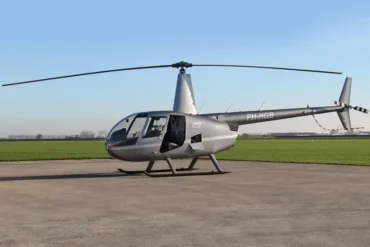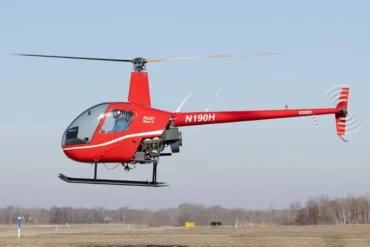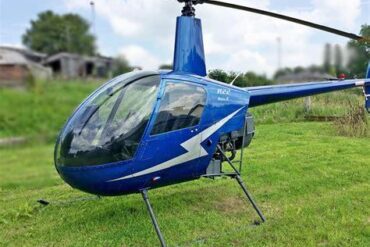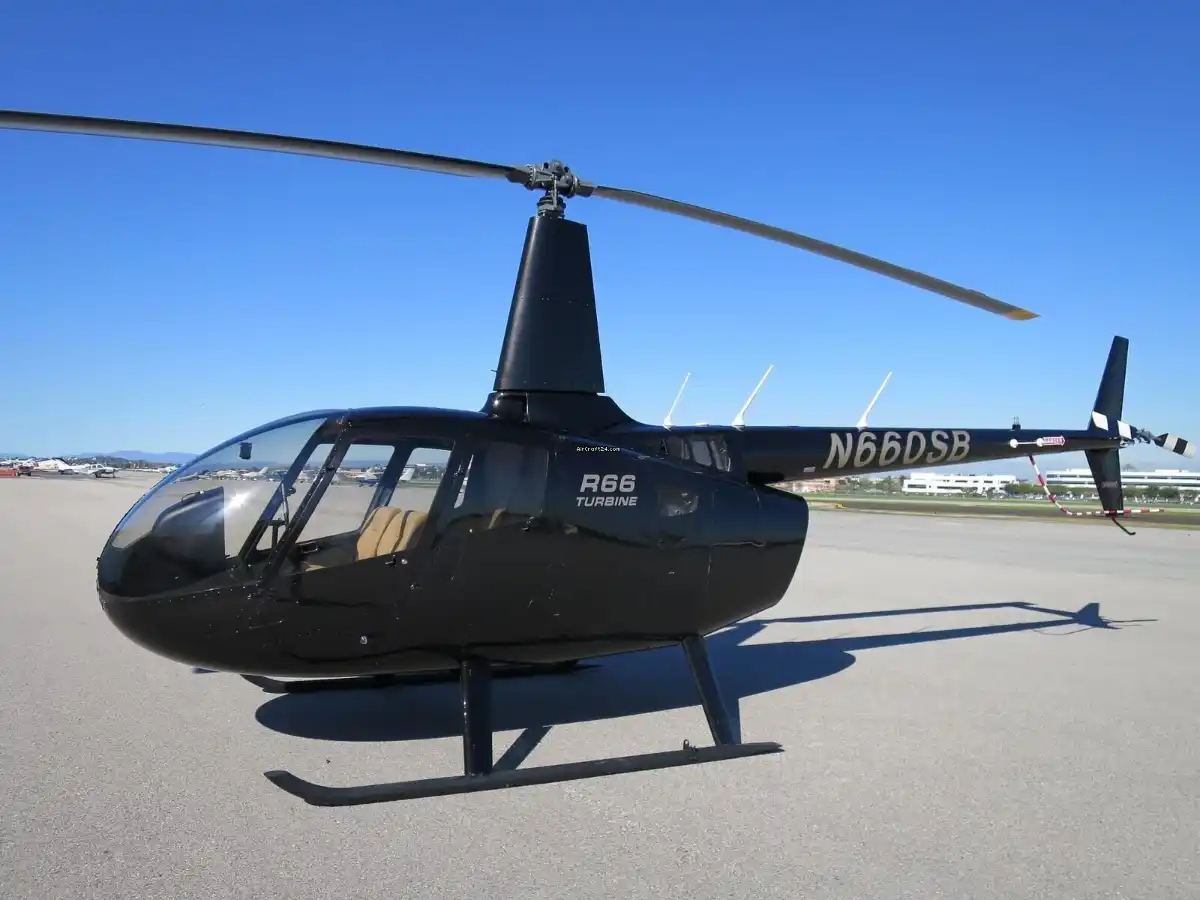
The Robinson R66 stands as a benchmark in the evolution of light turbine helicopters, reflecting over four decades of precision engineering by Robinson Helicopter Company. Officially certified by the Federal Aviation Administration (FAA) on October 25, 2010, the R66 redefined expectations in the light turbine segment with a new level of performance, reliability, and operational flexibility. Derived from the proven platform of the Robinson R44, the R66 distinguishes itself through its five-seat configuration, Rolls-Royce RR300 turboshaft engine, and dedicated cargo compartment—making it an ideal choice for personal use, commercial operators, and law enforcement agencies alike.
Development and Certification Milestones
Announced in 2007, the R66 marked a strategic leap for Robinson, transitioning from piston-powered designs to the more robust and capable turbine-powered architecture. While retaining the overall airframe familiarity of the R44, the R66 introduced a range of upgrades tailored to compete with larger, costlier turbine helicopters from manufacturers such as Bell Helicopter and Eurocopter (Airbus Helicopters).
By February 2010, Robinson began accepting pre-orders, signaling strong market anticipation. The production line moved swiftly from limited output to full-scale manufacturing by 2011. Robinson’s aggressive market entry was backed by strategic partnerships, including a decade-long agreement with Rolls-Royce to supply 100 RR300 engines annually—a testament to the expected scale of demand.
Certification followed swiftly across global markets:
- Russia in March 2013
- Canada in June 2013
- EASA (Europe) and CAAC (China) by mid-2014
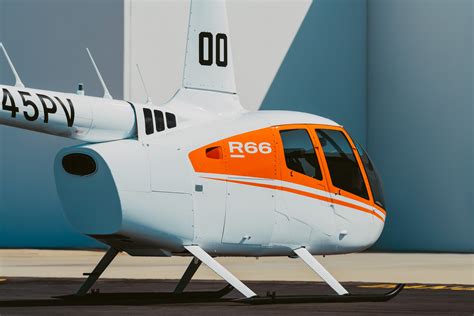
By 2015, production accelerated to three units per week, while over 70% of the total output was exported. The company celebrated its 700th R66 sale in December 2015, a number that soared past 1,500 units by early 2024. In August 2020, the milestone of the 1,000th R66 delivery was surpassed, solidifying its place as a global contender.
Design Philosophy and Technical Innovations
The R66 boasts a clean-sheet design grounded in simplicity, efficiency, and utility. Featuring a single-engine, two-blade main and tail rotor system, and fixed skid landing gear, the helicopter achieves a balance of agility and durability. The airframe is constructed using chromoly steel, aluminum alloys, and composite materials, ensuring both strength and weight efficiency.
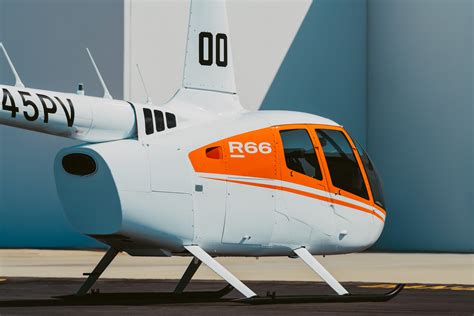
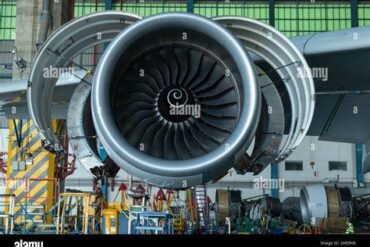
Where the R44 utilized a Lycoming O-540 piston engine, the R66 integrates the Rolls-Royce RR300 turbine, a purpose-built, lightweight powerplant that enhances performance while reducing maintenance complexity. The single-stage centrifugal compressor in the RR300 allows for lower operational costs and improved reliability over multi-stage turbine designs.
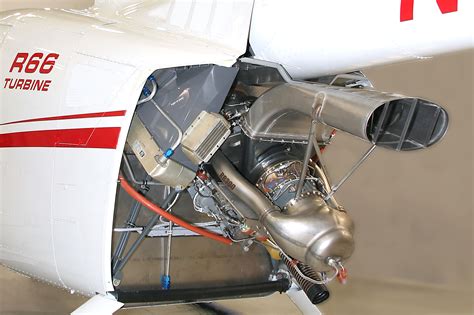
Key performance specifications include:
- Cruise Speed: 110 knots (130 mph / 200 km/h)
- Range: 350 nautical miles (400 mi / 650 km)
- Service Ceiling: 14,000 feet (4,300 meters)
- Fuel Consumption: 23 US gallons (87 L) per hour
The R66 uses Jet-A fuel, offering global availability and cost advantages, especially in markets where avgas is scarce or expensive.
Interior, Avionics, and Cockpit Features
One of the most practical additions to the R66 is its dedicated cargo hold, which can carry up to 300 pounds (140 kg)—a first for Robinson aircraft. Inside, the cabin accommodates five occupants in a single-row rear seat arrangement, enhancing passenger comfort and situational awareness for flight operations.
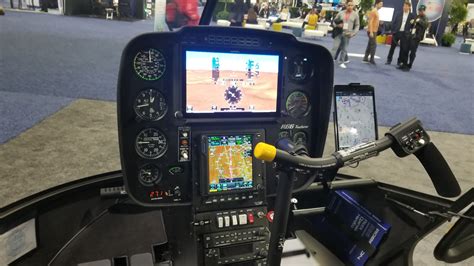
The cockpit features traditional electromechanical gauges, with the option to upgrade to a digital glass cockpit for enhanced situational awareness and instrument readability under dynamic lighting conditions. The flight controls are ergonomically designed for low pilot workload, mirroring Robinson’s signature simplicity and precision.
In 2017, the company introduced a new TB17 lithium-ion phosphate battery, weighing just 16 lb (7.3 kg) compared to the 42–52 lb predecessors. This weight reduction translates into increased payload flexibility and improved center-of-gravity management.
Variants and Specialized Applications
Beyond its standard configuration, the R66 has been adapted for law enforcement, media broadcasting, and military training roles. Each version integrates mission-specific hardware while retaining the helicopter’s core airframe.
- R66 Police Variant: Equipped with FLIR camera, searchlight, and external PA system
- R66 Marine: FAA-certified with pop-out emergency floats, designed for overwater operations
- R66 Newscopter (ENG): Certified in July 2017, with mounts for cameras and real-time broadcast systems
- TH-66 Sage: Developed for the U.S. Army as a cost-effective military trainer
These customizations, paired with the platform’s inherent reliability, make the R66 an optimal tool for multi-mission profiles. Retrofit kits, like cargo hooks and float systems, are available to tailor aircraft based on operator requirements. Notably, cargo hook approval in both Europe and the U.S. in 2015 increased the maximum gross weight from 2,700 lb to 2,900 lb, expanding utility operations.
Structural Safety and Flight Dynamics
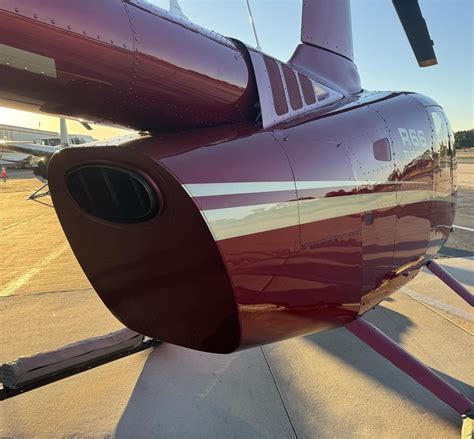
In response to emerging safety data, Robinson redesigned the tail section in the early 2020s, adding a symmetrical horizontal stabilizer. This critical enhancement reduces the risk of mast bumping, especially during low-G maneuvers, a known risk factor in two-bladed rotor systems. The updated empennage, FAA-certified, enhances roll stability during high-speed flight and turbulent conditions.
Ground Handling and Operational Flexibility
Despite its light classification, the R66 demands specific ground handling procedures due to its tail height and overall dimensions. The helicopter features rear-mounted skid brackets for attachable wheels that, when installed, cause the aircraft to tilt nose-down, allowing for controlled ground movement. However, due to weight and leverage, two-person operation is typically required unless using a tow cart or platform.
Tow carts range from manual jacks to battery-powered hydraulic lifts and are often used for hangar transport. For float-equipped R66s, wheels are mandatory for repositioning due to bracket inaccessibility.
Alternative options include mobile landing platforms that allow helicopters to land and be towed to remote hangars—common in private and corporate settings.
Market Reception and Global Operators
The R66 is operated worldwide by corporate users, law enforcement agencies, and private owners. In Indonesia, the National Disaster Management Authority employs the R66 for disaster response. The Nigerian Air Force also utilizes the platform, leveraging its agility for surveillance and training.

In the commercial sector, tour operators like Fly Karoo Air Services in South Africa use the R66 extensively for charter flights, praising its range, comfort, and fuel efficiency. With delivery milestones surpassing 1,500 units, the helicopter has established itself as the global leader in its weight class.
Frequently Asked Questions (FAQ)
Is the Robinson R66 suitable for private pilots?
Yes. The R66 was designed with operational simplicity in mind, and its systems are user-friendly for qualified private pilots. However, due to its turbine engine, transitioning from piston-powered aircraft may require additional training, typically offered through turbine transition programs.
How does the R66 compare to the Bell 206?
The R66 offers comparable performance to the Bell 206 JetRanger but at a significantly lower acquisition and operating cost. It also features a modern RR300 turbine, higher seating capacity, and improved fuel efficiency, making it a more economical option for light turbine users.
What is the fuel efficiency of the R66?
The R66 consumes approximately 23 US gallons (87 L) of Jet-A fuel per hour. This is higher than piston-engine helicopters like the R44, but on par with or better than most turbine models in its class due to the RR300’s design emphasis on simplicity and cost-effective operation.