In the vast timeline of aerospace engineering breakthroughs, the introduction of the Boeing T50 engine stands as a foundational leap in rotary-wing aircraft propulsion. Originally developed in the post-World War II era, this compact yet robust turboshaft engine became a catalyst for several firsts in aviation history, notably as the powerplant behind the Kaman K-225 and the Gyrodyne QH-50C — two helicopters that redefined what gas turbine technology could do.
The Genesis of the Boeing T50: From Turbojet Roots to Turboshaft Efficiency
The story of the T50 engine begins with the Boeing Model 500, a turbojet engine that marked Boeing’s early steps into turbine propulsion. Recognizing the versatility of this power unit, engineers began adapting its design to meet the evolving needs of helicopters. This transition led to the Model 502, a turboprop variant that laid the groundwork for what would become the T50 turboshaft engine.
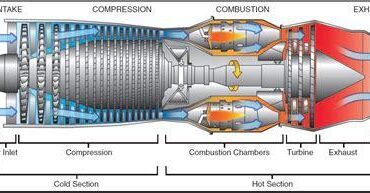
The move from turbojet to turboshaft was more than just a redesign — it was a response to the unique demands of rotary-wing aircraft, which required engines capable of producing high torque at relatively low RPMs. The T50 met this challenge head-on with a configuration that included a single-stage centrifugal compressor, two combustion chambers, and a single-stage axial turbine, which together produced around 300 shaft horsepower at 28,380 RPM.
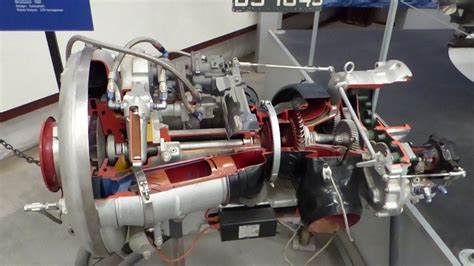
Despite its modest output by modern standards, the T50’s compact form factor — measuring just 40 inches long and 24 inches in diameter, with a weight of only 334 pounds — made it a game-changer for lightweight helicopter design. Its aluminum and rubber construction ensured both durability and minimal weight, ideal for the early, experimental rotorcraft of the 1950s and 60s.
Kaman K-225: The First Gas Turbine-Powered Helicopter
The Kaman K-225, developed by the Kaman Aircraft Corporation, earned its place in history as the first helicopter to fly with a gas turbine engine. Debuting between 1949 and 1951, this two-seat aircraft was a revolutionary platform that brought together an intermeshing twin-rotor configuration with cutting-edge powertrain technology.
Kaman’s decision to install the T50 was instrumental in proving the viability of turbine-powered helicopters, especially at a time when piston engines were the norm. The T50’s ability to deliver consistent power with minimal vibration gave the K-225 superior handling characteristics and mechanical simplicity compared to its contemporaries. Moreover, the engine’s reduced weight freed up payload capacity, enabling better efficiency and expanded mission versatility.
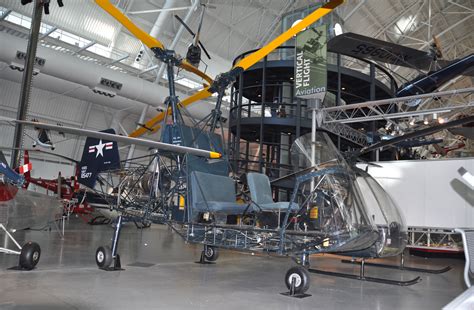
This breakthrough flight not only validated turbine engine application in helicopters but also laid the groundwork for subsequent military rotorcraft, including the Kaman HOK series used by the U.S. Marine Corps. The K-225 was more than a testbed — it was the bridge that carried vertical lift technology into the jet age.
Gyrodyne QH-50C: Pioneering Unmanned Rotorcraft Operations
While the T50 powered manned milestones, it also made its mark in unmanned aerial vehicle (UAV) history. The Gyrodyne QH-50C, designated DSN-3 by the U.S. Navy, was one of the first operational drone helicopters and among the earliest UAVs ever deployed.
Designed as an anti-submarine warfare (ASW) platform, the QH-50C was controlled remotely from surface ships and equipped to carry a formidable array of armaments, including rockets, guns, and even the Mark 57 nuclear depth bomb. Its reliability and compactness, largely thanks to the Boeing T50-BO-8A (Model 502-10VC) engine, allowed it to conduct missions too dangerous for manned aircraft.
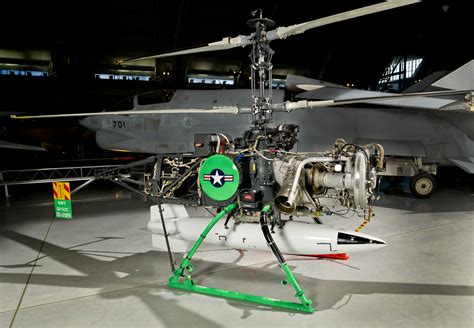
The 502-10VC variant was an enhanced version of the original T50, boasting improvements in component lifespan and thermal efficiency. In fact, it was the first U.S. turbine engine to receive a 150-hour operational certification, underscoring Boeing’s leadership in producing rugged and reliable aerospace hardware. With power ratings between 200 and 300 shaft horsepower, the QH-50C became a cornerstone of early UAV technology.
Technical Specifications and Design Features of the Boeing T50
To fully appreciate the T50’s impact, one must examine its specifications, which were finely tuned for the unique operational profiles of rotorcraft:
- Engine Type: Single-shaft turboshaft (converted from turbojet)
- Compressor: Single-stage centrifugal
- Combustion Chambers: Two
- Turbine: Single-stage axial
- Horsepower Output: ~300 shp
- RPM: 28,380
- Weight: 334 lbs (151 kg)
- Dimensions: 40 inches long, 24 inches diameter
- Materials: High-grade aluminum alloys, rubber seals
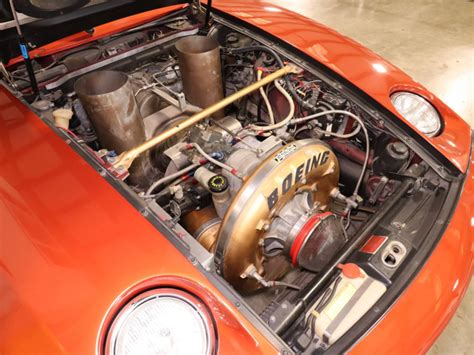
This combination of power, efficiency, and weight made the T50 suitable not only for helicopters but also for a variety of experimental platforms. Enthusiasts have even managed to fit the engine into a 1982 Porsche 928, highlighting its mechanical versatility and the niche appeal it continues to hold among aviation hobbyists.
Legacy and Influence on Future Turboshaft Development
The T50’s success had ripple effects across both military and civilian aviation sectors. Its operational reliability and performance benchmarks paved the way for a new class of turboshaft engines, inspiring models that would power Hueys, Black Hawks, and other iconic helicopters of the Cold War era.
Moreover, the T50 demonstrated the value of gas turbines in vertical flight applications. While piston engines dominated rotary-wing aircraft throughout the 1940s, the advent of the T50 showed that turbines could not only compete but also outperform in areas like maintenance, weight reduction, and smooth torque delivery.
The QH-50C’s long-term deployment — from the 1960s through the early 1980s — also underlined the T50’s operational reliability in unmanned systems. As militaries increasingly turned toward remote and autonomous vehicles, the Boeing T50 remained a trusted choice, enabling decades of technological experimentation.
Conclusion: A Turbine That Changed the Rotorcraft Game
While modern turboshaft engines have evolved to deliver thousands of horsepower with cutting-edge control systems and digital interfaces, the Boeing T50 remains a landmark in aviation history. It proved that lightweight turbine engines could be the future of rotary-wing aircraft, giving rise to helicopters that were faster, more reliable, and more versatile than ever before.
Its role in powering both the Kaman K-225 — the world’s first gas turbine helicopter — and the Gyrodyne QH-50C — one of the earliest UAVs — cements the T50’s place as a foundational engine in aerospace innovation. Whether as a historical footnote or a collector’s curiosity powering classic cars, the Boeing T50’s legacy continues to inspire engineers and enthusiasts alike.