A Critical Certification That Carries the Weight of Trust
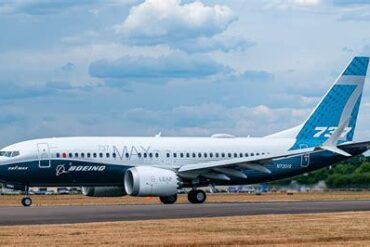
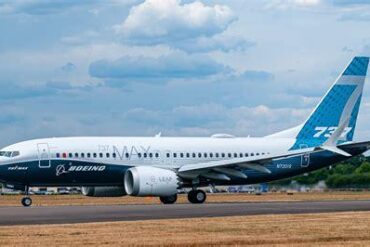
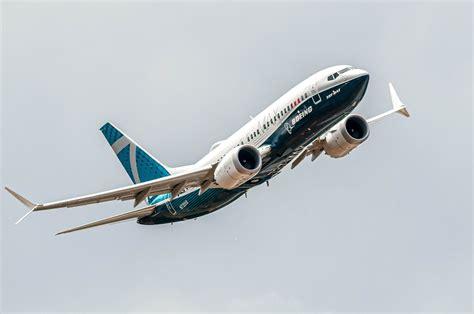
The certification of the Boeing 737 MAX 10 is far more than a technical milestone—it is a defining chapter in aviation’s effort to rebuild credibility. Years after the 737 MAX crisis, Boeing faces not only regulatory hurdles but also a deeply human challenge: restoring confidence among airlines, regulators, and millions of passengers. While the aircraft itself represents engineering evolution, the process behind its approval reflects something more profound—an intricate, relentless pursuit of safety shaped by thousands of professionals working in synchrony.
Unlike earlier certification programs, the MAX 10 exists under a microscope. Every calculation, simulation, and test is scrutinized with an intensity born from past failures. This has transformed certification from a procedural requirement into a global demonstration of accountability, where every detail must stand up to the highest level of examination.
The Invisible Workforce Behind Certification Excellence
The public often imagines test pilots as the central figures in aircraft certification, but their role is only one visible layer of a much larger ecosystem. Behind them stands a vast network of system engineers, safety analysts, data scientists, and compliance experts, each contributing to a process that is as analytical as it is exhaustive.
At the core of this effort lies the System Safety Assessment (SSA)—a rigorous framework that dissects every conceivable failure scenario. Engineers map out not just likely issues, but also hypothetical situations that may never have occurred in decades of aviation history. This approach ensures that even the most improbable risks are accounted for with robust mitigation strategies.
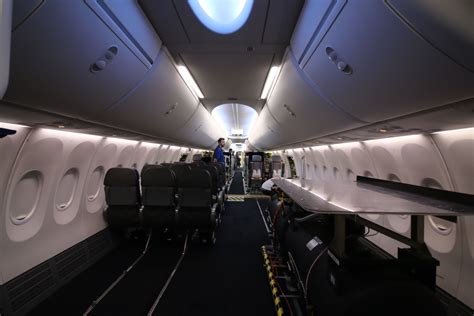
These assessments are not abstract exercises. They are grounded in real-world data, historical flight records, and predictive modeling, creating a layered safety net that must hold under every conceivable condition. The result is a level of scrutiny that transforms engineering into a discipline of anticipation, where imagination becomes as important as experience.
Engineering for the Impossible: One-in-a-Billion Scenarios
The Boeing 737 family, with nearly six decades of operational history, has accumulated over 482 million flight hours. This immense dataset provides a foundation for understanding how aircraft behave in the real world. Yet, certification demands going beyond what has been observed. Engineers must address scenarios with probabilities as low as one in a billion flight hours.
This requirement pushes the boundaries of engineering rigor. It demands not only advanced simulation tools but also a mindset that refuses to dismiss even the most remote possibilities. Each scenario is analyzed, documented, and validated, ensuring that backup systems perform flawlessly when needed.
The scale of this work is staggering. Individual SSA documents can extend to 15,000 pages, and the MAX 10 program requires 31 such submissions. These documents collectively form a comprehensive narrative of the aircraft’s safety architecture, detailing how every system behaves under stress, failure, and recovery conditions.
Parallel Paths: Where Flight Testing Meets Theoretical Precision
Certification is not a linear journey. It unfolds along parallel tracks where flight testing and theoretical analysis reinforce one another. Test flights provide empirical validation, while engineering models refine and predict outcomes that cannot be directly observed.
This dual approach ensures that no gap exists between theory and reality. When a test pilot pushes the aircraft to its limits, the data collected feeds back into engineering models, sharpening their accuracy. Conversely, theoretical insights guide the design of test scenarios, ensuring that every flight yields meaningful results.
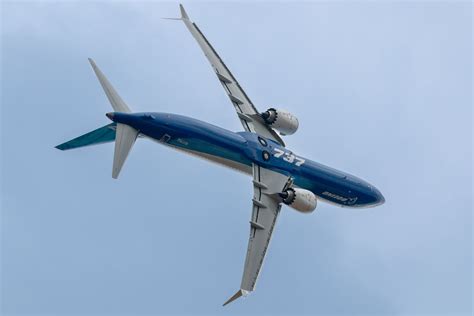
The interplay between these disciplines creates a dynamic feedback loop, where each discovery enhances the overall safety framework. It is a process defined not by isolated achievements, but by continuous refinement.
Learning from Crisis: A New Standard of Accountability
The shadow of the 2018 and 2019 737 MAX accidents, along with the Alaska Airlines door plug incident in 2024, has fundamentally reshaped Boeing’s approach. These events exposed vulnerabilities not only in design but also in communication and oversight. In response, the certification process for the MAX 10 has evolved into one of the most comprehensive in aviation history.
Regulators, particularly the Federal Aviation Administration (FAA), now demand unprecedented transparency. Boeing must demonstrate not just compliance, but a deep understanding of system behavior under extreme conditions. This has led to longer timelines, stricter documentation requirements, and a culture shift within the organization.
The phrase “seeing the light at the end of the tunnel” captures the current mood—progress is tangible, but it has been earned through years of meticulous effort and introspection.
Airline Demand Signals Confidence in the Future
Despite delays, the market demand for the Boeing 737 MAX 10 remains robust. With 1,431 aircraft on order, the program reflects strong confidence from global carriers. Airlines are not merely purchasing an aircraft; they are investing in a platform that promises efficiency, capacity, and renewed safety assurance.
Major operators such as United Airlines (165 orders), Alaska Airlines (163), American Airlines (115), and Ryanair (150) have committed heavily to the MAX 10. Their decisions underscore the aircraft’s strategic importance in modern fleets, particularly for high-density, short-to-medium-haul routes.
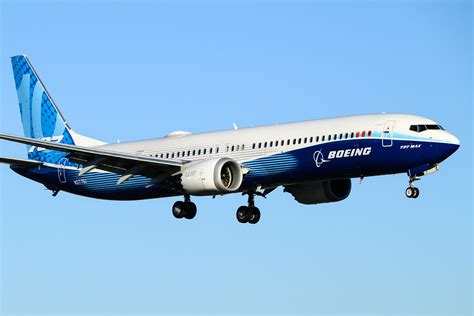
This demand also places additional pressure on Boeing to deliver a certified product that meets both operational and reputational expectations. Each order represents not just revenue, but a vote of confidence that must be justified through flawless execution.
The Human Effort That Defines Aviation’s Next Chapter
At its core, the story of the Boeing 737 MAX 10 certification is not about machines—it is about people. Thousands of individuals contribute their expertise, judgment, and persistence to a process that demands perfection. Their work often goes unseen, yet it forms the backbone of aviation safety.
This human dimension is what ultimately differentiates the MAX 10 program. It is a reminder that technology alone cannot guarantee safety; it is the discipline, rigor, and accountability of those who design and validate it that make the difference.
As certification approaches completion, the MAX 10 stands as both an aircraft and a symbol—of lessons learned, standards elevated, and trust painstakingly rebuilt.