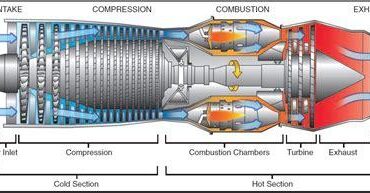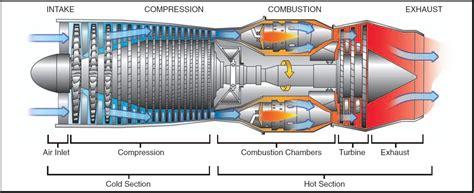
Gas turbine engines have revolutionized mechanical propulsion and power generation, becoming a cornerstone of modern engineering. Defined as continuous-flow internal combustion engines, they integrate three fundamental components: a compressor, combustor, and turbine. Together, these form the core—or gas generator—upon which different variants such as turbojets, turbofans, turboprops, and turboshafts are built. Each application introduces additional elements like air inlets, nozzles, afterburners, or external load couplings, tailoring the design for optimal thrust, shaft power, or hybrid outputs.
At the heart of a gas turbine engine’s operation lies the open Brayton cycle, a thermodynamic sequence consisting of isentropic compression, isobaric combustion, and isentropic expansion. Ambient air is compressed to high pressures, mixed with fuel, and combusted at nearly constant pressure. The resultant high-temperature gases expand through the turbine, extracting mechanical work to power the compressor itself and any additional load or thrust device. Depending on the configuration, the energy split between propulsive thrust and mechanical output varies, leading to specialized designs optimized for aviation, maritime, or stationary power generation.
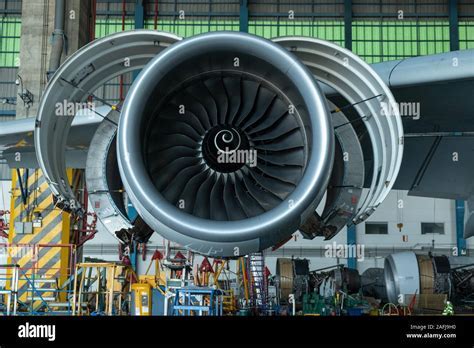
The breadth of applications for gas turbine engines is vast. Beyond their primary role in aircraft propulsion—spanning turbojets, high- and low-bypass turbofans, turboprops, and turboshafts—they drive ships, trains, armored vehicles, electric power generators, and critical industrial machinery like compressors and pumps. Furthermore, auxiliary power units (APUs) aboard aircraft and large vehicles rely on compact gas turbine designs to supply necessary electrical and pneumatic power when the main engines are offline.
The historical development of gas turbines is a tapestry woven over millennia. The earliest conceptual ancestor, Hero’s aeolipile (~50 CE), demonstrated basic jet propulsion principles. Innovations such as the Chinese Trotting Horse Lamp during the Song dynasty (~1000) and Da Vinci’s smoke jack (~1500) hinted at rotary motion driven by heated gases. In 1791, John Barber patented a primitive gas turbine, marking the transition toward serious technological pursuit.
The 19th century saw breakthroughs like Charles Parsons’ 1894 Turbinia, showcasing steam turbine maritime propulsion. American inventor Charles Curtis secured a US turbine patent in 1899, while Louis Moran and Alfred Büchi pioneered turbocharging and supercharging concepts, critical for high-efficiency operation.
By 1903, Ægidius Elling successfully demonstrated an 8 kW self-sustaining gas turbine. However, early designs by Franz Stolze (1904), Armengaud and Lemale (1906), and Holzwarth (1910) faced severe efficiency hurdles due to material limitations and primitive aerodynamics.
In 1926, Alan Arnold Griffith introduced groundbreaking aerodynamic compressor and turbine theories, laying essential foundations. Frank Whittle’s 1930 centrifugal jet engine patent and 1937 test flights brought practical jet propulsion closer to reality, culminating in the Heinkel He 178’s historic jet-powered flight in 1939. Anselm Franz’s Junkers Jumo 004 saw mass production by 1944, providing jet power to the Luftwaffe.
Post-WWII, innovations flourished: marine gas turbines emerged (Gatric, 1947); Velox boilers advanced combined cycles (1932); Siemens perfected single-crystal blades (1995); MHI achieved over 60% thermal efficiency in combined cycles (2011); and Doosan Enerbility expanded large turbine manufacturing (2019–2023).
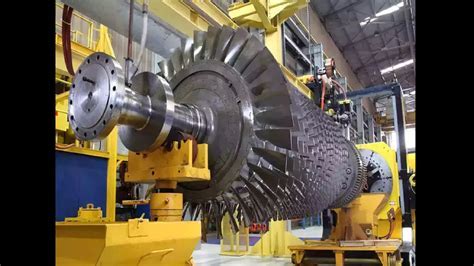
Understanding the theory and materials behind gas turbines is crucial to appreciating their capabilities. The Brayton cycle involves precise control of temperature, pressure, and flow velocity. Compressors—either axial or centrifugal—pressurize incoming air before it enters the combustion chamber, which may adopt annular, can, or can-annular designs. Notably, only about 30% of the compressed air directly supports combustion; the remaining 70% cools the engine internals to prevent catastrophic material degradation.
Most gas turbines allocate approximately 60–70% of their output simply to drive the compressor. Consequently, multi-spool designs optimize efficiency by splitting the compressor and turbine stages into independently rotating assemblies operating at ideal speeds, typically between 10,000–25,000 rpm for full-size engines and up to 500,000 rpm for microturbines.
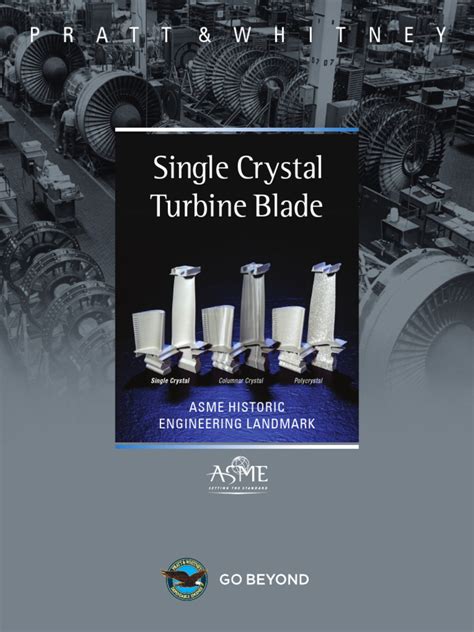
Bearing technology—particularly hydrodynamic and foil bearings—ensures reliability at extreme rotational speeds. Meanwhile, advanced materials such as nickel-based superalloys, thermal barrier coatings, bond coats, and single-crystal turbine blades mitigate thermal creep and oxidation, enabling operation at temperatures exceeding 1,500°C.
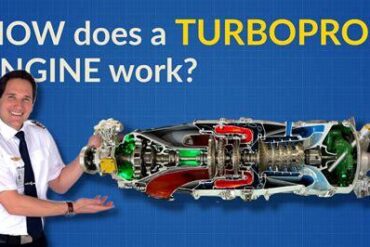
Diverse engine variants have emerged to meet distinct demands. Turbojets and low-bypass turbofans prioritize thrust-to-weight ratio, while high-bypass turbofans optimize fuel efficiency for commercial aviation. Turboprops like the Pratt & Whitney PT6 and Honeywell TPE331 integrate propellers for efficient subsonic flight.
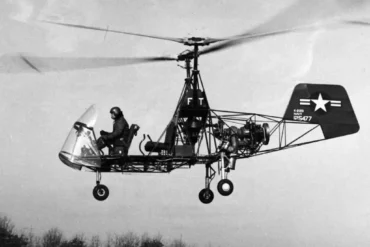
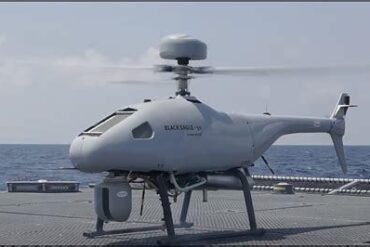
Aeroderivative turbines, including the GE LM2500, LM6000, and Rolls-Royce RB211, leverage aviation-derived cores for stationary power generation. Auxiliary power units (APUs), amateur-built turbines, and combined-cycle power plant turbines like GE’s 9HA and 7HA demonstrate the versatility of gas turbine technology. Turboshafts propel helicopters, while radial turbines and microturbines support decentralized energy systems and compressed air storage solutions.
Marine vessels, military tanks, locomotives, and series-hybrid vehicles benefit from vehicle applications of gas turbines, where their compact size and rapid startup offer strategic advantages. Turbochargers and turbo-compound engines also draw directly from gas turbine principles, enhancing automotive engine efficiency.
Historically, automakers have experimented extensively with gas turbine vehicles. The Rover JET1 (1950–1952) became the first practical turbine car prototype, followed by General Motors’ spectacular Firebird series (1953–1959). Chrysler’s Turbine Car consumer trial in 1963 showcased turbine reliability to the public, while European efforts like the Fiat Turbina (1954) explored high-speed road applications. Ford’s Big Red turbine truck (1964) and GM’s Turbo Titan trucks (1959–1965) demonstrated commercial freight potential. Later efforts in emissions-conscious decades included turbine-powered AMC Hornet experiments and Toyota turbine-electric concepts.
In the realm of racing, turbine vehicles achieved notable milestones. The 1955 USAF turbine race car laid groundwork for competitive applications, but it was the 1967 STP Oil Treatment Special that nearly clinched victory at the Indianapolis 500, showcasing the immense torque and reliability turbines could offer. The 1968 Howmet TX remains the only turbine-powered car to win a sanctioned automobile race, a landmark achievement in motorsport history.
Today, gas turbines continue to evolve, pushing the boundaries of efficiency, reliability, and environmental sustainability. With ongoing advancements in materials science, aerodynamics, and digital control systems, gas turbines stand poised to remain at the forefront of mechanical propulsion and energy production for decades to come.