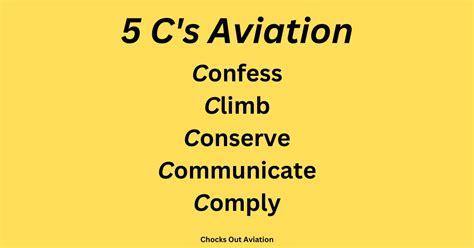
Aviation has always demanded clarity, precision, and decisive action. When pilots find themselves disoriented or uncertain about their exact position, they rely on a time-tested framework known as the 5 C’s of aviation. These five principles—Confess, Climb, Conserve, Communicate, and Comply—serve as a structured method for regaining situational awareness and restoring safety in the air. Throughout decades of aviation history, the 5 C’s have become foundational guidance for student pilots, commercial aviators, and seasoned professionals navigating complex skies.
This article explores the 5 C’s of aviation in depth, revealing not only their technical significance but also their lasting impact on aviation culture, pilot mindset, and operational safety. Along the way, real-world examples, historical context, and vivid aviation scenarios illustrate why these principles continue to endure as essential navigational tools.
Understanding the Purpose of the 5 C’s in Aviation
The environment inside a cockpit can shift from calm to challenging within moments. Weather systems evolve, navigation displays fail, terrain visibility changes, and operational pressure builds. When a pilot becomes uncertain of their position—whether geographically or situationally—the 5 C’s act as a cognitive anchor. Their purpose is simple: reinforce structured thinking and prevent impulsive decisions.
The beauty of the 5 C’s lies in their universality. They are as helpful during VFR navigation lapses as they are in more advanced IFR scenarios. This mental checklist ensures that the pilot remains methodical, avoids panic-induced mistakes, and maintains control of the aircraft while evaluating solutions.
Confess: Acknowledge Disorientation and Assess the Situation
The first principle, Confess, is about recognition. Pilots must admit—internally and externally—that they are no longer fully certain of their position or trajectory. This step is not a sign of weakness; it is an act of discipline. In aviation, denial wastes both time and fuel, increasing risk and compounding confusion. The moment a pilot acknowledges uncertainty, problem-solving can begin.
In real operations, confessing may involve stating the situation aloud, noting anomalies in navigation displays, or acknowledging deviations in expected course or time estimates. When conditions demand it, pilots transmit their situation to Air Traffic Control (ATC), which can provide essential vectors, radar services, or advisory information. This transparency is a cornerstone of aviation safety because it transforms ambiguity into actionable clarity.
Climb: Gaining Altitude for Enhanced Visibility and Safety
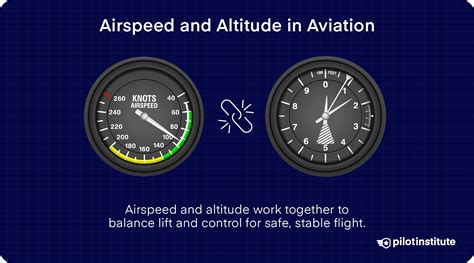
After acknowledging uncertainty, pilots transition to Climb, a principle rooted in physics and aeronautical safety. Gaining altitude increases radio range, improves radar visibility, and gives the pilot a broader view of the surrounding environment. Altitude also adds a margin of safety by placing the aircraft farther from terrain obstacles.
A pilot climbing to a safe altitude has more time, more space, and more strategic options. Whether flying over open terrain, mountain ranges, or vast coastal expanses, altitude provides literal and metaphorical clarity. This step aligns with the long-standing aviation doctrine that when situational awareness decreases, vertical separation becomes a pilot’s best ally.

Conserve: Preserving Fuel, Power, and Mental Bandwidth
The third principle, Conserve, shifts the pilot’s attention to resource management. Aviation fuel is finite. A disoriented pilot must adjust power settings, optimize speed, and adopt efficient flight configurations to extend endurance. Conserving resources isn’t limited to fuel; it includes mental capacity and time. Reducing unnecessary maneuvers, workload, or distractions allows pilots to remain focused on the steps required to resolve their situation.
In this stage, pilots often transition to best endurance or best range settings, depending on the nature of the challenge. The goal is to maximize options and minimize waste. Much like maritime captains navigating uncertain waters, pilots buy themselves valuable minutes by stretching their available resources as strategically as possible.
Communicate: Establish Connection and Coordinate Assistance
Next comes Communicate, a principle that emphasizes collaboration and information sharing. Aviation is a deeply interconnected ecosystem. Pilots who reach out to ATC, Flight Service Stations, or nearby aircraft gain access to radar assistance, position verification, weather updates, and navigation guidance.
Communication is not merely an emergency action. It is a proactive step toward building a support network in real time. Once ATC is aware of the situation, controllers can issue headings, identify radar targets, or provide distance and bearing to visual landmarks or airports. For pilots flying without radar services, communication opens doors to advisory frequencies and community wisdom across the skies.
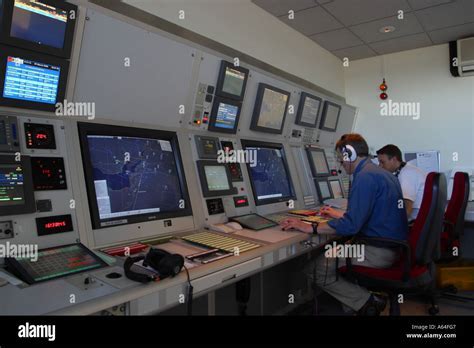
Comply: Follow the Guidance and Execute the Recovery
The final step, Comply, reinforces action and discipline. After receiving instructions or regaining clarity, pilots must follow through with precision. Whether ATC issues new headings, altitude assignments, or navigational instructions, compliance ensures the safest and most efficient path toward re-establishing orientation.
Compliance extends beyond simple obedience. It encompasses disciplined execution of the recovery plan, from flying assigned vectors to updating flight management systems to verifying fuel status. In aviation, consistency in following structured guidance transforms uncertainty into stability.
The Enduring Influence of the 5 C’s on Aviation Culture
The 5 C’s endure because they work in harmony with aviation psychology. When uncertainty arises, mental bandwidth narrows. The 5 C’s widen that bandwidth by offering pilots a simple, memorable sequence that breaks the paralysis of confusion.
Their influence extends far beyond small training aircraft. Commercial pilots, military aviators, and corporate crews carry these principles into turbine cockpits where precision is paramount. Even modern GPS and glass cockpit systems—which have dramatically reduced navigational ambiguity—cannot replace the psychological grounding provided by the 5 C’s.
Lessons from History: The Spirit of St. Louis and Navigational Resolve
No discussion of aviation perseverance is complete without recalling Charles Lindbergh and his monumental 1927 transatlantic flight. After more than thirty sleepless hours battling storms and sensory fatigue, Lindbergh found himself disoriented, alone, and flying without modern navigational aids. Yet through methodical reasoning and sheer tenacity, he reached the southern tip of Ireland almost perfectly on course.
Lindbergh’s success mirrored the spirit of the 5 C’s long before the mnemonic existed. His ability to recognize confusion, maintain altitude, conserve strength, engage in internal dialogue, and commit to his plan echo the very principles pilots still rely on today.
Why the 5 C’s Remain Vital in Modern Aviation
Modern aircraft bristle with digital tools—GPS, ADS-B, moving maps, terrain warnings, and autopilot integration. Despite these advances, the human mind remains the pilot’s most valuable instrument. Electronic systems can fail, screens can go dark, and unexpected conditions can overwhelm even experienced aviators.
The 5 C’s act as a manual override for human clarity. They center the pilot’s decision-making process, promote calm evaluation, and encourage structured action. At their core, they provide a timeless safety net woven through tradition, discipline, and the universal logic of aviation.
In an industry built on precision and resilience, the 5 C’s continue to anchor pilots to the foundational skills that have guided aviators for generations.