Flying a drone in New Jersey in 2025 demands more than technical skill. It requires legal awareness, disciplined planning, and a clear understanding of how federal aviation rules merge with local state and municipal authority. We see more drone operators than ever before, and that growth has forced lawmakers to sharpen their focus on airspace safety, personal privacy, and public risk management. The result is a legal environment that rewards preparation and penalizes ignorance. In this guide, we examine how drone laws in New Jersey actually work in real-world situations, not just in theory, giving drone pilots a reliable framework for safe and lawful flight.
The foundation of drone regulations in New Jersey still begins at the federal level. The Federal Aviation Administration controls national airspace, sets altitude limits, and enforces registration standards. What makes New Jersey unique is the level of local control layered on top of federal rules. Cities, counties, and park authorities are empowered to create their own flight restrictions, particularly for beaches, boardwalks, protected wildlife areas, and public events. This layered structure means a drone flight that is legal in one town can be unlawful just a few miles away. We view this as one of the most important realities every operator must understand before launching a drone anywhere in the state.
A major shift in 2025 is the state’s push to standardize enforcement. Lawmakers have worked toward clearer definitions of illegal drone behavior, stronger cooperation between state police and municipal departments, and tougher penalties for unregistered or anonymous flights. This move was not accidental. It was driven by rising reports of unsafe flights, privacy complaints, and public concern about unidentified nighttime drone activity. The current framework reflects a balance: the state supports innovation and commercial opportunity, while demanding accountability from every operator in the sky.
Understanding How New Jersey Drone Laws Actually Work
Drone laws in New Jersey function through a partnership between federal aviation authority and localized enforcement. We follow FAA rules for basic operational limits, including maximum altitude, visibility requirements, and registration mandates. At the same time, counties and municipalities are free to regulate where drones can take off, land, or operate. This creates a legal landscape that is highly dependent on geography. A drone pilot must think in terms of both airspace and ground jurisdiction.
In practical terms, this means we always recommend researching city ordinances before flying, even if the airspace appears unrestricted from a federal perspective. Some New Jersey towns have enacted quiet zones, privacy protection boundaries, and special restrictions near schools, hospitals, and government buildings. These laws are enforceable, and failure to follow them can lead to confiscation of equipment, fines, and in serious cases, criminal charges. We consider this local layer the most underestimated risk for out-of-state drone pilots visiting New Jersey.
The state has also improved how violations are tracked and handled. In 2025, coordination between the FAA and New Jersey law enforcement has been strengthened through shared reporting systems and digital evidence standards. This means that drone flights leaving digital footprints through remote identification systems can be investigated more efficiently than in previous years. We see this as a turning point where casual non-compliance now carries real and traceable consequences.
Permit Requirements for Hobbyists and Professional Drone Operators
Drone permits in New Jersey depend entirely on how the drone is being used. For commercial operations, we operate under the FAA Part 107 framework. This requires a Remote Pilot Certificate, which is obtained by passing a comprehensive aeronautical knowledge test. The test covers airspace classifications, weather dynamics, emergency procedures, crew resource management, and operational risk assessment. Every commercial drone used must also be registered, and the registration number must be visibly displayed.
For recreational pilots, the path is simpler but not optional. We are required to complete the FAA TRUST safety test before flying. This ensures that hobbyists understand the basics of airspace safety, emergency protocols, and operational limitations. There is no general statewide recreational permit, but local requirements can be strict. Some municipalities demand proof of insurance, flight intent notifications, and even prior approval for launching from public parks or beaches.
We have seen cities require detailed documentation for what appear to be simple hobby flights. This trend is becoming more common as drone use increases. We view this as a signal that hobbyists should adopt professional-level planning habits, even when flying for fun. This approach drastically reduces conflict with authorities and the public.
Flying Drones on New Jersey Beaches and Coastal Areas
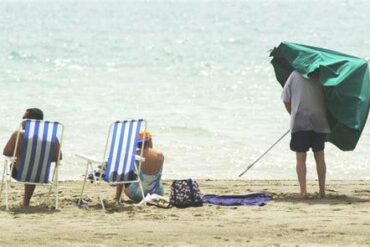
New Jersey’s beaches are among the most regulated drone environments in the state. We find that coastal drone laws are shaped by safety concerns, wildlife protection, and tourism management. During peak summer months, many Jersey Shore towns prohibit drone flights near beaches, boardwalks, and crowded waterfront areas. One of the clearest examples is Ocean City, where beach drone operations are restricted unless tied to permitted events or authorized emergency work.
Outside peak seasons or in less populated coastal zones, flights may be allowed, but conditions still apply. We must avoid flying over people, maintain direct visual line of sight, and remain clear of lifeguard operations, rescue helicopters, and maritime traffic. Wildlife is another critical factor. Shorebirds and nesting areas are protected, and drones that disturb these habitats can trigger both state and federal penalties.
We treat beach flights as high-risk operations by default. Sand, wind gusts, saltwater corrosion, and unpredictable public movement all combine to create operational hazards. From a legal and practical standpoint, we consider coastal flying in New Jersey to be an activity that demands slow, deliberate preparation rather than spontaneous flight.
Night Drone Flight Rules in New Jersey
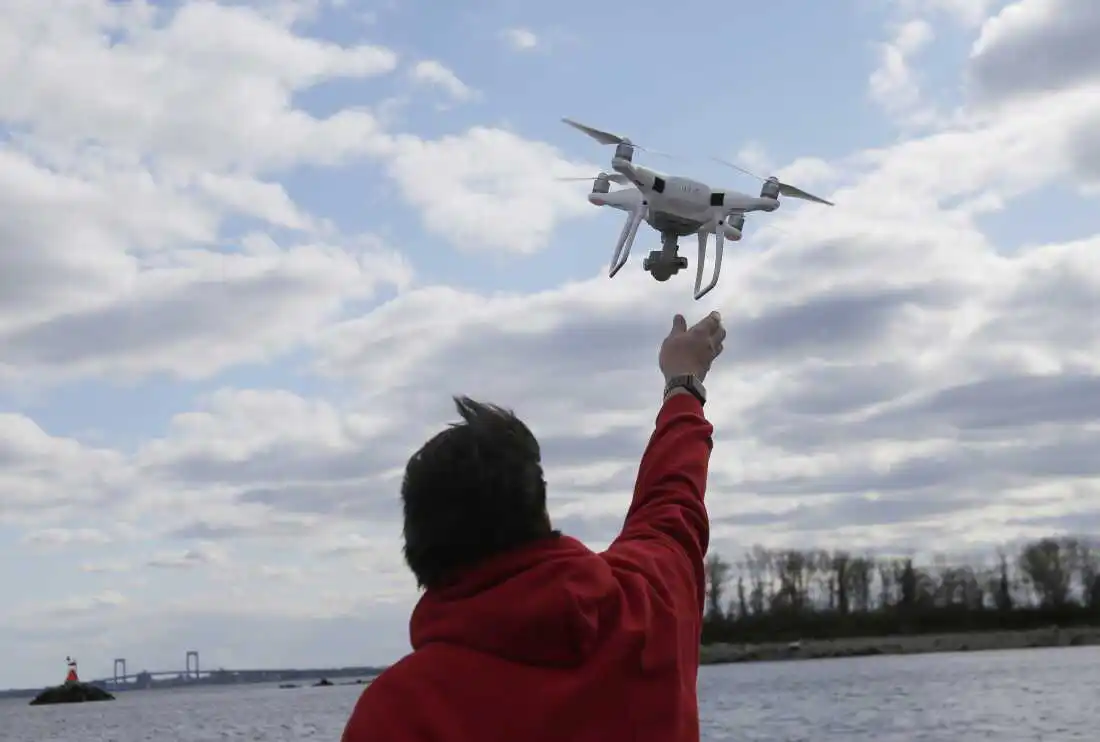
Night drone flying in New Jersey is legal, but only under strict technical and operational conditions. The FAA permits night flights when drones are equipped with anti-collision lighting visible from at least three statute miles. This requirement applies to commercial and recreational operators alike, even though many hobbyists overlook it.
Local laws can add additional restrictions. Some cities impose curfews or prohibit flights after certain hours, regardless of FAA permissions. We have seen cases where night flights were legal at the federal level but violated local noise or public safety ordinances. Weather conditions must also be evaluated carefully. Fog, rain, light pollution, and urban glare significantly reduce situational awareness and increase collision risk.
We view night operations as an advanced skill set rather than a casual extension of daytime flying. Proper lighting, conservative altitude choices, and wide safety buffers are essential. From both a legal and ethical standpoint, night flights should only be conducted when the operational benefit clearly outweighs the added risk.
Are Drones Banned in New Jersey?
There is no statewide drone ban in New Jersey, but there is an extensive network of prohibited and restricted locations. Sensitive areas are treated with zero tolerance. We are strictly prohibited from flying near prisons, military facilities, power infrastructure, airports, and critical transportation hubs. State parks and wildlife refuges frequently ban drone use entirely unless special permission is granted.
Temporary flight restrictions are another major factor. Public events, parades, political visits, and emergency response situations can trigger real-time airspace lockdowns. These are often invisible to the casual observer, which is why we treat real-time airspace verification as a mandatory pre-flight ritual. Tools that display live restriction data are not optional conveniences; they are operational necessities.
Why Drone Activity Has Increased Across New Jersey
Drone visibility across New Jersey has increased dramatically, and it is not an illusion. We attribute this expansion to rapid improvements in drone affordability, camera technology, and battery performance. Industries such as real estate, construction, insurance, agriculture, and media production rely heavily on aerial data. At the same time, recreational pilots now have access to sophisticated aircraft that were once limited to professional teams.
Public curiosity has also surged because of unexplained aerial sightings, especially at night. Many reports describe slow-moving lights, silent hovering objects, and unusual movement patterns. In most verified cases, these have been traced to commercial survey drones, research aircraft, or experimental flight platforms. However, the psychological effect on communities has been real, driving demand for stronger identification and visibility standards.
What to Do When You See a Drone in New Jersey
When encountering a drone in the sky, we recommend observation before escalation. If a drone is flying directly over crowds, hovering near private windows, or operating close to airports, it may be violating regulations. In these cases, local police departments and municipal authorities are the appropriate point of contact.
We emphasize that attempting to interfere with a drone is illegal. Throwing objects, using signal jammers, or physically damaging the aircraft can lead to serious criminal charges. Most drone flights are lawful and conducted for photography, inspection, or recreation. A calm, informed response protects both public safety and individual rights.
Maximum Legal Altitude for Drones in New Jersey
The maximum operating altitude for drones in New Jersey is 400 feet above ground level under normal conditions. There is a limited exception that allows flight near tall structures, where drones may ascend up to 400 feet above the top of the structure, provided they remain within close horizontal proximity.
This altitude limit exists to prevent conflicts with helicopters and low-flying airplanes. However, altitude legality does not equal safety. We must also factor in lateral distance from buildings, traffic, and people. Many local complaints and enforcement actions arise not from altitude violations, but from horizontal proximity violations. Smart drone operation is three-dimensional compliance, not just vertical limitation.
New Jersey Drone Maps and Real-Time No-Fly Zone Tools
We rely heavily on real-time mapping tools to stay compliant. Digital platforms display temporary flight restrictions, controlled airspace zones, and sensitive infrastructure overlays. Major airports such as Newark Liberty International Airport and Atlantic City International Airport have wide protective airspace areas. Ecological zones like the Pine Barrens are restricted due to environmental sensitivity.
Major bridges, tunnels, and dense urban corridors are also wrapped in invisible legal boundaries. We treat these digital maps as flight instruments, not casual references. A pre-flight airspace check is now a professional standard of care.
Ocean City NJ Drone Laws in Practice
Ocean City stands as one of the most restrictive jurisdictions in the state. We see this as a case study in how coastal cities prioritize tourism safety and resident privacy. Drones are not allowed over beaches, boardwalks, or crowded public spaces without approved permits. This restriction applies equally to hobbyists and commercial operators.
When permits are granted, the process is thorough. Applicants are typically required to present insurance certificates, pilot credentials, and detailed mission plans. Even with approval, flights are often limited by altitude caps, time-of-day restrictions, and predefined flight corridors. Enforcement is active and highly visible, with local police and beach patrol units authorized to inspect documentation on-site.
The December 2024 Drone Sightings and Their Legal Impact
In December 2024, New Jersey experienced a wave of aerial sightings that captured public attention and media headlines. Clusters of silent lights, slow-moving formations, and strange hovering movements were reported across suburban and rural areas. Many witnesses described the objects as orbs rather than traditional aircraft.
Subsequent investigations revealed that most of these incidents involved high-altitude drones operated by research institutions and defense contractors. The aftermath of these events reshaped policy. Lawmakers accelerated the implementation of remote identification systems and introduced tougher penalties for unregistered and anonymous drone flights. The 2025 regulatory framework reflects these lessons, with a stronger emphasis on transparency, traceability, and public reassurance.
Conclusion: Operating Drones in New Jersey with Confidence and Compliance
We believe drone laws in New Jersey are designed not to restrict opportunity, but to define responsibility. The technology is powerful, and with that power comes a legal and ethical obligation to protect people, property, and shared airspace. Whether flying for creative expression or commercial enterprise, success depends on preparation, legal awareness, and disciplined risk management. By treating compliance as a core skill rather than a burden, we ensure that New Jersey’s skies remain open, safe, and full of legitimate innovation.