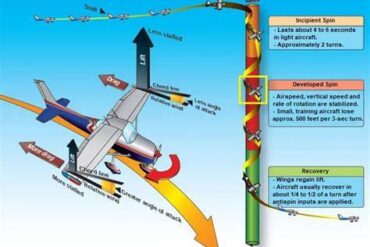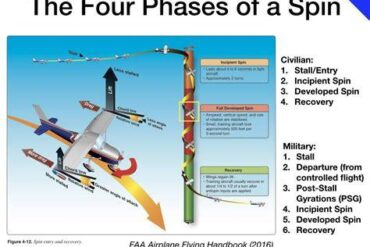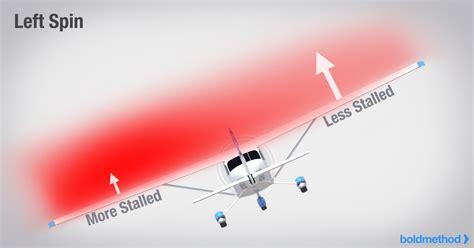
Before any pilot attempts spin recovery, it is imperative to understand exactly what a spin entails. According to the FAA, a spin is defined as “an aggravated stall that results in an airplane descending in a helical, or corkscrew path.” In such a state, both wings are stalled, but critically, one wing is more deeply stalled than the other. This imbalance results in a combination of roll and yaw that causes the aircraft to spiral downward. The inside wing, flying at a higher angle of attack, generates less lift and more drag, exacerbating the spin. Conversely, the outside wing continues to generate comparatively more lift, causing the aircraft to roll into the spin even further. Recognizing this aerodynamic condition is the first step toward effective recovery.
To break out of this dynamic, we rely on the proven PARE technique, an acronym representing Power to idle, Ailerons neutral, Rudder opposite, Elevator forward. Each step is deliberate, each action directly targeting the forces sustaining the spin.
Power To Idle: Reducing Engine Thrust To Regain Control
The first command in the PARE sequence is to pull the throttle to idle. This may seem counterintuitive at first glance; after all, in a typical stall recovery, we apply power to regain lift. But during a spin, adding power increases recovery difficulty. Higher power settings cause the propeller’s slipstream to exert a downward force on the horizontal stabilizer, increasing the nose-up attitude. Furthermore, if the thrust line lies below the center of gravity, it introduces a pitch-up torque that exacerbates the stall. By reducing power to idle, we eliminate these destabilizing forces, allowing the aircraft’s nose to drop more easily and setting the stage for breaking the stall.
Ailerons Neutral: Avoiding Adverse Roll Effects
Next, we must set the ailerons to neutral. Pilots may feel tempted to correct the spin’s roll using ailerons, but this action is counterproductive. Attempting to lift the inside wing with opposite aileron input actually increases that wing’s angle of attack, deepening the stall and worsening the spin. Likewise, applying aileron into the spin risks accelerating the roll rate or precipitating a secondary spin in the opposite direction once recovery initiates. Neutralizing the ailerons eliminates asymmetric lift inputs, reducing the lateral forces perpetuating the spin.
Rudder Opposite: Counteracting Yaw To Stop The Rotation
Perhaps the most pivotal step in the sequence is the application of opposite rudder. In a spin to the left, we apply full right rudder; in a right spin, full left rudder. This input counters the yawing motion that sustains the spin. The rudder acts directly against the rotational inertia of the spin, arresting the aircraft’s rotation around the vertical axis. Timing and decisiveness are critical here: failure to apply sufficient rudder promptly can allow the spin to deepen, while excessive or mistimed rudder can complicate the recovery.
Elevator Forward: Reducing The Angle Of Attack To Break The Stall
With power at idle, ailerons neutral, and opposite rudder engaged, the final step is to push the elevator forward. This action lowers the angle of attack, allowing the wings to exit the stalled condition. Only by reducing the angle below the critical threshold can the wings reestablish smooth airflow and begin producing lift again. It is at this moment that many pilots must overcome instinct: when pointed nose-down in a spin, pushing forward feels unnatural. However, without this step, the aircraft remains stalled, trapped in the spin’s self-sustaining aerodynamics.
Returning To Controlled Flight: Post-Recovery Procedures
Once the spin halts and the aircraft begins flying out of the descent, we must take care to neutralize the rudder to prevent entering a spin in the opposite direction. Gradually raise the nose to the horizon to stop the descent without overstressing the airframe. Then, as airspeed stabilizes, add power incrementally to restore normal cruise or climb performance. Each of these post-recovery actions must be measured, respecting the airspeed and attitude limitations detailed in the aircraft’s Pilot’s Operating Handbook (POH).
Aircraft-Specific Considerations And Training Emphasis
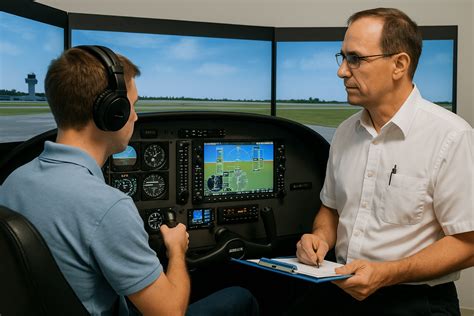
While the PARE technique provides a universal framework for spin recovery, it is essential to reference each aircraft’s specific recovery procedures as detailed in its POH. Some airplanes exhibit unique spin characteristics, including variations in required control inputs or recovery timing. For this reason, thorough training in spin recognition and recovery in a spin-certified aircraft with an experienced instructor is indispensable. Pilots should commit the recovery sequence to memory, as reading a checklist during an actual spin is impractical and unsafe.
Simulated spins during flight training reinforce a pilot’s confidence in recognizing the onset of a spin, distinguishing it from other stalls or departures from controlled flight. Additionally, instructors often use spin training to highlight critical pre-spin warning signs such as uncoordinated flight, excessive pitch angles, or inadvertent cross-controlled inputs.
The Aerodynamic Forces At Play: Understanding The Physics Behind PARE
The logic behind each PARE step lies in reversing the forces creating the spin. A spin’s roll is driven by differential lift between the inside and outside wings, while its yaw stems from asymmetric drag. By removing power, we mitigate propwash effects on the stabilizer; by neutralizing ailerons, we avoid exacerbating roll asymmetry; by applying opposite rudder, we nullify the yawing moment; and by lowering the elevator, we break the stall that started it all. These actions together restore equilibrium to the aircraft’s forces, allowing natural aerodynamic recovery.
Understanding the physics enhances procedural compliance. Pilots who know why they perform each step are more likely to act swiftly and correctly under pressure. This is particularly vital in spins originating at low altitudes or following distraction or disorientation.
Conclusion: Mastery Through Preparation And Practice
Mastering spin recovery is not solely about memorizing the PARE acronym; it is about internalizing the relationship between control inputs and aerodynamic responses. Regular training, ideally conducted in varied conditions and aircraft types, builds the muscle memory and situational awareness needed to execute recovery instinctively. The spin, though dramatic in its manifestation, yields to disciplined adherence to recovery fundamentals. By committing ourselves to thorough preparation, we safeguard our aircraft, our passengers, and our own confidence in flight.