Uruguay’s preparations for the 2026 FIFA World Cup took an unexpected turn when a charter aircraft scheduled to transport the national team from Mexico to Florida was denied entry into the United States due to regulatory documentation issues. The incident forced the Uruguayan Football Association (AUF) into a last-minute search for alternative transportation just hours before the team’s opening match of the tournament.
The travel disruption created uncertainty around one of South America’s strongest football nations as players, coaching staff, and officials prepared to travel from their World Cup base in Mexico to Miami for their group-stage clash against Saudi Arabia. With kickoff looming, the AUF had little time to resolve a situation that threatened to disrupt carefully planned pre-match preparations.
Uruguay selected the Mayakoba Complex in eastern Mexico as its operational base during the tournament. The location offers strategic access to both Mexico and the United States, making it an ideal hub for a World Cup campaign that spans multiple host cities across North America. While the team’s first two matches are scheduled in Miami, their third group-stage fixture will take place in Guadalajara, making the Mexican base a practical logistical choice.
Charter Aircraft Blocked by US Regulatory Requirements
According to reports, the original aircraft arranged to carry the Uruguayan delegation was unable to enter American airspace because it lacked documentation required under United States aviation regulations. The issue was not related to weather conditions, aircraft performance, or operational safety concerns, but rather administrative compliance requirements necessary for international charter operations.
An AUF spokesperson described the delay as resulting from circumstances beyond the association’s control. As the departure timetable slipped, concern grew regarding the team’s ability to arrive in Florida in time for scheduled media commitments and final preparations ahead of the opening match.
The situation quickly became a significant logistical challenge. International sporting events rely on highly coordinated travel arrangements involving national associations, charter providers, airport authorities, and tournament organizers. A disruption affecting any part of that chain can create substantial complications, especially when a team is operating on a tightly managed schedule.
FIFA reportedly remained in close contact with Uruguay’s delegation throughout the delay, coordinating with operational partners and airport authorities to minimize disruption and accelerate the search for a solution.
Aeromexico Provides a Critical Last-Minute Solution
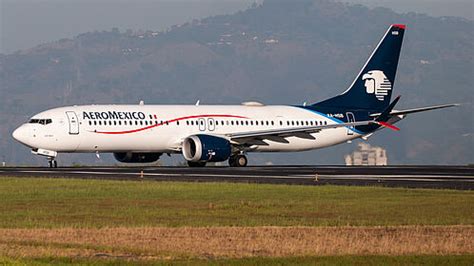
As pressure mounted, a replacement aircraft was secured through Aeromexico, Mexico’s flag carrier and a member of the SkyTeam airline alliance. The airline supplied a Boeing 737 MAX 9, enabling the Uruguayan squad to continue its journey to Florida.
The aircraft assigned to the mission operated as flight AM9687. Historical flight tracking data indicates that the jet departed Cancun International Airport at approximately 4:46 PM local time after arrangements were finalized.
The emergency substitution highlighted the flexibility of major airlines when responding to unexpected operational challenges. While commercial schedules are often tightly structured, airlines occasionally provide special charter support for governments, sports teams, and other organizations facing urgent transportation requirements.
For Uruguay, Aeromexico’s intervention ensured that a potentially damaging travel crisis did not escalate further on the eve of one of the most important matches of the team’s campaign.
Arrival in Florida Came Just Hours Before Key Commitments
The replacement flight completed its journey in approximately one hour and forty-one minutes. The Boeing 737 MAX 9 landed at Fort Lauderdale-Hollywood International Airport (FLL) at 7:27 PM local time.
The airport’s location proved advantageous. Situated just north of Miami, Fort Lauderdale offers quick road access to the region’s sporting venues, including Hard Rock Stadium, where Uruguay was scheduled to face Saudi Arabia.
The delayed arrival meant that members of the Uruguayan delegation were operating under considerable time pressure. Head coach Marcelo Bielsa, one of football’s most respected and influential managers, still attended his pre-match press conference, although the schedule was pushed back from its original timing.
Despite the disruption, the team ultimately reached Florida in time to continue preparations without suffering a major competitive disadvantage. The successful completion of the journey represented a significant relief for players, coaches, and supporters alike.
A Familiar Travel Challenge for Uruguay
Interestingly, this was not the first time Uruguay experienced travel complications immediately before a major international tournament fixture. References resurfaced to a similar incident during the 2010 FIFA World Cup, when former star striker Diego Forlán publicly commented on delays affecting the national team’s charter arrangements.
While the circumstances surrounding the earlier disruption differed, the recurrence of pre-tournament travel difficulties added an unusual historical parallel to the latest episode. Such incidents serve as reminders that even elite international teams remain vulnerable to operational and administrative challenges beyond the football pitch.
The Aeromexico Boeing 737 MAX 9 Behind the Rescue Mission
The aircraft that ultimately carried Uruguay to Florida was identified as XA-MJJ, a Boeing 737 MAX 9 in Aeromexico’s fleet. Fleet records indicate that the aircraft is slightly over four years old, making it a relatively young example of Boeing’s latest-generation narrowbody family.
Aeromexico currently operates approximately thirty Boeing 737 MAX 9 aircraft. These jets play a central role in the airline’s regional and international network, offering modern avionics, improved fuel efficiency, and enhanced passenger comfort.
The configuration of XA-MJJ includes 181 seats, consisting of 16 business-class seats and 165 economy-class seats. Prior to its unexpected World Cup assignment, the aircraft had been operating routine domestic services within Mexico, including flights between Mexico City and Cancun.
Its rapid reassignment to transport Uruguay’s national team demonstrated both the operational flexibility of Aeromexico and the importance of dependable aviation partnerships during global sporting events.
Uruguay Avoids a Major World Cup Setback
What began as a potentially serious logistical crisis ultimately concluded with a successful last-minute solution. Thanks to Aeromexico’s intervention and coordinated efforts among aviation and tournament stakeholders, Uruguay arrived in Florida and remained on track for its World Cup opener.
The incident underscores the often-overlooked role aviation plays in international sports. Behind every major tournament lies a complex network of aircraft, airports, regulators, and logistics specialists working to move teams efficiently across continents. In this case, a single paperwork issue threatened to derail those plans, but swift action ensured Uruguay’s World Cup campaign could begin as scheduled.