The countdown to the 2026 FIFA World Cup has already transformed the global aviation industry into a high-stakes logistical exercise. Airlines are adding routes, airports are preparing for unprecedented passenger volumes, and millions of football fans are beginning to map out journeys across North America. But while the tournament promises unforgettable moments inside stadiums, the experience inside some American airports may become equally memorable for all the wrong reasons.
A new AirAdvisor Summer Connection Risk Index has revealed an uncomfortable reality for international travellers: several of the United States’ most important aviation gateways are also among the least reliable airports in the world for making flight connections during peak summer travel. For fans planning multi-city itineraries across the United States during FIFA World Cup 2026, the findings highlight a growing risk of missed flights, overnight delays, and travel disruptions at exactly the time passenger demand will surge to historic levels.
The research evaluated major global hub airports using metrics including cancellation rates, average delays, flights delayed more than an hour, and overall traffic volume. The result was a reliability score ranking airports from safest to riskiest for summer connections. What immediately stood out was how poorly the largest American hubs performed compared with their European counterparts.
The four worst-performing airports globally for missed connections were all in the United States: Dallas/Fort Worth International Airport, Chicago O’Hare International Airport, New York JFK Airport, and Miami International Airport. Ironically, these same hubs will become some of the busiest gateways for FIFA World Cup supporters arriving from Europe, South America, Asia, and the Middle East.
By the summer of 2026, those pressure points may become far more severe.
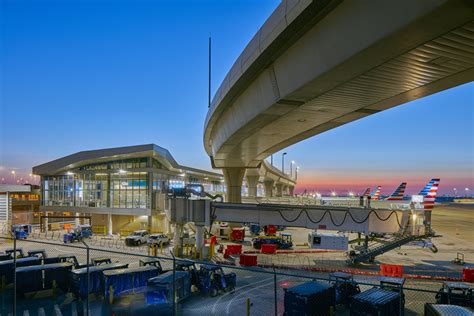
Dallas/Fort Worth International Airport Faces the Greatest Connection Risk
Dallas/Fort Worth International Airport emerged as the world’s worst major hub for flight connections, earning a reliability score of just 6.15. According to the AirAdvisor analysis, roughly one in every six flights at DFW experiences delays exceeding one hour, a statistic that becomes especially concerning when passengers are attempting tight domestic or international connections.
The airport’s enormous scale contributes directly to the problem. DFW is among the busiest airports on Earth, functioning as a critical transfer hub for domestic US flights and international arrivals alike. During ordinary summer operations, the airport already struggles with intense traffic volume, complicated aircraft sequencing, and weather-related disruptions. FIFA World Cup traffic threatens to push those operational challenges even further.
The airport will become particularly important because Texas is one of the central geographic pillars of the tournament. Matches in Dallas, Houston, and nearby host cities are expected to attract massive numbers of supporters. Many international travellers flying into Texas will first arrive through DFW before connecting onward to regional airports or domestic destinations.
The issue is not merely congestion inside terminals. Summer thunderstorms across Texas frequently create cascading operational failures that ripple across the national air traffic network. Once delays begin accumulating at DFW, recovery times can stretch for hours because gates, crews, aircraft rotations, and connecting banks all become disrupted simultaneously.
Travellers booking 45-minute or even one-hour layovers at Dallas during FIFA World Cup season may be gambling with their entire itinerary.
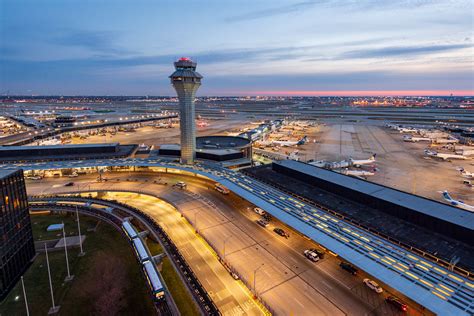
Chicago O’Hare Remains One of America’s Most Delay-Prone Mega Hubs
Chicago O’Hare International Airport ranked second on the global high-risk list with a reliability score of 6.60. The airport’s reputation for weather delays is already deeply embedded within the aviation industry, but the AirAdvisor findings reinforce how vulnerable O’Hare becomes during peak summer operations.
One in seven flights at O’Hare reportedly experiences delays exceeding one hour. For connecting passengers, especially international visitors unfamiliar with the complexity of US airport procedures, that statistic represents a major warning sign.
Unlike many European hubs where transit systems are designed around smoother passenger flow, American airports often require lengthy terminal transfers, repeated security checks, and substantial walking distances. O’Hare magnifies these challenges because of its sprawling layout and constant runway congestion.
Summer storms across the Midwest frequently force ground stops and air traffic slowdowns that impact not only Chicago but airports throughout the eastern half of the United States. During FIFA World Cup 2026, even relatively minor weather disruptions could trigger chain reactions affecting thousands of supporters travelling between host cities.
Chicago’s importance as a transatlantic gateway further increases the stakes. Large numbers of European football fans are expected to route through O’Hare before continuing to destinations across the US and Canada. A delayed inbound international flight could easily result in missed domestic connections, particularly if passengers face customs queues or terminal transfers.
The problem is compounded by the fact that summer airline schedules already operate near maximum capacity. Once disruptions occur, there is often little flexibility left in the system to absorb delays quickly.
New York JFK Struggles Under Crowded Northeast Airspace
New York’s John F. Kennedy International Airport ranked third among the world’s riskiest connection hubs with a reliability score of 6.75. While JFK remains one of the most globally connected airports in aviation, its operational environment is uniquely difficult.
The challenge begins with geography. JFK shares crowded Northeast airspace with LaGuardia Airport and Newark Liberty International Airport, all functioning under the same broader air traffic control system. When delays occur at one airport, operational consequences frequently spill into the others.
AirAdvisor found that one in 10 flights at JFK experienced delays exceeding one hour during last summer’s travel season. That may sound less severe than Dallas or Chicago, but JFK’s dense international schedule means disruptions can quickly affect enormous numbers of long-haul passengers.
For FIFA World Cup travellers arriving from Europe, South America, or Africa, JFK will remain one of the primary entry points into North America. Many fans will attempt onward domestic connections immediately after landing. Unfortunately, JFK is rarely forgiving when itineraries become tight.
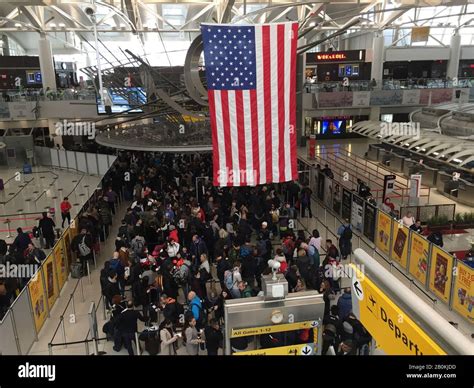
Passengers often face long taxi times after landing, congested immigration facilities, complicated terminal transfers, and frequent departure delays. Even under ideal conditions, making short connections at JFK can feel stressful. During the World Cup travel rush, those pressures are likely to intensify dramatically.
The Northeast corridor’s weather volatility adds another layer of uncertainty. Thunderstorms, low cloud ceilings, and heavy traffic restrictions can rapidly reduce airport capacity. Once delays start building across the New York region, recovery becomes painfully slow because the entire airspace system is already operating near saturation.
For international football supporters planning itineraries involving New York, relying on minimal connection times could become one of the biggest travel mistakes of the tournament.
Miami International Airport Combines Hurricanes and Heavy International Traffic
Miami International Airport rounded out the global high-risk category with a reliability score of 6.85. The airport’s operational challenges are deeply tied to geography and climate.
Florida’s summer weather pattern creates near-daily thunderstorm risks, while hurricane season overlaps directly with the FIFA World Cup travel period. Even short-lived storms can temporarily halt airport operations, delay arrivals, and create severe congestion across surrounding airspace.
AirAdvisor’s analysis found that one in eight flights at Miami experienced delays exceeding one hour last summer. Unlike smaller airports where operations can recover relatively quickly, Miami’s heavy international traffic volume makes normalization far slower after disruptions occur.
The airport serves as one of America’s most important gateways for Latin America and the Caribbean. During FIFA World Cup 2026, Miami is expected to absorb enormous passenger flows from South American football fans travelling into the United States.
Many supporters arriving through Miami will continue onward to other host cities using domestic connections. Unfortunately, summer weather delays often create widespread scheduling breakdowns precisely during the busiest travel windows of the day.
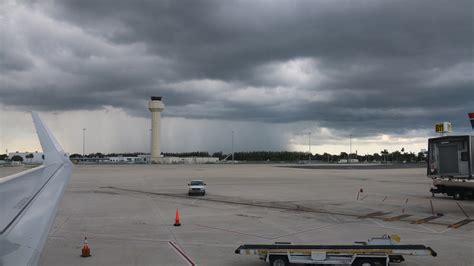
Miami also faces infrastructure strain because international processing facilities can become heavily congested during simultaneous arrival peaks. Long customs queues combined with delayed inbound flights create extremely narrow margins for passengers attempting quick transfers.
Even when storms clear rapidly, the aftereffects can continue for hours because aircraft and crews are displaced throughout the network. By evening, airports may still be attempting to recover from weather disruptions that began earlier in the afternoon.
Why European Airports Are Performing Far Better
While American hubs dominated the bottom of the rankings, European airports occupied most of the safest positions globally. Stockholm Arlanda Airport topped the reliability index with an exceptional score of 9.30, followed closely by Warsaw Chopin Airport at 9.15.
Madrid Barajas, Lisbon Humberto Delgado, Rome Fiumicino, and Barcelona El Prat also ranked among the world’s safest connection hubs. These airports generally benefited from lower cancellation rates, shorter delays, and more resilient operational performance during summer peaks.
The contrast highlights broader structural differences between aviation systems. Many European hubs emphasize shorter taxi times, centralized terminal operations, and more coordinated passenger transfers. Although European airports certainly experience disruptions, their overall operational consistency proved substantially stronger in the AirAdvisor study.
Meanwhile, no US airport achieved placement in the safest category.
FIFA World Cup 2026 Travellers Need Longer Layovers
For football supporters planning travel across North America in 2026, the message from the data is increasingly clear: short layovers at major US hubs represent a serious risk.
Millions of additional passengers will flow through airports already struggling with congestion, weather disruptions, and operational limitations. The infrastructure constraints identified in the AirAdvisor rankings are unlikely to disappear before the tournament begins.
Travellers connecting through Dallas/Fort Worth, Chicago O’Hare, New York JFK, or Miami should strongly consider scheduling at least 90-minute layovers, particularly when transferring between international and domestic flights. Many aviation experts would argue that even longer buffers may be necessary during peak World Cup travel weeks.
The FIFA World Cup will deliver unforgettable sporting drama across the United States, Canada, and Mexico. But for many fans, the first real competition may begin long before kickoff — inside some of America’s most delay-prone airports.