The logistical challenge behind the 2026 FIFA World Cup extends far beyond football. With 48 national teams, 16 host cities, and venues spread across the United States, Canada, and Mexico, aviation has become one of the tournament’s most critical operational pillars. Every match depends on an intricate network of long-haul international arrivals, domestic charter flights, cargo operations, airport coordination, and air traffic management.
Rather than simply moving teams from one stadium to another, FIFA has developed a sophisticated transportation ecosystem centered around dedicated Team Base Camps, regional flight networks, and carefully planned scheduling designed to minimize fatigue while maximizing operational efficiency. The result is arguably the most ambitious aviation operation ever undertaken for a sporting event.
The tournament demonstrates that modern football is no longer just about performances on the pitch—it is also about executing flawless logistics across one of the world’s largest air transportation networks.
A World Cup Built Across Three Nations
Unlike previous tournaments hosted within a single country, the 2026 FIFA World Cup stretches across three North American nations and four different time zones. That geographic footprint fundamentally changes how teams travel throughout the competition.
Instead of remaining within relatively compact regional clusters, participating nations must navigate thousands of miles between training bases and match venues while maintaining strict recovery schedules. Every hour spent in transit affects player preparation, medical routines, nutritional planning, and tactical training.
The expanded format featuring 48 teams further compounds the challenge. More nations mean more aircraft, more airport movements, more baggage, additional security requirements, and significantly greater demand for premium airport infrastructure.
From the opening match to the final, aviation serves as the invisible backbone keeping the tournament running on schedule.

Long-Haul Flights Bring National Teams to North America
The first phase of operations began long before kickoff as teams departed their home countries for North America using a diverse fleet of widebody aircraft.
Many national airlines proudly transported their football squads, turning aircraft into flying ambassadors. These flights attracted enormous attention from aviation enthusiasts and football fans alike, with aircraft tracking services recording exceptionally high viewing figures during several arrivals.
Among the most eye-catching examples was Argentina’s journey from Buenos Aires to Kansas City aboard an Aerolíneas Argentinas Airbus A330 carrying a custom livery featuring Lionel Messi’s famous number 10 on the tail. Even the flight number carried symbolic significance—AR1978—commemorating Argentina’s first FIFA World Cup triumph.
Brazil’s arrival also generated tremendous global interest as the national team crossed into North America aboard an Aeronexus Boeing 767, becoming one of the most closely monitored flights of the tournament’s opening weeks.
European teams prioritized premium cabin configurations designed to reduce the physical effects of long-haul travel. France selected an all-business-class Airbus A321neo operated by La Compagnie, allowing players maximum personal space during the Atlantic crossing. England opted for a direct Virgin Atlantic Airbus A350-1000 flight from Birmingham to West Palm Beach, eliminating unnecessary connections and reducing total travel time.
These carefully selected aircraft reflected a broader philosophy: minimizing travel fatigue before the tournament even begins.
Team Base Camps Create an Aviation Hub-and-Spoke Network
One of FIFA’s most innovative logistical decisions was the establishment of Team Base Camps (TBCs) instead of requiring teams to relocate continuously between cities.
Every national squad operates from a permanent home base throughout the group stage. Players train, recover, conduct media activities, and prepare for upcoming matches from this central location before flying directly to each match venue and returning immediately afterward.
This model resembles the hub-and-spoke system used by major commercial airlines.
Instead of relocating hotels every few days, teams repeatedly fly between their base camp and match destinations. The approach provides consistency for athletes while dramatically simplifying accommodation, security, and operational planning.
The United States hosts the overwhelming majority of these bases, with 39 official Team Base Camps distributed across the country. Germany established operations in Winston-Salem, Saudi Arabia selected Austin, while Qatar chose Santa Barbara as its operational headquarters.
Mexico accommodates seven base camps, including facilities used by Colombia and South Korea, while Canada hosts two additional camps for Canada and Panama.
The result is a continent-wide network of recurring charter operations linking training facilities directly with stadium cities throughout the tournament.

Why Teams Rarely Stay Near Match Venues
At first glance, locating teams close to every stadium might appear more practical. In reality, constantly relocating entire delegations would create far greater disruption.
Modern national teams travel with dozens of players, coaches, analysts, doctors, physiotherapists, nutritionists, media personnel, and security staff. They also transport extensive training equipment, recovery systems, medical supplies, and specialized dietary provisions.
Remaining in one carefully prepared environment allows every aspect of team operations to function without interruption.
Training pitches remain consistent.
Medical facilities stay fully equipped.
Hotel staff understand each team’s routines.
Security procedures remain unchanged.
Meanwhile, charter flights provide rapid access to every assigned match without requiring permanent relocation.
For elite athletes competing every few days, maintaining familiar surroundings can be just as valuable as reducing flight duration.
American Airlines Anchors Domestic Tournament Operations
Managing hundreds of domestic team movements required far more than traditional charter arrangements.
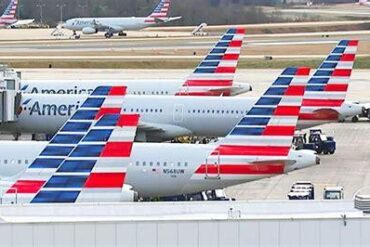
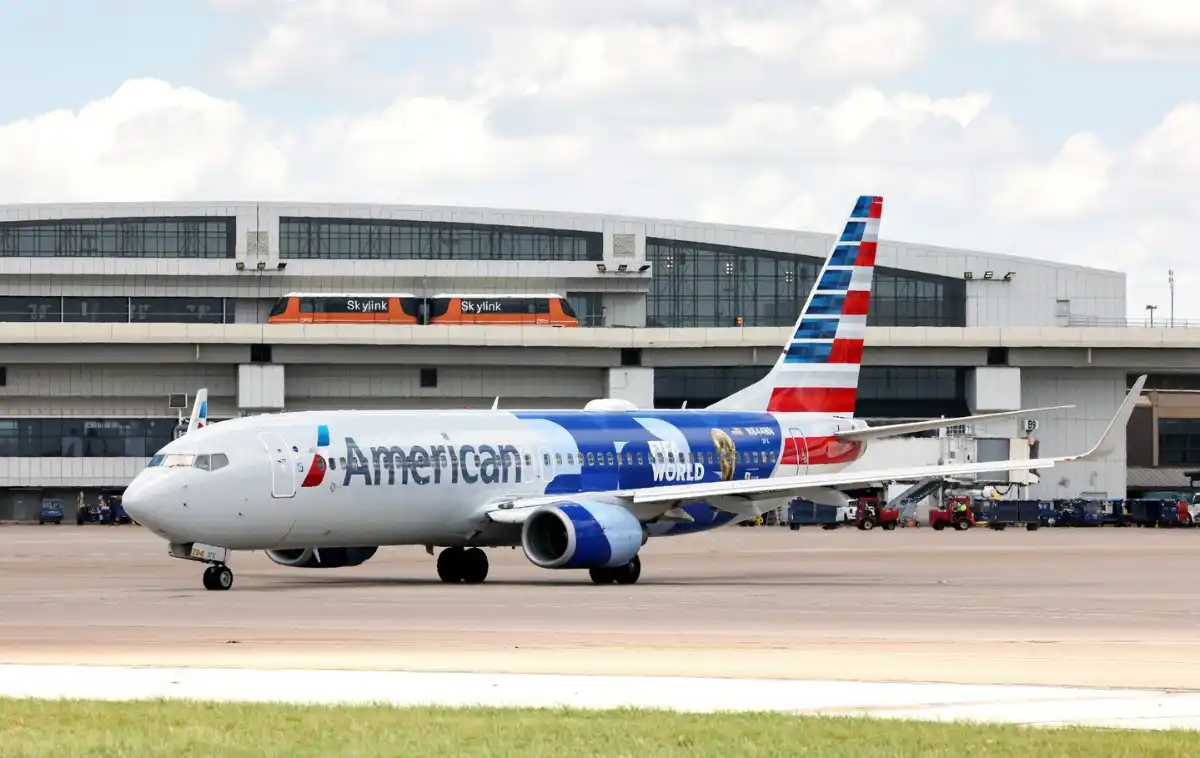
To provide standardized transportation across North America, American Airlines became FIFA’s Official North American Airline Supplier, giving tournament organizers access to one of the continent’s largest airline networks.
The carrier’s extensive presence across all 16 host cities makes it uniquely positioned to support both scheduled operations and dedicated charter services. Its infrastructure enables streamlined baggage handling, priority gate assignments, private terminal access, and coordinated scheduling alongside existing commercial operations.
American also works closely with FIFA’s global airline partner, Qatar Airways, particularly for international arrivals and cross-border coordination.
Together, these partnerships create a transportation framework capable of moving entire national delegations with military-like precision while minimizing disruption to regular airline schedules.
Domestic Narrowbody Aircraft Keep Teams Moving
While widebody aircraft dominate international arrivals, domestic operations rely heavily on efficient narrowbody fleets.
Aircraft such as the Boeing 737 MAX and Airbus A220 perform much of the tournament’s regional transportation, connecting smaller airports with major host cities through quick turnaround charter flights.
Several airlines contribute to these operations.
Southwest Airlines has transported teams between domestic cities using its extensive Boeing 737 network, while JetBlue has demonstrated the flexibility of the Airbus A220 during charter missions involving national squads.
These aircraft are particularly well suited to flights lasting one to three hours, providing sufficient passenger capacity while maintaining operational flexibility at both large international hubs and smaller municipal airports.
Instead of deploying oversized widebody aircraft for every journey, organizers match aircraft capacity to route requirements, improving efficiency across the network.

Regional Scheduling Reduces Player Fatigue
Geography presents one of the greatest challenges of hosting a tournament across North America.
Flying from the East Coast to the West Coast can require more than five hours in the air, not including airport procedures and ground transportation.
To reduce unnecessary travel, FIFA divided host cities into Eastern, Central, and Western regional clusters during the group stage.
Most teams remain within their assigned geographic corridor, substantially limiting repeated transcontinental journeys during the opening rounds.
The strategy reduces cumulative fatigue, simplifies logistics, and lowers overall fuel consumption compared with unrestricted scheduling.
Nevertheless, certain teams still face demanding travel patterns because of their chosen Team Base Camps.
Iran provides one notable example. Although scheduled to play multiple matches in West Coast cities such as Los Angeles and Seattle, the team established its operational base in Tijuana, Mexico. Every fixture therefore requires repeated international flights and border coordination before returning to its training headquarters.
Such schedules demonstrate that even carefully optimized tournament planning cannot entirely eliminate North America’s immense geographic scale.
Airports Face an Extraordinary Operational Challenge
Hosting the world’s largest football tournament transforms airports into critical pieces of sporting infrastructure.
Major gateways including Los Angeles International Airport, Dallas/Fort Worth International Airport, and New York’s John F. Kennedy International Airport already process enormous passenger volumes under normal conditions. During the World Cup, they must also accommodate national team charters, VIP aircraft, government delegations, sponsors, broadcasters, and millions of football supporters.
Aircraft parking becomes a particularly valuable resource.
Unlike commercial airliners that quickly unload passengers before departing again, many charter aircraft remain available for team transportation throughout the tournament.
Airport authorities therefore carefully allocate apron space, designate remote parking positions, and reposition aircraft to secondary airports whenever necessary to preserve operational efficiency.
Ground handlers, fueling providers, maintenance teams, baggage services, and security personnel must coordinate every movement with remarkable precision.
Even small delays can create cascading operational consequences affecting multiple flights throughout the day.
Cross-Border Aviation Adds Regulatory Complexity
Operating across three sovereign nations introduces another layer of logistical sophistication.
Every flight crossing between the United States, Canada, and Mexico requires coordination among multiple aviation regulators, customs agencies, immigration authorities, and airport operators.
Authorities work together to streamline entry procedures for players while maintaining security standards.
Whenever possible, teams use dedicated processing arrangements allowing athletes to move directly between aircraft and team buses without entering crowded public arrival halls.
These sterile transfer procedures significantly reduce waiting times while helping players maintain tightly controlled recovery schedules.
Behind every seemingly routine charter arrival lies extensive international coordination involving flight permissions, customs documentation, security clearances, and diplomatic cooperation.
Cargo Operations Are Just as Important as Passenger Flights
While players naturally attract most public attention, cargo represents one of the tournament’s largest logistical undertakings.
A modern national team transports far more than footballs and uniforms.
Medical equipment, rehabilitation devices, tactical analysis technology, nutritional supplies, communications systems, broadcasting equipment, promotional materials, and training gear all travel alongside the athletes.
Collectively, these shipments amount to millions of pounds of freight.
To manage this enormous operation efficiently, FIFA’s logistics partners pre-position much of the equipment before teams arrive, using dedicated cargo flights, trucking networks, and strategically located warehouses.
By the time a charter aircraft lands, essential equipment has often already reached the team’s hotel, stadium, or training facility.
This synchronized approach minimizes unloading time while ensuring every delegation can begin preparations immediately upon arrival.
Without sophisticated cargo planning, even perfectly timed passenger flights would fail to keep the tournament operating smoothly.
Millions of Fans Increase Pressure on Airline Networks
The aviation challenge extends well beyond the participating teams.
Millions of supporters are expected to travel across North America throughout the tournament, creating extraordinary demand for airline seats, hotel capacity, rental vehicles, and airport services.
International visitors compete with domestic travelers for limited flight availability, particularly on routes linking major host cities.
Meanwhile, global broadcasters continuously reposition cameras, satellite systems, mobile production units, and technical crews between venues according to the match schedule.
Any disruption—whether severe weather, air traffic congestion, customs delays, or airport equipment failures—can affect not only one team’s itinerary but also thousands of spectators and live television broadcasts watched by billions worldwide.
Maintaining resilience throughout this complex transportation network becomes just as important as maintaining speed.
The World’s Biggest Football Tournament Depends on Aviation Excellence
The 2026 FIFA World Cup showcases how modern aviation has become inseparable from elite international sport. Behind every kickoff lies an enormous network of aircraft, airports, logistics specialists, air traffic controllers, cargo operators, and airline partners working in perfect synchronization.
From customized long-haul arrivals carrying football superstars to recurring charter flights linking Team Base Camps with stadium cities, every journey is meticulously planned to maximize performance while minimizing disruption.
Rather than treating air travel as a simple transportation requirement, FIFA has integrated aviation into the tournament’s competitive strategy. Carefully selected aircraft, regional scheduling, centralized training bases, and coordinated cargo networks all contribute directly to player recovery, operational efficiency, and broadcast reliability.
As millions of fans watch matches unfold across North America, most will never witness the intricate aviation ecosystem operating behind the scenes. Yet every successful kickoff, every on-time arrival, and every seamless transfer stands as proof that one of the world’s largest sporting events depends just as much on aviation precision as it does on football excellence.