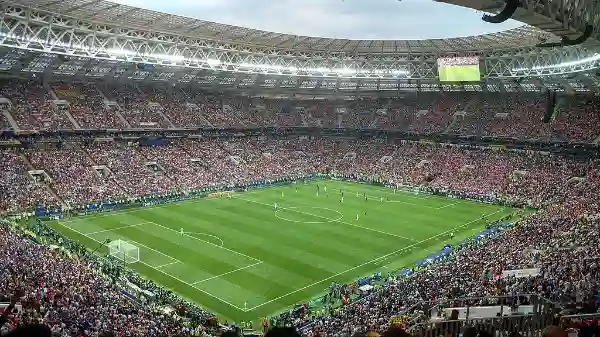
In a sweeping new initiative aimed at fortifying U.S. airspace, the White House has announced a $500 million plan to strengthen counter-drone defenses in preparation for the 2026 FIFA World Cup and other upcoming large-scale events, including the United States’ 250th anniversary and the 2028 Los Angeles Olympics. The program, led by Andrew Giuliani, director of the White House’s FIFA World Cup 2026 Task Force, marks one of the largest single investments ever made in national drone security infrastructure.
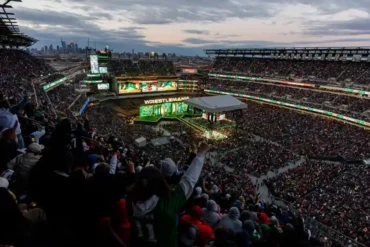
The administration’s goal is clear: to provide state and local governments with the funding, equipment, and authority needed to detect, track, and neutralize rogue drones that may pose a threat to major venues and public gatherings. With over 104 soccer matches scheduled to take place in American stadiums across multiple host cities, the security challenge is immense — and the potential risks, significant.
“Everybody from governors to police commissioners to stadium security chiefs agrees that this is something they need in order to protect the sites,” Giuliani stated in an interview, underscoring the urgency behind the plan.

Federal Investment Signals Heightened Concern Over Drone Threats
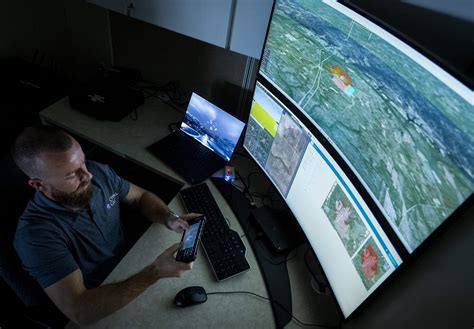
The $500 million fund, drawn from allocations to the Department of Homeland Security (DHS) under the One Big Beautiful Bill, will directly support local security agencies tasked with defending event airspace. The administration envisions urban law enforcement equipped with portable drone detection tools capable of identifying unauthorized aircraft, disrupting control signals through jamming, or issuing automated return-to-origin commands.
This move reflects an increasing national security concern over uncrewed aerial systems (UAS), particularly as drones become more accessible, affordable, and powerful. From potential terrorist exploitation to criminal interference and careless civilian use, the spectrum of drone-related risks continues to expand.
“Drones are a disruptive technology. They have an amazing potential for both good and ill,” noted Sebastian Gorka, Senior Director for Counterterrorism at the National Security Council. “We will increase the enforcement of current laws to deter two types of individuals: evildoers and idiots — the clueless and the careless.”
Bridging Legal Gaps Between Federal and Local Drone Authority
A central challenge in the rollout of this program is legal jurisdiction. Under current U.S. federal law, only DHS and the Department of Justice (DOJ) possess the authority to intercept or disable unauthorized drones. This limitation has raised significant concerns among local law enforcement agencies, who are expected to secure large venues without the legal capacity to neutralize airborne threats.
To address this, the White House is exploring a temporary authorization framework that would allow the DOJ to delegate limited counter-drone powers to state and local officials during high-risk events like the World Cup. Meanwhile, Congress has been slow to advance a bill expanding these powers permanently, leaving a critical legislative gap as major events approach.
More than 30 governors have formally urged Congress to grant states drone mitigation authority, arguing that localized response capacity is vital for fast-moving aerial incidents. The House Transportation Committee has approved a pilot program that would test this capability at certain events, but it remains unclear when the measure will reach a full vote.
World Cup 2026: The Testbed for National Drone Security Doctrine
The 2026 FIFA World Cup — co-hosted by the United States, Canada, and Mexico — is set to serve as the primary proving ground for the administration’s expanded drone defense strategy. Eleven U.S. cities are expected to host matches, and federal task forces are meeting daily to align security protocols, airspace management systems, and rapid-response teams across jurisdictions.
Giuliani has described drones as “a key part” of World Cup planning, noting that FIFA’s own Chief Safety and Security Officer, G.B. Jones, has identified drone incursions as “the greatest security challenge” facing the tournament. Jones told a recent House Homeland Security Committee hearing that ensuring airspace protection is essential not only for stadiums but also for training sites, fan zones, and other large outdoor gatherings.
“The DHS, FBI, FAA, and local law enforcement partners must be equipped with both resources and legal frameworks to mitigate drone threats across all venues,” Jones emphasized, highlighting the intricate coordination required to secure multiple airspaces simultaneously.

Funding and Coordination Across Borders
In addition to direct drone-security funds, World Cup host cities already have access to a $625 million DHS grant program created under the One Beautiful Bill Act, designed to reimburse local governments for tournament-related security costs. Guidance on how to apply for the new drone-defense funding will be distributed to all states and territories in the coming months.
Each state will receive a minimum baseline allocation, even if it is not directly hosting World Cup matches or America 250 events. “There will be a certain minimal amount available for every state,” Giuliani explained, “because this is about national readiness, not just event readiness.”
Meanwhile, trilateral cooperation is deepening. The U.S., Canada, and Mexico convened their first joint counter-drone coordination meeting in Mexico City this summer, working to harmonize standards despite differences in airspace laws and enforcement frameworks. Giuliani stressed that all three nations are committed to sharing best practices and establishing a unified approach to aerial threat management.
Broader Industrial and Defense Implications
Beyond event security, the administration’s drone policy is being tightly integrated with industrial and defense modernization goals. In June, President Trump signed a series of executive orders aimed at enhancing airspace security, accelerating domestic drone innovation, and promoting U.S. leadership in unmanned systems manufacturing.
Homeland Security Secretary Kristi Noem has framed the drone issue as part of a broader “weapons-technology revolution,” warning that unmanned aircraft are increasingly used to smuggle narcotics, spy on defense installations, and target critical infrastructure.
The $500 million World Cup drone security initiative, then, is not just a short-term event measure — it represents a strategic investment in long-term aerial defense capacity, intended to prepare the nation for a future in which drone threats are constant, complex, and increasingly autonomous.
As the countdown to kickoff continues, the White House’s challenge will be balancing public safety, technological innovation, and legal clarity — ensuring that the skies above the world’s most watched sporting event remain safe, secure, and under control.