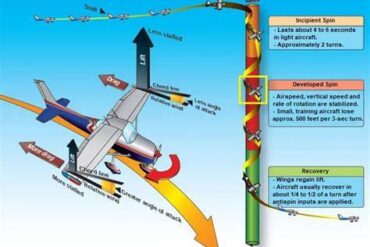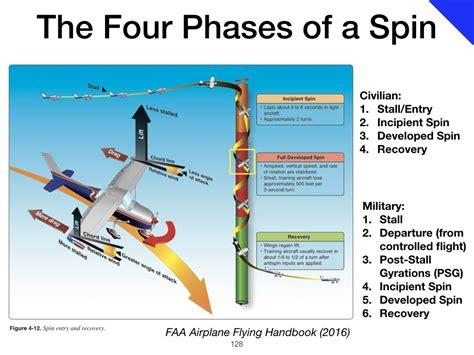
A spin occurs when an aircraft experiences a yaw aggravated stall, leading to rotation around the spin axis. During this event, the aircraft follows a steep, corkscrew-like path downward. Spins can happen both intentionally and unintentionally, regardless of the aircraft’s flight attitude or airspeed. Essentially, if a stalled aircraft undergoes a significant yaw rate, it will enter a spin. This yaw might result from improper rudder use or specific wing drop characteristics of the aircraft.
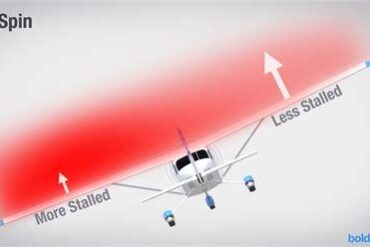
In a spin, both wings are stalled, but one wing is typically in a deeper stall than the other. The wing that stalls more deeply creates more drag, causing the aircraft to yaw toward that wing. Spins are characterized by a high angle of attack, low airspeed, and a rapid descent rate. To recover from a spin, pilots must follow a specific set of actions, which can seem counter-intuitive. If a pilot uses incorrect techniques, exceeds spin certification limits, or has an improperly loaded aircraft, the spin could lead to a crash.