The Rising Menace of Unmanned Aerial Systems
As unmanned aerial systems (UAS) become increasingly ubiquitous and lethal, the United States military finds itself at a critical juncture. Drones—once niche assets—have evolved into essential tools of modern warfare. Whether deployed by peer adversaries like Russia and China or irregular forces in the Middle East, these systems now possess a battlefield presence that challenges traditional military dominance. From one-way attack drones to loitering munitions and AI-enabled swarms, the drone threat is real, escalating, and transforming the rules of engagement.
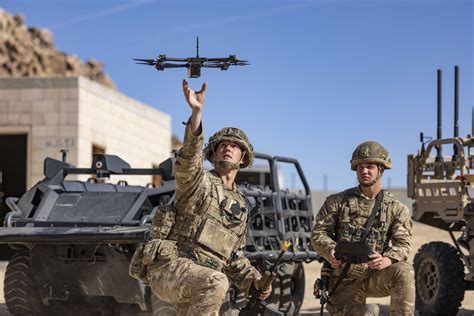
The January 29, 2024 drone attack on a U.S. base in Jordan, which killed three service members, is no isolated event. Over 600 drone incursions have taken place at U.S. military installations since 2022, many driven by Iran-backed militias and non-state actors exploiting the low cost and high impact of commercial and modified drones. In Ukraine, drone warfare has redefined battlefield strategy, with both Kyiv and Moscow deploying massed drone formations to penetrate defenses, gather intelligence, and deliver precision strikes.
Lessons from Ukraine: The Air Littoral Comes Alive
The conflict in Ukraine provides real-time laboratories of drone evolution. Ukrainian forces, facing a larger adversary, have used small drones to target tanks, convoys, and artillery—leveling the playing field with asymmetric tools. The concept of the “air littoral” has emerged: a low-altitude, contested space where drones operate below radar coverage, evading traditional air defenses and dominating reconnaissance roles.
Russia has deployed hundreds of Iranian-made Shahed drones to exhaust Ukraine’s air defense networks. Ukraine, in response, has shifted toward swarm tactics and automated drone systems, with plans to fully operationalize drone battalions by 2025. These tactical adaptations demonstrate the potential for UAS to influence strategic outcomes—and underscore the urgency for the U.S. to evolve accordingly.
U.S. Capabilities and the Fragmentation Problem
While the U.S. military is not unaware of the threat, its counter-UAS (C-UAS) response remains fragmented. Programs like the Joint Counter-small Unmanned Aircraft Systems Office (JCO) and tests at Yuma Proving Ground have shown promise. However, these efforts are underfunded and unevenly distributed. As of 2025, few frontline units are consistently equipped with C-UAS technologies, and only a fraction of personnel are trained to operate them effectively.
At present, American forces deploy a patchwork of systems:
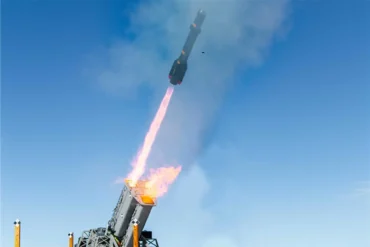
- Kinetic interceptors such as the APKWS and Thales LMM offer flexible, precise destruction of hostile drones.
- Electronic warfare tools can jam or disrupt drone signals, although these are limited by range and require technical expertise.
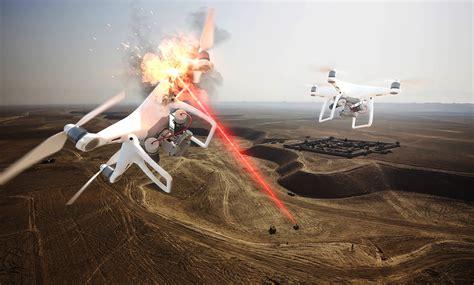
- Directed-energy weapons (DEWs) like high-energy lasers show potential but suffer from reliability issues, logistical burdens, and lack of combat validation.
Despite this layered approach, coverage gaps persist, especially against smaller drones that can evade radar and blend with civilian air traffic. Installation commanders often lack the legal authority to neutralize threats hovering over their own facilities. Worse, many service members lack the formal training to even identify the drones they might be expected to counter.
Cost and Efficiency: The Unsustainable Tradeoff
One of the most striking lessons from drone conflicts is economic asymmetry. In Ukraine, $200 commercial drones have triggered responses from air defense systems costing millions per shot. One U.S. ally used a $3 million Patriot missile to destroy a hobbyist drone—an absurd but common example of unsustainable defense economics. Unless the U.S. can field affordable, modular, and scalable countermeasures, it will face a crisis of resource attrition.
To ensure strategic sustainability, the Pentagon must prioritize systems like the APKWS that offer precision without exorbitant cost. DEWs, while exciting, should be pursued cautiously due to their power requirements and operational complexity. Instead, kinetic and electronic hybrid systems represent the most realistic short-term solution.
The Detection and Identification Gap
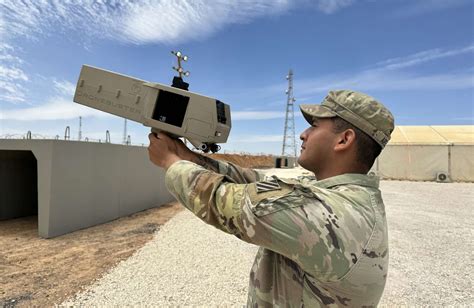
A C-UAS system is only as effective as its detection layer. Currently, drone identification capabilities are underdeveloped, raising the risk of fratricide or missed threats. The military lacks a standardized system to quickly classify drones as hostile, neutral, or friendly. In fast-moving combat situations, hesitation can be fatal.
To close this gap, the Department of Defense must invest in:
- Real-time drone classification software, powered by AI and integrated across platforms.
- Networked radar and optical sensors optimized for low-altitude detection.
- Unified doctrine for cross-branch coordination, ensuring joint units can share intelligence and respond coherently.
Without interoperable systems, U.S. forces risk confusion, redundancy, and vulnerability—particularly in theaters with mixed allied operations or civilian proximity.
Training: The Critical Shortfall
Weapons without training are dead weight. Although the Joint C-sUAS University (JCU) at Fort Sill has introduced promising multi-branch training, it remains critically undermanned. Only a small fraction of troops are trained on the wide variety of systems they might encounter. Even within a single service, there is limited interoperability between units.
This failure threatens to negate hardware advances. Major General Sean Gainey has acknowledged that counter-drone training is lagging behind technology, a disconnect that erodes operational readiness.
JCU must be scaled up—both in personnel and in curriculum breadth—to encompass:
- Cross-service system training (Army, Navy, Air Force, Marines)
- Rapid UAS threat updates, including adversary tactics and drone specifications
- Live-scenario exercises simulating swarm incursions, jamming conflicts, and base defense contingencies

Legal and Command Constraints
Legally, domestic drone defense presents thorny challenges. Section 130i of Title 10 grants certain military authorities to take action against UAS over U.S. bases, but not universally. Many commanders remain powerless to shoot down or jam drones, even when they threaten operational security. Until this legal framework is harmonized across all installations, adversaries will exploit these seams.
Congress must act to provide unified engagement authority to base commanders. This authority should be accompanied by a standardized set of engagement protocols to avoid misuse while empowering defenders. Legal ambiguity is a liability that smart adversaries have already learned to exploit.
Recommendations for Immediate Action
To regain the initiative in drone warfare, the Department of Defense should act swiftly:
- Mass-field cost-effective kinetic C-UAS platforms like APKWS and LMM across frontline units and installation defenses.
- Harden domestic installations with unified drone detection grids, rapid classification software, and commander authority to engage.
- Expand and nationalize training at the JCU to encompass all services and systems, emphasizing practical, scenario-driven instruction.
- Enhance detection protocols with AI, radar fusion, and cloud-based classification shared across the joint force.
- Support legislative reform that extends base commander authority and modernizes C-UAS engagement laws.
Each of these steps aligns with maintaining technological edge, force protection, and strategic deterrence in an increasingly drone-saturated battlespace.
The Future Fight Will Be Fought in the Air Littoral
Unmanned systems will not replace manned platforms—but they will transform how battles are fought, from logistics disruption to precision assassination. Future conflicts will likely unfold in contested airspaces cluttered with drones, some weaponized, some innocuous, all demanding rapid identification and response. The U.S. military’s ability to maintain its advantage will hinge on how quickly and intelligently it adapts.
Countering the drone threat requires more than acquisition; it demands doctrine, training, integration, and a cultural shift. The current fragmented posture is not sustainable. In the new age of warfare, drones are no longer a novelty—they are a battlefield constant. The time to act decisively is now.