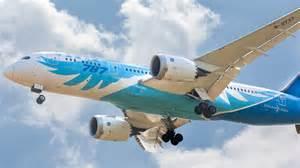
China Southern Airlines has executed a decisive fleet restructuring move, offloading its entire subfleet of 10 Boeing 787-8 Dreamliners through an online auction process that has now secured a confirmed buyer. The transaction, finalized on February 27, 2026, signals both a strategic recalibration by China’s largest carrier and a potential fleet expansion catalyst for Thai Airways, which appears poised to take control of the aircraft via leasing arrangements.
With nearly 700 aircraft in operation, China Southern is no stranger to large-scale fleet optimization. Yet the disposal of its entire 787-8 fleet stands out for both its structure and implications. Rather than selling aircraft individually, the airline insisted on an “all or nothing” transaction, bundling the 10 aircraft together with two spare GE Aerospace GEnx-1B engines. That insistence has now paid off.
China Southern’s Strategic Exit From The Boeing 787-8
Delivered between 2013 and 2014, the 10 Dreamliners average more than 12 years in service. Configured with 266 seats, including 18 business class and 248 economy class seats, the aircraft were primarily deployed from Ürümqi (URC) in western China, supporting long-haul connectivity from a geographically strategic but operationally challenging hub.
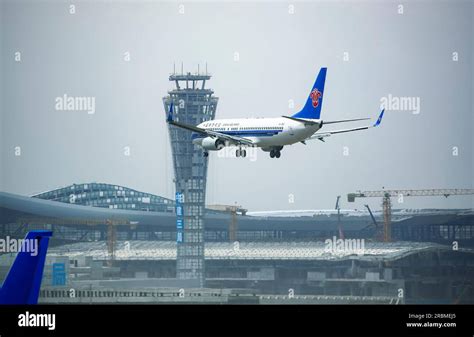
Despite the 787-8’s renowned fuel efficiency and range capabilities, these specific aircraft lacked the updated maximum takeoff weight enhancements found in newer production units. That limitation reduced their operational flexibility compared to more modern widebody assets. For an airline recalibrating toward higher-capacity aircraft, the economics became less compelling.
China Southern has made clear its intention to concentrate on larger widebody platforms. The airline’s current long-haul fleet includes:
- 22 Airbus A330-300s
- 19 Airbus A350-900s
- 15 Boeing 777-300ERs
- 20 Boeing 787-9s
Against that backdrop, the smaller-capacity 787-8 subfleet became operationally isolated. Fleet commonality drives cost efficiency in maintenance, crew training, and scheduling. Maintaining just 10 aircraft of a specific variant introduces complexity that large carriers increasingly seek to eliminate.
The divestment process began in 2024 as part of a broader initiative to “optimize fleet structure.” However, the effort was temporarily suspended in early 2025 amid tariff-related uncertainty affecting aircraft transactions. Once market conditions stabilized, the airline resumed the sale—this time with a firm package strategy.
Avolon Secures $532 Million Deal Through Bohai Leasing
The buyer has emerged in the form of Bohai Leasing, which signed a Master Sale and Purchase Agreement via its subsidiary Avolon, one of the world’s largest aircraft lessors. The transaction is valued at approximately $532 million, with final pricing determined through the exchange bidding process.
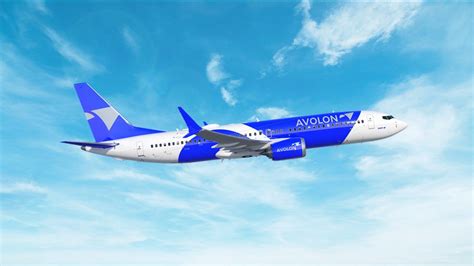
The involvement of a major leasing company rather than a direct airline buyer reflects current market dynamics. Aircraft manufacturers continue to struggle with production delays, leaving airlines eager for lift capacity. Yet paradoxically, the secondhand widebody market has remained selective, particularly for mid-life aircraft without the latest performance upgrades.
Avolon’s acquisition demonstrates confidence in placing these jets with an operator seeking immediate capacity at a lower capital outlay than factory-fresh deliveries. The inclusion of spare engines further enhances lease attractiveness by mitigating operational risk.
Thai Airways Positioned as The Likely Operator
While the sale announcement does not explicitly name the end operator, multiple indicators point toward Thai Airways. The Star Alliance carrier has publicly confirmed plans to acquire 10 Boeing 787-8 aircraft through a leasing company, with deliveries expected in the coming months. The numerical alignment with China Southern’s divestment is difficult to dismiss as coincidence.
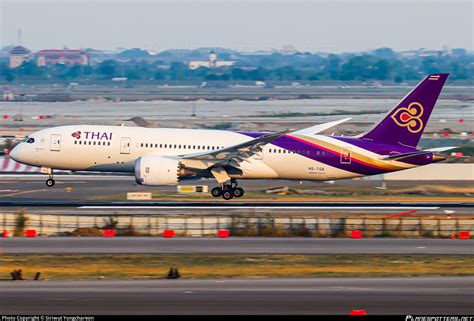
Thai Airways is in an active rebuilding phase following pandemic-era restructuring and fleet rationalization. The airline has dozens of factory-new Boeing 787-9s on order, yet production backlogs mean those aircraft will arrive gradually. Immediate capacity is critical as international demand rebounds across Southeast Asia.
Historically, Thai Airways has shown flexibility in sourcing aircraft from secondary markets, prioritizing operational growth over uniform cabin consistency. Industry observers do not expect extensive interior retrofits for the incoming 787-8s. Standardization of hard product has rarely been the airline’s defining strategy.
From a financial perspective, leasing mid-life Dreamliners offers a pragmatic bridge solution. The 787 platform remains highly efficient compared to older-generation widebodies, and acquisition costs are materially lower than new-build alternatives. For Thai Airways, the equation balances speed, efficiency, and capital preservation.
What This Deal Signals for The Widebody Market
This transaction underscores a subtle but important shift in the global widebody landscape. Airlines are trimming niche subfleets to reduce complexity, while lessors increasingly act as intermediaries, redistributing assets to carriers with near-term growth ambitions.
China Southern’s decision to pursue a bundled online auction was unconventional for a major state-backed airline, yet it achieved the desired outcome: full disposal of a non-core fleet segment in a single stroke. The transaction cleans up the airline’s widebody structure and reinforces its pivot toward higher-capacity aircraft better aligned with its network strategy.
For Thai Airways, the likely incoming 787-8s represent accelerated restoration of long-haul capability at a time when passenger demand is outpacing aircraft supply. The deal reflects opportunistic fleet management rather than fleet expansion for its own sake.
The Dreamliner, once emblematic of next-generation aviation technology, now demonstrates another dimension of its versatility: adaptability across lifecycle stages and ownership structures. As production bottlenecks persist and airlines recalibrate post-pandemic strategies, secondary-market transactions like this one may become increasingly influential in shaping global fleet evolution.