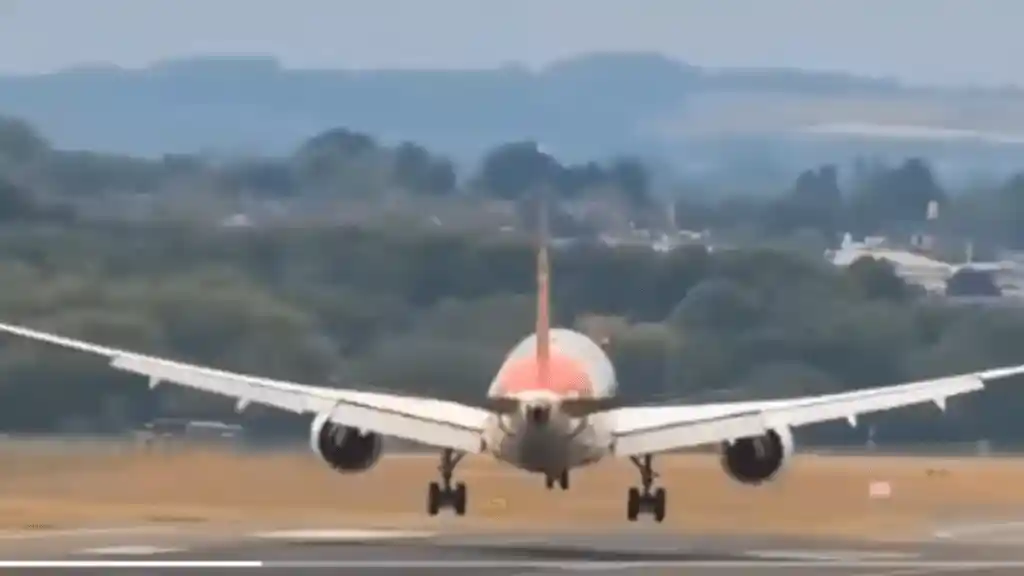
On July 4, 2025, an Air India Boeing 787-8 Dreamliner, operating as flight AI 113 from Delhi International Airport (DEL) to Birmingham Airport (BHX), captured global attention after executing a go-around maneuver during final approach. The event, which unfolded under challenging wind conditions, was filmed and shared by the Airport Action YouTube channel, rapidly garnering thousands of views and sparking widespread conversation across aviation communities.
The aircraft, registered VT-NAA, descended normally until just moments before touchdown, when the pilots initiated a swift climb-out. The engines audibly spooled up, and the wide-body aircraft pulled away from the runway, ascending into the grey UK skies. While the move startled some unfamiliar passengers and casual observers, for seasoned aviators and industry professionals, it was a routine safety procedure executed with precision.
What Prompted the Go-Around? Turbulence and Judgement at the Threshold
According to FlightRadar24 data, flight AI 113 was on final approach when the flight crew likely assessed that strong crosswinds or an unstable approach path made a safe landing uncertain. A go-around, while not rare, requires decisive action — something the Air India crew demonstrated expertly.
A go-around, also known as a missed approach, occurs when a pilot aborts a landing and re-enters the traffic pattern for another attempt. The reasons can vary: sudden wind gusts, poor visibility, runway obstructions, another aircraft on the runway, or even direction from air traffic control (ATC). Regardless of the cause, the objective is always passenger and crew safety.
In this case, while Air India has not released an official statement regarding the precise reason for the maneuver, atmospheric conditions reported at BHX indicated gusting crosswinds and intermittent low cloud cover — both of which can compromise a stabilized approach, particularly in larger aircraft like the 787-8 Dreamliner.
Social Media Reactions and Aviation Community Applause
What truly propelled the event into viral territory was the captivating footage of the maneuver. Filmed from the airport perimeter by Airport Action, the video clearly shows the aircraft descending gracefully before rapidly accelerating and ascending again. The footage struck a chord across platforms, from YouTube and Reddit to aviation forums and TikTok, where commenters heaped praise on the flight crew.
Viewers described the action as “textbook“, “smooth and professional,” and a “masterclass in airmanship.” Many were surprised to learn how common such maneuvers are and lauded the transparency and accessibility of aviation data that allowed the general public to understand what transpired in real time.
The virality of this go-around reflects a growing public interest in aviation safety and flight operations. Unlike a decade ago, when such events might have gone unnoticed by passengers, today’s interconnected platforms and publicly accessible flight tracking tools turn any flight maneuver into a teachable moment.
The Boeing 787 Dreamliner: Technology Meets Safety
The Boeing 787-8 Dreamliner, known for its long-range capabilities and fuel efficiency, is also engineered for complex flight operations. Equipped with state-of-the-art flight management systems, automated approach aids, and superior engine thrust control, the Dreamliner is built to respond effectively to dynamic in-flight conditions.
Air India’s Dreamliner fleet, introduced in 2012, remains central to its long-haul operations. Aircraft VT-NAA, in particular, is one of the early models delivered to the airline. Despite its age, the aircraft continues to perform reliably, thanks to rigorous maintenance protocols and continuous software upgrades that ensure safety in rapidly changing weather environments like that of the UK.
Pilots operating the 787-8 are trained extensively on go-arounds, with scenarios simulated in flight training devices that replicate windshear, unstable approaches, and ATC interventions. The AI 113 incident underscores the value of that training — a seamless decision, cleanly executed, protecting all 200+ souls on board.
How Go-Arounds Are Perceived — And Why They Shouldn’t Worry Passengers
Despite the rising awareness, many passengers still react to go-arounds with anxiety. The abrupt power surge, the climb-back after a near landing, and the absence of immediate explanation can cause discomfort. However, aviation professionals reiterate that go-arounds are neither emergencies nor mistakes.
In fact, the International Civil Aviation Organization (ICAO) and national regulators like the DGCA (India) or CAA (UK) emphasize go-arounds in their safety manuals. Most aircraft manuals even include detailed performance charts to guide pilots in calculating fuel, altitude, and trajectory considerations should a go-around become necessary.
Moreover, go-arounds are actively encouraged in safety training. Pilots are taught that when in doubt, they must err on the side of caution. As a result, an increasing number of airlines treat go-arounds as a metric of pilot discretion and good judgment, not as anomalies.
Aviation Professionals Respond: Commendations, Context, and Comparisons
The aviation community — from active airline pilots to safety investigators and retired air traffic controllers — weighed in across social media and blogs following the incident. Most applauded the flight crew’s judgment and the absence of drama despite difficult conditions.
In forums like PPRuNe (Professional Pilots Rumour Network) and Airliners.net, experienced aviators noted the smooth vertical profile on re-climb, the lack of banking under pressure, and the excellent coordination between pilots and ATC in managing the unexpected go-around.
Several compared the maneuver to a similar event involving Emirates flight EK225 in San Francisco on March 19, 2025. The A380, during final approach at SFO, encountered windshear just 50 feet from landing and executed a go-around that was also widely viewed. In both instances, crew training and systems redundancy led to incident-free outcomes.
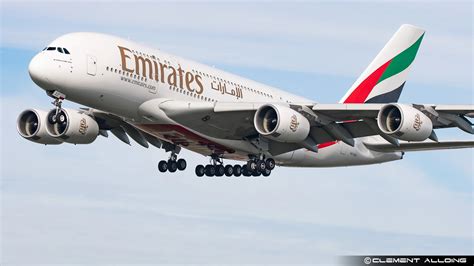
These examples reinforce a powerful narrative: modern commercial aviation is designed for resilience, and go-arounds are a feature, not a flaw.
Historical Precedents and the Safety Culture Behind the Scenes
While the AI 113 event stood out due to its visual clarity and the public’s reaction, such go-arounds happen globally on a near-daily basis. According to FAA and EASA data, go-arounds occur in roughly 1–2 per 1,000 landings, often going unnoticed by the flying public.
From London Heathrow to Singapore Changi, major international airports plan runway availability and ATC shifts with the assumption that go-arounds will occasionally be necessary. Pilots conduct pre-briefs on alternate landing runways, missed approach vectors, and holding patterns. Airlines such as Air India, Emirates, Lufthansa, and ANA all include go-around strategies in their standard operating procedures (SOPs).
Crucially, the safety culture underpinning these procedures means that pilots feel empowered to take these decisions without fear of criticism or delay penalties. This cultural backing, reinforced by post-incident reviews and crew debriefings, ensures that every go-around adds to operational knowledge.
Final Touchdown: Aftermath and Operational Closure
Following the go-around, flight AI 113 made a second approach and landed safely at BHX without further incident. Ground staff confirmed normal disembarkation, and no passenger injuries or technical issues were reported.
Later, FlightAware logs showed that the aircraft taxied to its assigned gate with a delay of under 15 minutes — a minimal deviation, especially considering the potential complexity of the situation. This seamless conclusion reflects both the efficiency of Birmingham ATC and the skill of the flight crew, who ensured the maneuver was executed without unnecessary delay.
Air India, while not issuing a detailed press release, reportedly acknowledged internally the crew’s performance and flagged the video for use in internal training modules.
Conclusion: A Lesson in Precision and Preparedness
The go-around at Birmingham Airport involving Air India’s Boeing 787-8 was far from an emergency. It was, instead, a remarkable demonstration of flight crew judgment, procedural adherence, and technological support. What transformed it into a viral sensation was not the maneuver itself, but the growing public interest in behind-the-scenes aviation excellence.
For an industry that often grabs headlines for the wrong reasons, this incident shines a light on what aviation does right — prioritizing safety, adapting to evolving conditions, and executing complex tasks with poise. In that sense, the go-around at BHX wasn’t just a flight maneuver — it was a global masterclass in aviation discipline.