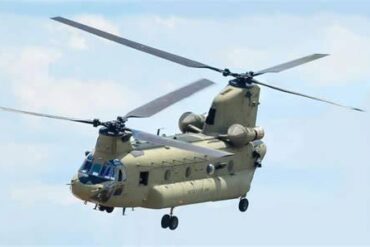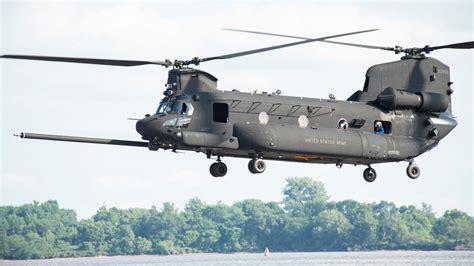
U.S. Special Operations Command has awarded Boeing a $19.4 million firm-fixed-price modification to support continued production of the MH-47G Block II Chinook helicopter, reinforcing the heavy-lift backbone of America’s special operations aviation fleet through November 2030. Executed in Ridley Park, Pennsylvania, the contract action may appear modest in value, yet it sits within a broader, multi-year modernization strategy designed to ensure that Special Operations Forces retain reliable long-range insertion, extraction, and resupply capabilities in increasingly contested environments.
The funding modification adds to an existing delivery order and signals sustained production momentum for the MH-47G, SOCOM’s specialized variant of the venerable H-47 Chinook. While the award does not publicly specify aircraft quantities or configuration adjustments, its timeline aligns directly with a larger procurement trajectory that stretches to the end of the decade. In November 2025, Boeing secured an $877.7 million delivery order for MH-47G production under the same schedule window. This latest action likely supports incremental production funding, long-lead components, or integration work necessary to maintain assembly-line continuity without interruption.
Such incremental awards are standard within military aviation procurement. Rotary-wing production, particularly for highly specialized aircraft, operates on a carefully phased funding structure. By extending resources across multiple fiscal years, SOCOM ensures stable supplier networks, predictable workforce planning, and sustained industrial readiness—factors that are often more decisive than headline contract figures.
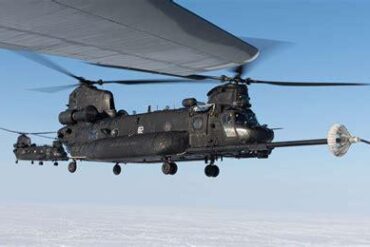
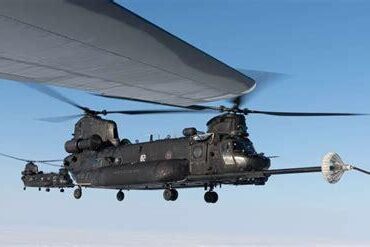
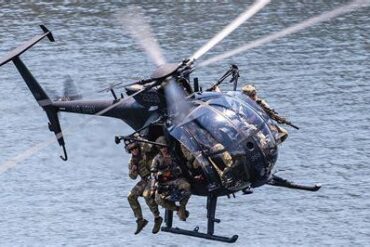
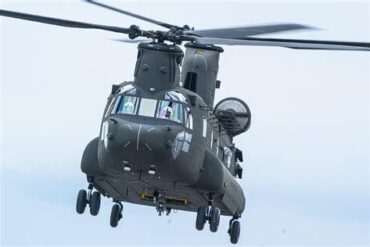
The MH-47G Chinook is not merely a transport helicopter with upgraded avionics. It is a purpose-built heavy assault platform tailored for the most demanding special operations missions. Designed for long-range infiltration and exfiltration, the aircraft routinely operates at night, in adverse weather, and across austere terrain where conventional lift platforms would struggle. Its operational envelope includes urban insertion, over-water penetration profiles, shipboard operations, sling-load resupply, and forward arming and refueling point support.
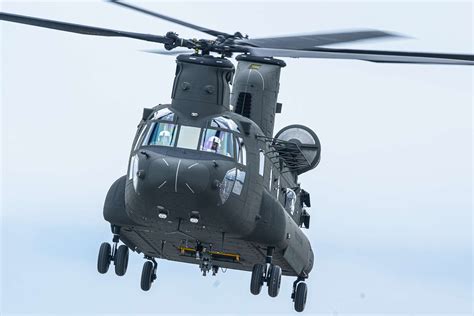
The aircraft’s defensive armament typically includes forward-mounted M134 miniguns and aft-positioned M240 machine guns, enabling suppressive fire during high-risk insertions and extractions. This configuration underscores the platform’s dual identity: heavy transport and armed overwatch in a single airframe. Special Operations Aviation units rely on that flexibility when missions evolve mid-flight from surgical raids to emergency casualty evacuations.
At the heart of the modernization effort lies the Chinook Block II baseline, an upgrade designed to reclaim payload and range eroded by decades of structural modifications and additional mission systems. Over time, incremental additions—armor, sensors, fuel capacity, defensive systems—gradually consumed lift margins. Block II addresses this through structural strengthening, redesigned fuel tanks, an improved drivetrain, and refined weight management.
The upgraded configuration supports a maximum gross weight of 54,000 pounds, restoring lift performance while extending mission radius. Reinforced airframe components and an enhanced fuel system ensure that the aircraft can carry heavier payloads over longer distances without sacrificing reliability. For SOCOM, this translates directly into deeper penetration capability and fewer forward staging requirements—an operational advantage in regions where basing rights may be limited or politically sensitive.
Modernization extends beyond mechanical improvements. The MH-47G Block II incorporates advanced flight control technologies designed to reduce pilot workload during demanding low-level operations. An Active Parallel Actuator Subsystem provides tactile feedback, helping prevent crews from exceeding aircraft performance limits. In high-threat environments, where terrain masking and rapid maneuvering are routine, reducing cognitive strain enhances both safety and survivability.
The aircraft’s survivability suite includes upgraded aircraft survivability equipment, next-generation tactical communications, sensor fusion integration, and degraded visual environment systems. These enhancements allow crews to operate effectively in dust, fog, or low-light conditions while maintaining real-time situational awareness. Software-driven architecture improvements also create growth margins for future mission system integration, ensuring that the platform remains adaptable through the 2030s.
A defining capability of the MH-47G is its AN/APQ-187 Silent Knight radar, a low-probability-of-intercept, low-probability-of-detection multi-mode radar optimized for terrain-following and terrain-avoidance flight. Operating between roughly 100 and 1,000 feet above ground level, the radar enables safe high-speed flight in darkness or poor weather. Terrain-following mode automatically adjusts altitude to match ground contours, allowing the helicopter to exploit natural masking features and reduce exposure to hostile sensors and weapons.
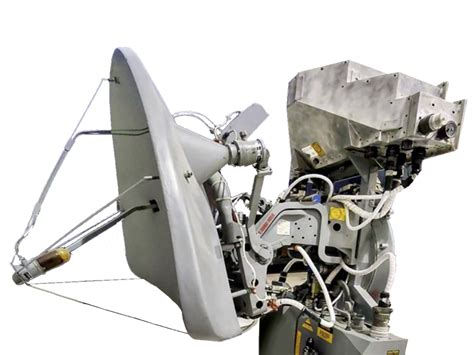
The Silent Knight’s compact one-box configuration minimizes weight and integration penalties while delivering modes for weather detection, ground mapping, and maritime detection. Over-water approaches and coastal penetrations—historically high-risk profiles—benefit from the radar’s precision tracking and clutter discrimination. In operational terms, it allows special operations crews to approach targets with minimal warning and maximal flexibility.
Strategically, the MH-47G fills a capability gap that neither medium-lift helicopters nor fixed-wing mobility aircraft can bridge. Fixed-wing platforms offer range but lack vertical landing flexibility. Medium helicopters provide maneuverability but cannot match the heavy payload capacity required for multi-team insertions, specialized vehicles, breaching systems, or extended sustainment loads. The MH-47G combines heavy lift with precision low-altitude penetration, enabling distributed operations across wide geographic areas.
This capability becomes increasingly relevant as U.S. defense planning shifts toward contested logistics and distributed operations in peer-threat environments. Special operations missions may require launch from distant staging bases, forward refueling at austere sites, and rapid repositioning under electronic warfare conditions. The Block II configuration enhances endurance and reliability, allowing SOCOM to execute these missions with reduced dependency on large, fixed infrastructure.
Fleet recapitalization further explains the significance of sustained funding. Army planning documents indicate that the Block II effort aims to rebuild or replace up to 69 MH-47G aircraft, many of which trace structural lineage back more than four decades. By mid-2024, dozens of Block II aircraft were already under contract, marking steady progress toward full fleet renewal. The February 2026 modification reinforces that trajectory rather than introducing a new program phase.
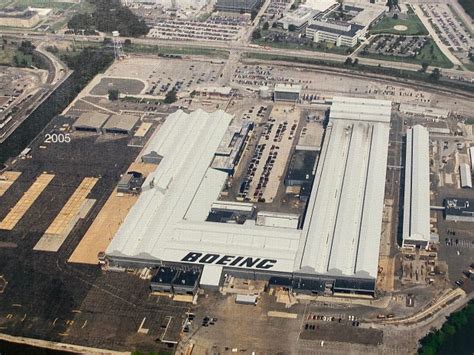
Industrial stability is another critical factor. The Ridley Park production line supports a highly specialized workforce and supplier ecosystem. Firm-fixed-price contracting reflects configuration maturity and production stability, shifting cost risk to the contractor while ensuring predictable budgeting for the government. Maintaining uninterrupted production reduces the risk of supplier attrition and preserves critical manufacturing competencies within the U.S. defense industrial base.
As geopolitical tensions intensify and operational demands expand, the MH-47G remains central to SOCOM’s rapid-response toolkit. Its blend of heavy lift, long-range penetration, advanced avionics, and survivability systems ensures that Special Operations Forces can insert and extract personnel under conditions that challenge conventional aviation assets.
The $19.4 million modification may represent only a fraction of overall program value, but in defense procurement, continuity is power. Sustained funding through 2030 secures production tempo, preserves modernization momentum, and signals institutional commitment to maintaining heavy assault capability at the highest readiness level. In an era defined by contested airspace, dispersed battlefields, and rapid-response requirements, the MH-47G Block II Chinook remains not just a transport platform, but a strategic enabler of American special operations reach.