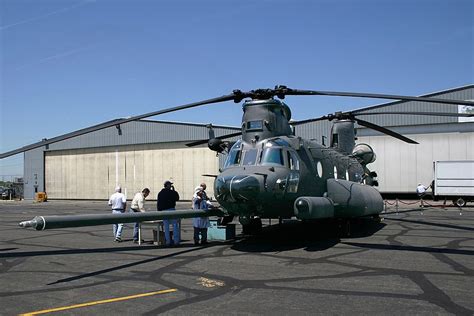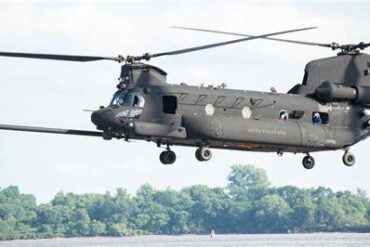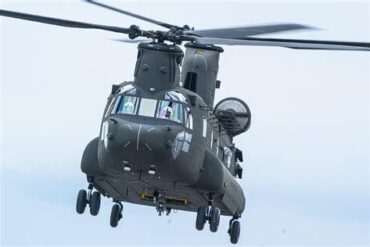
On November 20, 2025, the U.S. Special Operations Command (USSOCOM) deepened its long-standing partnership with Boeing by placing an $877 million order for additional MH-47G Block II Chinook helicopters. This substantial investment not only extends the helicopter’s production line through late 2030, but it also underscores the critical role the MH-47G plays in enabling U.S. special operations forces across the globe.
Strategic Expansion of the MH-47G Program
This latest delivery order reflects a broader modernization initiative that has evolved steadily over the past seven years. Beginning with a $26.9 million contract in July 2018, the Department of Defense began shifting to MH-47G Block II platforms, designed specifically for the rigorous demands of elite units like the 160th Special Operations Aviation Regiment (SOAR) — famously known as the Night Stalkers.
The new order follows a historical cadence of procurements, including:
- June 2019: A $194 million contract for Block II units.
- September 2020: Delivery of the first MH-47G Block II.
- December 2023: A $271 million contract for six remanufactured helicopters.
- March 2025: A $240 million order for five more remanufactured aircraft.
These acquisitions cumulatively bring the total number of Block II helicopters under contract to fifty-one, setting the stage for a fully modernized USASOAC Chinook fleet by early 2030.
The Backbone of Special Operations Aviation
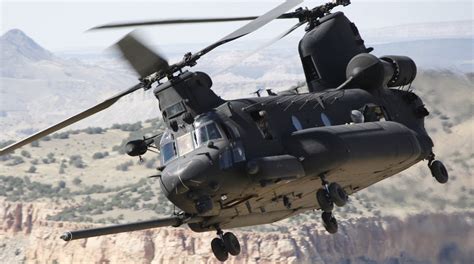
The MH-47G remains a linchpin in U.S. special operations aviation for a reason. Derived from the CH-47 Chinook, the G-model has been honed specifically for high-risk missions, with key roles including:
- Insertion and extraction of special operations teams
- Rapid resupply in denied or rugged environments
- Airborne command and control
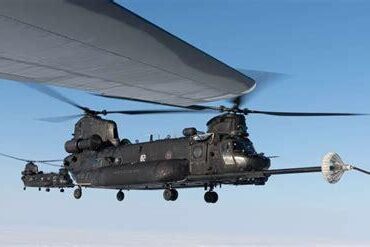
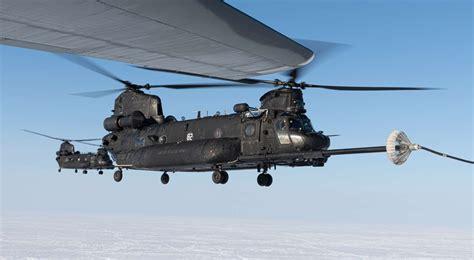
- Static refueling operations, or “fat cow” missions
These operations demand an aircraft that not only boasts raw power and endurance, but also advanced avionics, stealth, and multi-environment capability.
Engineering Advancements: From D and E Models to Block II
Evolution from earlier variants like the MH-47D and MH-47E has brought structural, aerodynamic, and operational enhancements. The current MH-47G Block II incorporates:
- Monolithic machined fuselage sections, replacing built-up structures to reduce weight and improve strength
- Upgraded electrical and hydraulic systems
- Enlarged sponsons (referred to as “fat tanks”) with greater fuel capacity for extended range
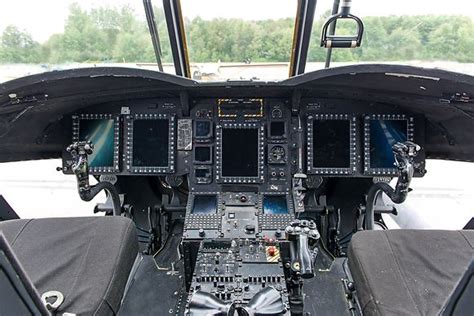
- Digital cockpit with improved crew situational awareness
One of the most remarkable features is its capability to conduct high-altitude operations. It is the only U.S. Army helicopter proven capable of operating reliably in the elevated terrain of Afghanistan, where thinner air and rugged landscapes challenge rotorcraft performance.
Powerplant and Performance: Built for Endurance
At the core of the MH-47G’s strength are its two Honeywell T55-GA-714A turboshaft engines, each generating approximately 4,734 horsepower. These are paired with IES-47 infrared exhaust suppressors, minimizing thermal signatures during low-level, nighttime infiltration missions.
Performance metrics include:
- Top speed: Up to 315 km/h depending on configuration
- Maximum gross weight: 24,494 kg
- Fuel capacity: 7,828 liters
- Mission radius: Approximately 630 kilometers without refueling
- In-flight refueling compatibility: Extends operational reach significantly
Such endurance allows MH-47Gs to complete long-range missions without relying on forward staging, crucial for operations in denied or remote areas.
Avionics: A Nerve Center for Precision Missions
Designed with the Common Avionics Architecture System (CAAS), the MH-47G shares systems with other U.S. Army rotorcraft like the MH-60M Black Hawk, enabling interoperability and streamlined maintenance.
Its cockpit integrates:
- Five multifunction displays
- Two control display units
- Night vision goggle compatibility
Navigation and situational awareness tools include:
- AN/ASN-137 inertial doppler navigation
- Digital moving map
- AN/ASN-149 GPS receiver
- AN/ZSQ-2 EO/IR sensor turret for day and night operations
Pilots can operate in nearly all conditions, aided by the Silent Knight radar (AN/APQ-187) that provides terrain-following and avoidance capabilities, plus weather detection — all vital for safe, covert movement in combat zones.
Communication Systems: Full-Spectrum Interconnectivity
In a joint and dynamic battlefield, staying connected is mission-critical. The MH-47G comes with a multi-layered communications suite:
- AN/ARC-220 HF and AN/ARC-201D UHF/VHF radios
- Four AN/ARC-231 radios, including two SATCOM-capable
- MTX Blue Force Tracker for real-time friendly force positioning
- AN/APX-123 IFF transponder for secure identification
- Digital intercom system connecting all crew stations
This integrated network allows the aircraft to serve not just as a tactical transport, but also as a mobile command post during multi-phase operations.
Defensive Countermeasures and Armament
Given its high-value mission role, the MH-47G is outfitted with extensive self-protection systems:
- Common Missile Warning System (CMWS)
- Suite of Integrated Radio Frequency Countermeasures (SIRFC)
- AN/AVR-2B laser warning receivers
- XM216 dark flares, invisible to the naked eye, offering IR decoy capability without visual compromise
Armament includes four gun stations:
- Two M134 7.62 mm miniguns (electrically operated, forward ports)
- Two M240D 7.62 mm machine guns (rear cabin windows)
Together, these features provide both defensive suppression and supporting fire for ground forces during insertion and extraction.
Insertion, Extraction, and Rescue Capabilities
Special missions often require rapid deployment and recovery from non-permissive zones. The MH-47G includes a suite of systems for flexible personnel handling:
- Fast Rope Insertion/Extraction System (FRIES) for rapid drop
- Special Patrol Insertion/Extraction System (SPIES) accommodating up to eight personnel
- Rope ladders from belly hatch
- Powered rescue hoist at the forward door
- Personnel Location System to retrieve downed crew via beacon triangulation
Such versatility enables commanders to tailor the platform to the unique demands of each mission set.
Global Impact and Allied Interest
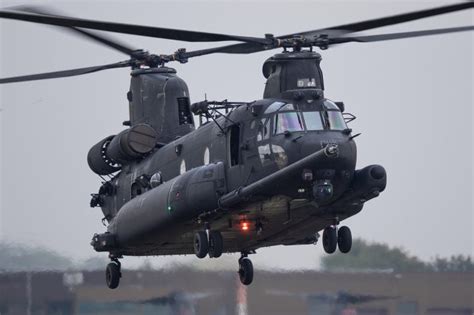
The capabilities of the MH-47G have not gone unnoticed among U.S. allies. In June 2021, the United Kingdom became the first foreign buyer of the Block II variant, purchasing fourteen aircraft in a $578 million deal. This marked the beginning of broader international interest in Boeing’s special operations Chinook line.
Looking Ahead: Sustaining Strategic Superiority
With this latest $877 million contract, Boeing will continue producing MH-47G Block II helicopters at least through November 2030. The longevity of this production run ensures not only consistent employment across Boeing’s rotorcraft division but also sustained availability of cutting-edge rotorcraft for the most elite U.S. military units.
As geopolitical threats evolve and the demand for precision, speed, and survivability increases, the MH-47G remains at the forefront of special operations aviation. Its blend of raw power, modular adaptability, and digital intelligence confirms its position as the premier heavy-lift platform for missions where success depends on seamless execution under extreme conditions.