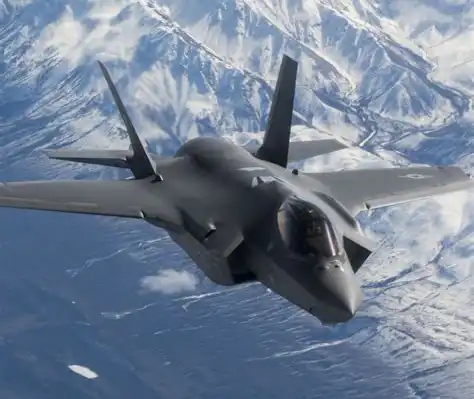
Modern air combat is evolving at a pace that few could have imagined when the Lockheed Martin F-35 Lightning II entered service. The fifth-generation fighter transformed aerial warfare with stealth technology, sensor fusion, network-centric capabilities, and unprecedented situational awareness. These advantages helped the aircraft become the backbone of air forces across more than twenty nations. Yet the rapid development of artificial intelligence, autonomous systems, and distributed battle networks is already paving the way for a new era.
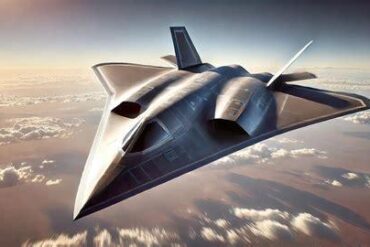
Rather than operating as standalone platforms, sixth-generation fighters are being designed as command centers within vast interconnected combat architectures. They will control drone swarms, process enormous amounts of data in real time, perform electronic warfare missions, and coordinate assets across land, sea, air, space, and cyberspace. By the 2030s and 2040s, these aircraft could redefine air superiority and make today’s F-35 appear like a transitional platform between generations.
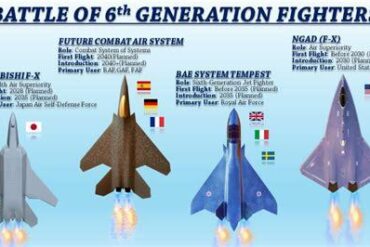
The race toward sixth-generation dominance is now underway, with China, the United States, Europe, and Japan all pursuing ambitious programs intended to dominate future battlefields.
Why Sixth-Generation Fighters Represent a Revolution
The F-35 introduced many groundbreaking technologies, including advanced sensor fusion, internal weapons carriage, and low-observable design. However, future fighters are expected to go several steps further.
Artificial intelligence will dramatically reduce pilot workload while enhancing decision-making. Loyal wingman drones will accompany manned aircraft and perform dangerous tasks ranging from reconnaissance to electronic attack. Future aircraft will act as information hubs, constantly exchanging data with satellites, naval assets, and ground forces.
Stealth itself will also evolve. Designers are focusing on larger airframes with extended range, adaptive engines, sophisticated electronic warfare suites, and the ability to penetrate increasingly complex anti-access and area-denial environments. Instead of a single aircraft determining victory, entire combat ecosystems will fight as one integrated force.
Chengdu J-36: China’s Ambitious Bid for Sixth-Generation Dominance
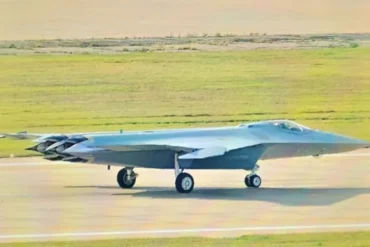
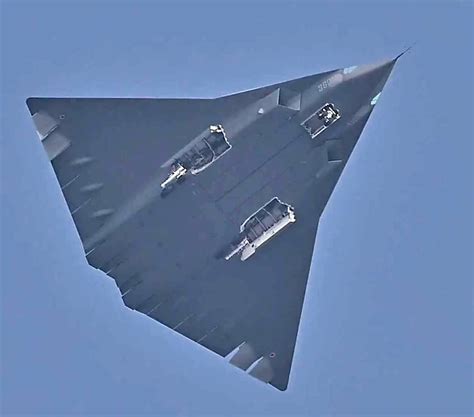
China has rapidly emerged as a major competitor in advanced combat aviation. Among its most intriguing projects is the Chengdu J-36, which has reportedly undergone multiple test flights since late 2024. Analysts believe the aircraft could become one of the most formidable long-range strike platforms of the next decade.
The J-36 appears optimized for penetrating heavily defended airspace. Its stealth characteristics and large internal weapons bay suggest a design intended for deep-strike operations against enemy command centers, radar stations, air bases, and integrated air-defense networks.
Unlike traditional fighters, the aircraft may carry long-range cruise missiles such as the KD-20 and potentially accommodate the PL-17 missile internally. Such weapons would enable engagements against airborne warning aircraft and tankers, both of which are vital force multipliers for Western air operations.
The aircraft’s two-seat configuration also reveals China’s intentions. One crew member would focus on piloting, while the second operator could manage weapons systems, electronic warfare, and drone coordination. Artificial intelligence would assist both crew members in processing complex battlefield information.
Perhaps the most important capability of the J-36 lies in its role as an airborne battle manager. Rather than simply engaging enemy aircraft, it could coordinate networks of unmanned systems and distribute intelligence throughout the theater, dramatically increasing combat effectiveness.
Future Combat Air System: Europe’s Vision for Networked Warfare
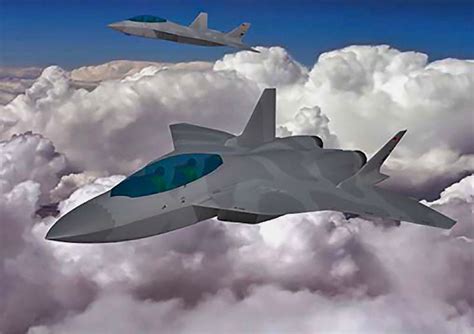
France, Germany, and Spain have combined their resources to create the Future Combat Air System (FCAS), one of the most sophisticated military projects ever undertaken in Europe.
With an estimated lifecycle cost approaching €100 billion, FCAS extends far beyond the development of a single aircraft. At its heart lies the revolutionary concept known as the Combat Cloud, essentially a military version of the Internet of Things.
This architecture will connect aircraft, satellites, ground forces, cyber assets, and sensors into one unified network. Information collected across the battlespace will be processed by artificial intelligence and delivered instantly to the personnel who need it.
At the center of this ecosystem will be the New Generation Fighter (NGF). This sixth-generation stealth aircraft will act as both a combat platform and an airborne command center. Sensor fusion capabilities will allow pilots to absorb vast amounts of information while AI systems recommend tactical responses.
Human operators will still retain decision-making authority, but autonomous drones will become inseparable members of each mission package. Rather than optional support assets, unmanned systems will operate as integral teammates.
Such an approach could fundamentally alter how European forces conduct warfare, transforming separate military branches into one interconnected combat architecture.
Global Combat Air Program: Britain, Italy, and Japan Join Forces
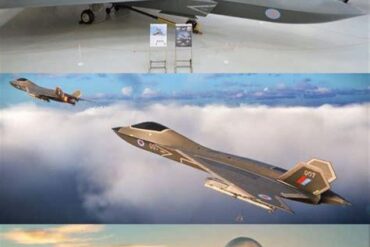
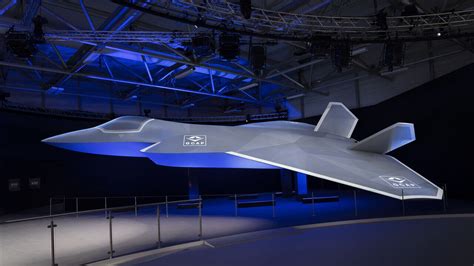
The Global Combat Air Program (GCAP) represents another major leap toward sixth-generation aviation. The partnership unites BAE Systems, Leonardo, and Mitsubishi Heavy Industries, bringing together British, Italian, and Japanese expertise.
Scheduled to enter service around 2035, GCAP will replace the Eurofighter Typhoon and Japan’s Mitsubishi F-2. The program aims to produce hundreds of aircraft while giving participating nations greater independence from foreign defense suppliers.
One of the defining features of the future aircraft will be its emphasis on networking and AI-assisted combat operations. Engineers envision a platform capable of serving as an airborne command node, directing accompanying drones and coordinating fifth-generation assets.
Stealth characteristics will permit operations deep inside hostile territory, while powerful electronic warfare systems will suppress enemy radars and communications. Artificial intelligence will continuously analyze data and assist pilots in making rapid decisions under combat conditions.
Unlike platforms heavily influenced by American export restrictions, GCAP participants will enjoy greater control over technology development and sales, potentially making the aircraft an attractive alternative for allied nations seeking advanced capabilities without extensive external limitations.
F/A-XX: The U.S. Navy’s Future Carrier-Based Predator
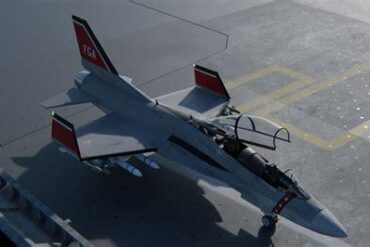
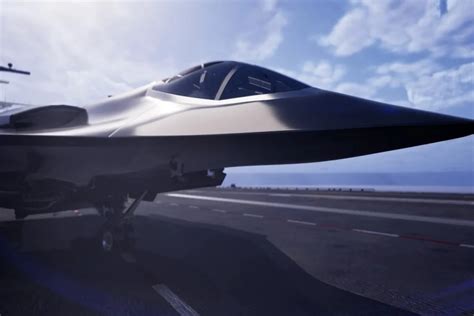
The United States Navy is preparing to replace the aging F/A-18 Super Hornet with a revolutionary aircraft known as the F/A-XX. Designed under the Next Generation Air Dominance family, the aircraft will emphasize long-range operations and survivability.
Unlike existing carrier fighters, the F/A-XX is expected to possess significantly greater range and fuel efficiency, allowing aircraft carriers to remain farther from hostile coastlines while still projecting power effectively.
Advanced stealth capabilities will help the aircraft penetrate heavily defended environments, while sophisticated sensor systems will gather and distribute intelligence throughout the combat network.
Drone integration is expected to become a major element of naval warfare. Unmanned aircraft could perform reconnaissance missions, extend sensor coverage, assist with aerial refueling, and even participate directly in strike operations. Artificial intelligence will coordinate these assets to maximize operational efficiency.
The F/A-XX will not merely defend carrier groups. It is intended to become a central element of future American power projection, particularly in contested regions throughout the Indo-Pacific.
Boeing F-47 and the Next Generation Air Dominance Program
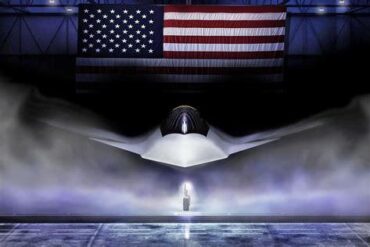
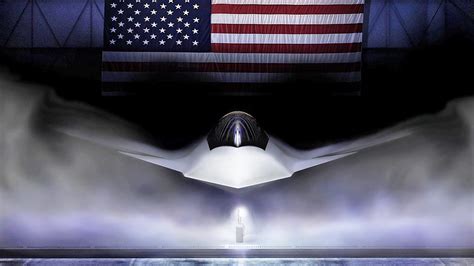
Among the most secretive and strategically important projects under development is the Boeing F-47, emerging from the United States Air Force’s Next Generation Air Dominance (NGAD) initiative.
Following Boeing’s selection as the prime contractor in 2025, the aircraft entered advanced development stages supported by substantial Pentagon funding. The F-47 is expected to become the centerpiece of America’s future air superiority strategy.
Its mission extends far beyond traditional fighter roles. The aircraft will function as the command element within a larger ecosystem of manned and unmanned platforms. Using powerful onboard computers and sensor suites, the aircraft will process enormous amounts of battlefield data and distribute intelligence across multiple domains.
Artificial intelligence will enable the F-47 to manage drone swarms capable of conducting electronic warfare, defensive countermeasures, surveillance missions, and precision strikes. Such capabilities represent a dramatic shift from previous generations of fighters.
Strategically, the aircraft is expected to play a crucial role in deterring peer adversaries, particularly in the Indo-Pacific. Bases in Guam, Japan, Alaska, Australia, and other allied territories could eventually host NGAD assets during rotational deployments.
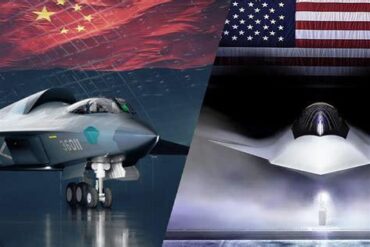
Because China has already tested sixth-generation prototypes, American development efforts have accelerated significantly. The F-47 therefore represents not only a technological project but also a strategic response to growing geopolitical competition.
The Shift From Fighters to Combat Ecosystems
Perhaps the most revolutionary aspect of sixth-generation aircraft is that they are no longer being designed as isolated machines. Instead, they function as central nodes inside vast combat ecosystems.
The pilot of the future will command a network rather than a single aircraft. Loyal wingman drones, satellites, cyber assets, naval vessels, and ground forces will share information seamlessly. Artificial intelligence will filter and prioritize massive amounts of battlefield data, allowing human operators to focus on strategic decisions rather than raw information management.
Electronic warfare, cyber operations, autonomous systems, and long-range precision weapons are becoming equally important components of aerial warfare. Air superiority itself is evolving into information superiority.
This transformation means that future combat aircraft will resemble flying command centers as much as traditional fighters.
Will the F-35 Become Obsolete?
Calling the F-35 obsolete would be misleading. The aircraft will remain one of the world’s most capable fighters for decades and will continue receiving upgrades to its sensors, software, and weapons systems. Many countries are only beginning to integrate the aircraft fully into their forces.
However, by the late 2030s, sixth-generation platforms will likely possess capabilities that exceed the original design philosophy of the F-35. Artificial intelligence, autonomous teaming, expanded sensor networks, and system-of-systems warfare represent evolutionary leaps rather than incremental improvements.
Just as fourth-generation aircraft eventually gave way to stealth fighters, the F-35 may ultimately become the bridge between two eras of combat aviation. The aircraft that revolutionized aerial warfare in the early twenty-first century could one day be remembered as the foundation upon which an entirely new generation of intelligent, networked combat systems was built.
By the time the 2040s arrive, the skies may no longer be dominated by individual fighters. Instead, victory could belong to those capable of orchestrating entire ecosystems of manned and unmanned systems, with these five sixth-generation programs leading the transformation.