The Global Combat Air Programme (GCAP) has officially christened its new trilateral Joint Venture (JV) as Edgewing, marking a pivotal leap in the multinational effort to develop a sixth-generation fighter aircraft that will redefine air superiority well into the latter half of the 21st century. With BAE Systems (UK), Leonardo (Italy), and Japan Aircraft Industrial Enhancement (Japan) standing as equal stakeholders, the initiative signals a fusion of industrial might, technological innovation, and strategic alignment across Europe and Asia.
Edgewing: A Strategic Tri-National Aerospace Alliance
The formation of Edgewing is not merely symbolic; it is an institutional and operational consolidation of three major defense powers striving to meet the ambitions of GCAP. Headquartered in the United Kingdom, Edgewing will oversee the design, development, and lifecycle authority of the next-generation fighter. All three stakeholders — BAE Systems, Leonardo, and Japan Aircraft Industrial Enhancement — hold an equal 33.3% share, reinforcing a governance structure based on balanced control, mutual accountability, and shared innovation.
The new JV assumes a central role within GCAP, supporting the overarching GCAP International Government Organisation (GIGO) and ensuring coordination with national governments. Its mission is to deliver an advanced air combat platform capable of replacing the Eurofighter Typhoon operated by the UK and Italy, and Japan’s F-2 fighter jet. This effort not only reshapes future air forces but also revitalizes the defense-industrial bases in all three participating countries.
From Concept to Combat: A Delta Wing Reimagined
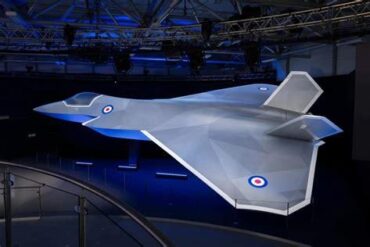
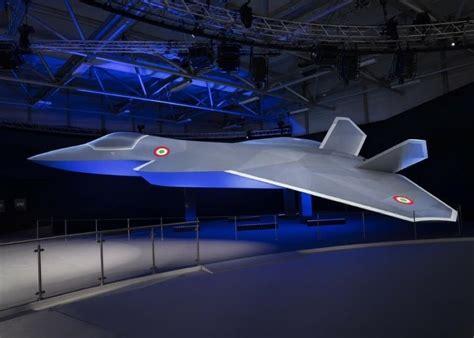
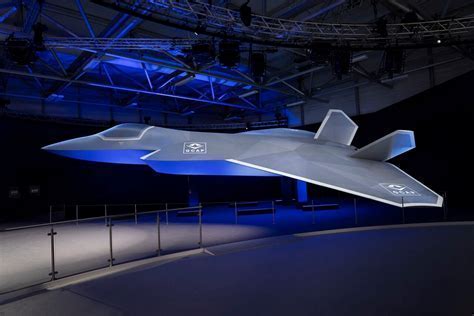
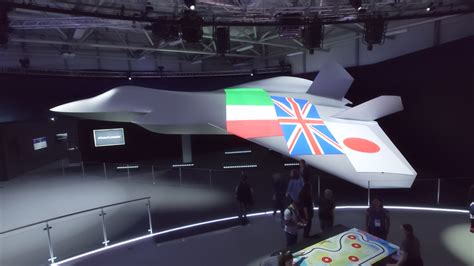
The fighter jet concept, which was revealed approximately a year before Edgewing’s naming, draws from a conventional delta wing configuration. However, it incorporates modern refinements that distinguish it from earlier iterations. The updated design features a broader wingspan, optimized for enhanced lift, increased agility, and extended operational range — characteristics imperative for next-generation air superiority.
This delta-based airframe also reflects a design philosophy increasingly leaning toward modularity and stealth. The broader wing not only supports advanced maneuverability but also accommodates integrated sensors, AI-enabled systems, and optionally manned capabilities. The reduction of radar cross-section, alongside energy-efficient propulsion integration, ensures that the fighter is suitable for multi-domain operations from Day 1 of deployment.
Leadership and Structure: Who’s Running Edgewing?
The first CEO of Edgewing is Marco Zoff, the former Managing Director of Leonardo Aircraft. His appointment symbolizes both continuity and evolution, blending traditional European aerospace leadership with the innovative tempo of modern joint ventures. Zoff will lead a multi-national operational structure, with joint teams operating across the UK, Italy, and Japan.
Edgewing’s governance and staffing model mirrors that of other successful international defense collaborations, but with a tighter, more agile framework. It is designed to minimize bureaucratic drag and maximize cross-border synergy. It will also be uniquely positioned to harmonize industrial planning with GIGO, thereby fostering military-industrial cohesion at the governmental level.
A Timeline Anchored in Precision: Targeting 2035 for Operational Deployment
GCAP has set an ambitious target: bring the sixth-generation fighter into service by 2035. To meet this, Edgewing will have to compress traditional development timelines by leveraging emerging technologies and accelerated systems engineering cycles. Digital twin environments, AI-enhanced prototyping, and agile development sprints will underpin the program’s execution strategy.
This 2035 milestone is not arbitrary. By the mid-2030s, the Eurofighter Typhoon and F-2 platforms will face obsolescence amid rising global air combat threats and near-peer adversary advancements. Edgewing’s aircraft is being designed not as a replacement per se, but as a quantum leap forward in capabilities — integrating everything from hypersonic deterrence to full-spectrum electronic warfare systems.
A New Standard in Trilateral Industrial Cooperation
Edgewing stands out not only for its operational goals but also for its geopolitical architecture. In contrast to troubled European collaborations — such as the repeated friction between Airbus and Dassault over the FCAS program — GCAP has, so far, maintained a stable, coordinated development rhythm.
The choice of Edgewing’s UK headquarters is not incidental. It is designed to align seamlessly with GCAP’s intergovernmental coordination efforts. This central hub serves as a nexus for design governance, cybersecurity protocols, and test integration. Meanwhile, development teams in Italy and Japan will focus on critical system modules, propulsion testing, and avionics advancements, maintaining a distributed yet interconnected workflow.
Technological Core: What Makes the Edgewing Fighter Sixth-Gen?
While technical specifications remain largely classified, several key differentiators have emerged from official briefings and leaked concept documents:
- Multi-role integration: Air superiority, deep strike, ISR, and cyber operations in one airframe
- AI-augmented pilot support: Onboard AI to reduce pilot workload and enhance combat decisions
- Modular open architecture: Facilitates upgrades and third-party system integration
- Stealth-by-design: Not an afterthought — Edgewing aircraft will feature embedded low-observable elements
- Collaborative combat cloud: The fighter will act as a node in a real-time, multi-domain battle network
These characteristics reflect the next generation of air dominance, where information, connectivity, and survivability converge.
Economic and Strategic Impact on Partner Nations
The establishment of Edgewing will also have significant economic ripple effects. For the UK, it means long-term employment for high-tech manufacturing hubs and increased R&D investments in defense AI. Italy expects to revitalize its aeronautical sectors with an emphasis on high-precision systems and materials science. Japan, on the other hand, sees the JV as a springboard for transitioning its defense sector toward global standards of integrated air systems development.
Moreover, the Edgewing project ensures supply chain resiliency across allied nations. In an era of fragile global trade networks and technological competition, this tri-national supply mesh provides both strategic autonomy and operational interoperability.
Edgewing vs. FCAS: A Tale of Two Futures
While Europe’s Future Combat Air System (FCAS) continues to suffer from turf wars and budgetary gridlock, GCAP and Edgewing are rapidly emerging as the more cohesive and future-ready program. The inclusion of Japan — a Pacific powerhouse with cutting-edge electronics and a strong industrial ethos — gives Edgewing a broader technological reach than any other next-gen fighter program currently in progress.
If Edgewing hits its development targets, it may eclipse other sixth-gen efforts in both capability and deployment schedule. That would reshape strategic balances, not just in Europe or East Asia, but globally.
Looking Ahead: A New Era of Air Superiority Begins
Edgewing is not just a name — it is a commitment to innovation, collaboration, and air dominance. With its roots grounded in a multi-national vision and its branches reaching into the future of aerial warfare, this JV has the potential to redefine how allied nations prepare for contested airspaces in the decades to come.
Whether Edgewing’s aircraft becomes the global standard for sixth-generation combat platforms depends on sustained political will, continuous technological breakthroughs, and the ability to deliver — fast, smart, and unified. As the countdown to 2035 continues, all eyes remain fixed on this ambitious, high-altitude project — and what it could mean for the skies of tomorrow.