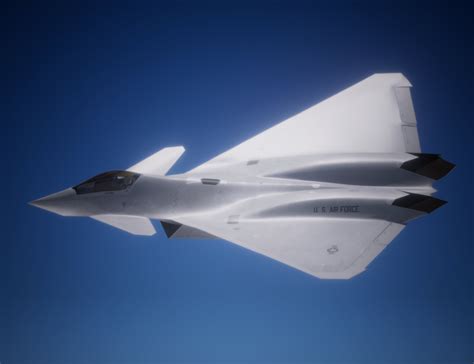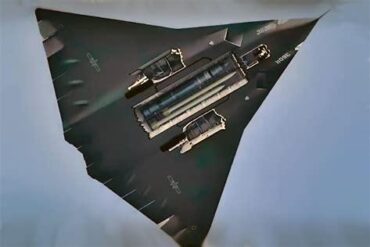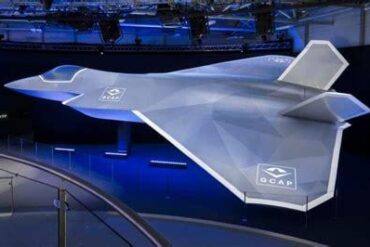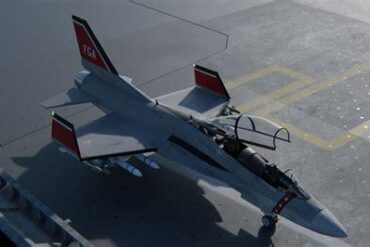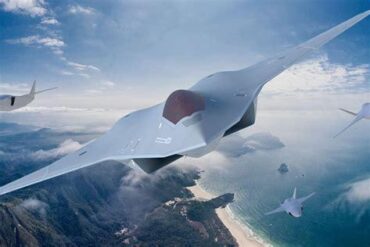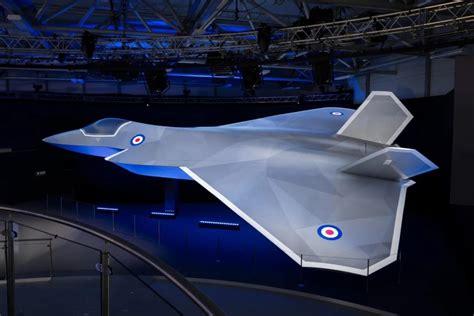
The future of allied airpower in the Indo-Pacific is increasingly tied to a quiet but consequential question unfolding behind closed diplomatic doors in Tokyo, London, Rome, and Washington: should Japan stay fully committed to the Global Combat Air Programme, or pivot toward Boeing’s rapidly advancing F-47 stealth fighter?
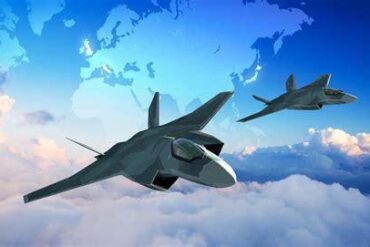
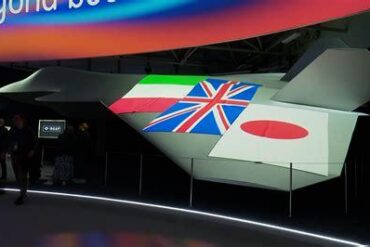
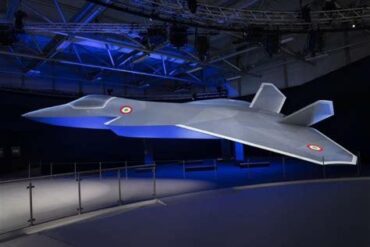
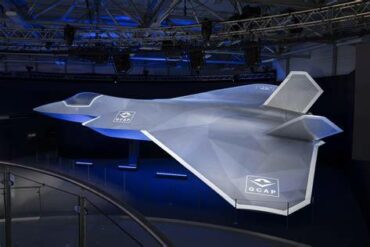
What once appeared to be a stable trilateral partnership between the United Kingdom, Italy, and Japan has evolved into one of the most politically delicate defense-industrial balancing acts of the decade. At the center of the debate sits GCAP, the ambitious sixth-generation fighter initiative intended to replace the Eurofighter Typhoon and Mitsubishi F-2 with a next-generation combat aircraft capable of operating deep inside heavily contested airspace by 2035.
Yet the emergence of Boeing’s F-47, combined with mounting British budget instability, has forced Japanese planners to reconsider assumptions that previously seemed untouchable. The issue is no longer theoretical. It is strategic, financial, industrial, and geopolitical all at once.
The stakes extend far beyond procurement. The outcome may ultimately determine how the Western alliance structures future airpower, how technology sharing evolves between allies, and whether multinational defense programs can still survive in an era increasingly dominated by speed, cost pressure, and rising security threats in the Pacific.
For Japan, the calculation is becoming harder by the month.
By joining GCAP, Tokyo was not merely purchasing another fighter aircraft. It was buying influence, industrial sovereignty, and long-term technological independence. Japan’s defense establishment viewed the program as an opportunity to escape decades of reliance on tightly controlled American export restrictions while developing domestic expertise in stealth integration, propulsion, sensor fusion, and combat networking.
But idealism inside defense procurement rarely survives contact with fiscal reality.
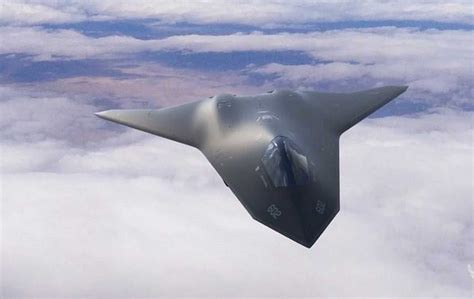
Britain’s £28 Billion Defense Funding Gap Shook Confidence In GCAP
The first major fracture inside GCAP did not begin with technology. It began with money.
When the United Kingdom formally joined forces with Italy and Japan in 2022, the political atmosphere surrounding the program appeared remarkably optimistic. Britain promoted the initiative as proof of its post-Brexit global defense ambitions. Italy saw the project as a chance to preserve Europe’s high-end aerospace industrial base. Japan viewed it as a strategic breakthrough after years of frustration with restrictive American defense export policies.
The industrial structure itself looked credible. BAE Systems, Leonardo, and Mitsubishi Heavy Industries formed the backbone of the partnership, while governments repeatedly emphasized that the aircraft would enter operational service by 2035.
Then Britain’s defense budget crisis erupted.
The revelation of a reported £28 billion funding shortfall inside the UK’s Defence Investment Plan fundamentally changed how the program was perceived abroad. The problem was not simply that Britain faced financial pressure. Every major military power faces defense budget tension at some stage. The deeper concern was uncertainty.
The Defence Investment Plan, which was expected to provide long-term funding clarity for GCAP, repeatedly failed to materialize. Delays in publishing the plan triggered growing anxiety among Japanese officials already worried about the pace of Chinese military modernization.
The consequences quickly became visible inside the program itself. Contracts expected to advance critical design work slipped behind schedule. Development timelines became increasingly difficult to verify publicly. Industry insiders began speaking more cautiously about milestones that had once been presented confidently.
Eventually, a temporary solution emerged through a £686 million stopgap contract signed with Edgewing, the joint venture responsible for aircraft development. The agreement preserved momentum and avoided immediate disruption, but the symbolism was difficult to ignore.
Three months of guaranteed funding was not the same thing as long-term strategic certainty.
For Tokyo, the issue was especially alarming because Japan’s regional security environment does not permit leisurely timelines. China’s military aviation sector is evolving rapidly, and Beijing’s own sixth-generation fighter programs are no longer theoretical concepts confined to research laboratories.
Every delay inside GCAP potentially widens the capability gap Japan hopes to avoid.
Why Japan Joined GCAP In The First Place
Understanding Tokyo’s growing discomfort requires understanding why Japan entered GCAP at all.
For decades, Japanese defense procurement operated under strict limitations imposed by dependence on American military technology. Aircraft like the F-15J and F-35 strengthened Japan’s airpower capabilities, but they also reinforced a structural imbalance: Japan could operate cutting-edge platforms without truly controlling the underlying technologies.
That distinction mattered enormously to Japanese strategists.
The original ambition behind Japan’s domestic F-X fighter initiative was to create a platform where Tokyo possessed meaningful control over mission systems, stealth integration, software architecture, and future upgrades. When GCAP emerged as a trilateral partnership, it offered a compromise between independence and affordability.
Japan would gain access to shared development while preserving industrial participation and technology ownership in ways unavailable under conventional American export arrangements.
This principle of technological co-ownership became central to Tokyo’s political justification for joining the program.
The challenge today is that technological sovereignty loses strategic value if delivery schedules become unreliable.
Japan’s security planners face a reality far more immediate than their European partners. Chinese airpower expansion is accelerating across the East China Sea and broader Indo-Pacific region. The People’s Liberation Army Air Force continues modernizing stealth capabilities, missile systems, electronic warfare infrastructure, and long-range strike doctrine at a pace few nations can comfortably ignore.
Unlike Britain or Italy, Japan cannot afford a prolonged gap between current-generation aircraft and future combat systems.
That pressure explains why Boeing’s F-47 suddenly commands so much attention in Tokyo.
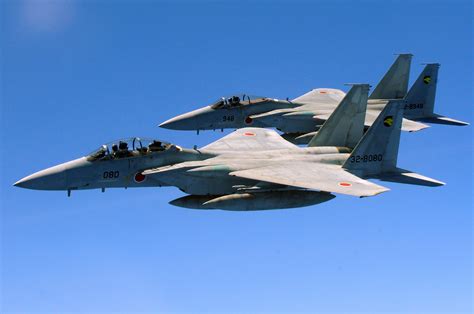
Boeing’s F-47 Changed The Strategic Equation
The appearance of the F-47 transformed the debate because it introduced something GCAP previously lacked: a plausible alternative backed by enormous American defense resources.
For years, sixth-generation fighter development seemed destined to evolve through separate national ecosystems. The United States would build its own platform, Europe would pursue independent projects, and Japan would cooperate selectively while preserving domestic priorities.
The F-47 disrupted that assumption.
Boeing’s victory in the Next Generation Air Dominance competition signaled that the United States intended to move aggressively toward fielding a new air superiority platform designed around stealth persistence, networked warfare, loyal wingman integration, and advanced sensor fusion.
More importantly, the aircraft appeared to be structured from the outset with allied interoperability and potential exports in mind.
That marked a dramatic departure from the F-22 Raptor era.
The F-22 was famously denied export approval despite strong interest from close American allies including Japan, Australia, and Israel. Washington considered the aircraft too sensitive to release abroad. Japan spent years unsuccessfully attempting to gain access before ultimately shifting attention elsewhere.
The F-47 appears different.
American strategic discussions increasingly frame trusted Indo-Pacific allies as potential participants within a broader future combat ecosystem. Japan’s name repeatedly surfaces in those conversations alongside Australia and the United Kingdom.
The implications are enormous.
If Tokyo can acquire a highly capable American sixth-generation fighter with a faster timeline and stronger funding support than GCAP currently demonstrates, the political pressure to reconsider existing commitments inevitably intensifies.
This does not mean Japan automatically abandons GCAP. The industrial and diplomatic consequences would be massive. However, it introduces leverage, uncertainty, and optionality into calculations that previously revolved around a single path forward.
Donald Trump’s Reported F-47 Pitch To Japan Sent Shockwaves Through Europe
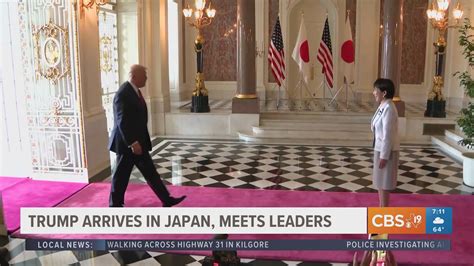
The geopolitical tension surrounding the F-47 intensified dramatically after reports emerged that then-President Donald Trump personally encouraged Japan to consider the aircraft during conversations with Japanese leadership.
The significance of such outreach extended well beyond ordinary defense marketing.
Military procurement discussions between allied governments are common, but direct presidential involvement sends a different signal entirely. It indicates strategic intent from Washington at the highest political level.
According to reports originating from Japanese and Italian defense media, Trump reportedly proposed an export-oriented version of the F-47 tailored for allied customers while emphasizing that Japan would receive privileged treatment within the arrangement.
European observers interpreted the move as a direct challenge to GCAP.
The historical parallels were difficult to miss. Earlier American pressure campaigns had already influenced Japanese fighter procurement decisions in the past, including Tokyo’s fading interest in the Eurofighter Typhoon during previous competitions.
Now history appeared to be repeating itself under even higher stakes.
For Britain and Italy, the situation created a deeply uncomfortable reality. GCAP was originally envisioned not simply as a fighter program, but as proof that Western allies outside the United States could still collaborate independently on next-generation military technology.
An American intervention strong enough to weaken Japanese participation would strike directly at that vision.
From Japan’s perspective, however, the situation is more pragmatic than ideological.
Tokyo’s defense establishment must evaluate timelines, capability gaps, industrial returns, and regional threats simultaneously. If the F-47 offers earlier operational readiness and lower developmental risk, Japanese officials cannot simply dismiss the option for diplomatic reasons alone.
Security realities in East Asia rarely allow for sentimental procurement decisions.
The Interoperability Debate Inside The Western Alliance
Not everyone believes the F-47 and GCAP must become direct rivals.
Some defense officials argue the opposite: that the future battlefield requires multiple interconnected sixth-generation systems operating together across allied networks.
This argument centers on interoperability rather than exclusivity.
Under this framework, the F-47 would function primarily as America’s dominant air superiority platform while GCAP would provide complementary capabilities tailored for European and Japanese operational requirements. Both systems could theoretically share data, coordinate with autonomous drones, integrate into common command architectures, and support distributed coalition warfare.
Conceptually, the idea makes sense.
Modern air combat increasingly revolves around ecosystems rather than standalone aircraft. Future warfare will depend on sensor sharing, real-time data fusion, collaborative targeting, electronic warfare coordination, and unmanned teaming.
In theory, allied nations operating both systems could strengthen coalition flexibility.
The practical obstacle is cost.
Developing, purchasing, maintaining, and upgrading even one sixth-generation fighter platform will impose extraordinary pressure on national defense budgets. Operating two simultaneously would be financially punishing for nearly every participating country outside the United States.
Japan, despite rising defense spending, still faces significant fiscal constraints tied to demographics, economic pressures, and competing military priorities across naval, missile defense, and cyber domains.
If Tokyo eventually chooses the F-47 as its primary air dominance platform, sustaining full-scale investment inside GCAP becomes politically difficult to justify.
That possibility represents the program’s greatest vulnerability.
China’s Military Rise Is Accelerating Every Timeline
The deeper force driving this entire debate is China.
Without the rapid expansion of Chinese military aviation capabilities, GCAP’s delays might remain manageable. Multinational defense programs often move slowly. Political friction and budget negotiations are hardly unusual.
But the Indo-Pacific security environment is changing too quickly for comfortable delays.
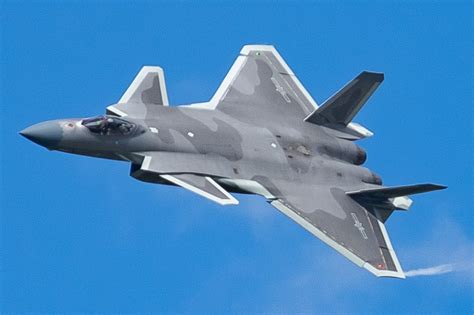
China’s aerospace sector has matured dramatically over the past two decades. Indigenous stealth aircraft programs, hypersonic missile development, electronic warfare systems, and integrated air defense networks are evolving simultaneously within a broader strategy designed to challenge American and allied air dominance across the Pacific.
Japanese defense planners understand the implications clearly.
A delayed sixth-generation fighter program does not merely create scheduling inconvenience. It risks generating an operational vulnerability during a period of rising regional tension.
That strategic urgency explains why Tokyo increasingly evaluates GCAP through the lens of timing rather than aspiration alone.
Technology ownership remains valuable. Domestic industrial participation remains politically attractive. European strategic cooperation still carries diplomatic advantages.
Yet none of those benefits matter if the aircraft arrives too late to influence the balance of power.
GCAP Still Possesses One Critical Advantage Over The F-47
Despite growing uncertainty, GCAP retains a unique strength that Boeing cannot easily replicate.
Ownership.
Not ownership in the financial sense, but ownership of the technology itself.
Japan’s participation inside GCAP offers direct influence over software architecture, systems integration, future modifications, and industrial production. Tokyo is not merely purchasing a finished aircraft from abroad. It is helping shape the aircraft’s DNA.
That distinction carries long-term strategic significance.
Nations operating American military hardware often face restrictions tied to software access, export permissions, weapons integration, and upgrade pathways. Even close allies rarely receive unrestricted technological autonomy.
GCAP changes that equation.
For Japan, the program represents an opportunity to preserve and expand sovereign aerospace expertise while ensuring domestic industry remains deeply involved in future combat aviation.
That industrial base matters beyond a single aircraft program. It affects engineering talent, supply chain resilience, national innovation capacity, and long-term defense independence.
The question now haunting policymakers is brutally simple: how much delay is acceptable before those benefits no longer outweigh the risks?
The Future Of Allied Airpower May Depend On Tokyo’s Decision
The next several years could determine the shape of Western air combat strategy for decades.
If Britain stabilizes defense funding and restores confidence inside GCAP, the program may yet fulfill its original vision as a multinational sixth-generation fighter capable of strengthening allied interoperability while preserving technological independence for participating nations.
If delays continue, pressure on Japan will intensify rapidly.
Tokyo may eventually face a choice between remaining loyal to an increasingly uncertain European partnership or aligning more closely with an American platform backed by deeper resources, faster momentum, and stronger strategic urgency.
Either outcome would reshape the global defense industry.
A successful GCAP would demonstrate that multinational development programs can still compete against dominant American defense ecosystems. It would reinforce European and Japanese industrial autonomy while creating a new center of gravity in allied aerospace cooperation.
A Japanese pivot toward the F-47, however, would dramatically strengthen American dominance over next-generation combat aviation while potentially weakening Europe’s ambitions for independent strategic capability.
The outcome remains uncertain, but one reality is already clear.
The emergence of Boeing’s F-47 transformed GCAP from a collaborative vision into a geopolitical stress test. The project is no longer judged solely on technological ambition. It is now judged on credibility, timing, funding stability, and strategic urgency.
And in the Indo-Pacific security environment, time may ultimately become the deciding factor.