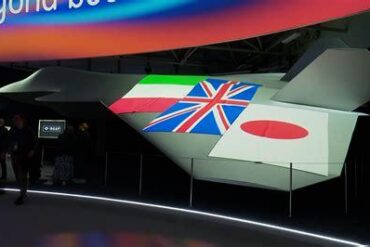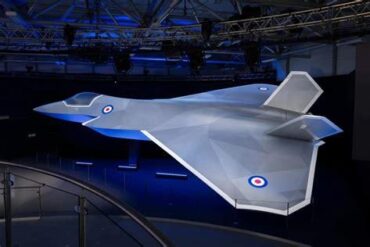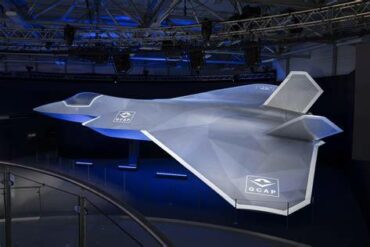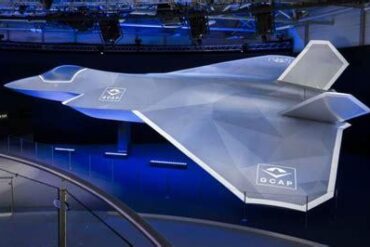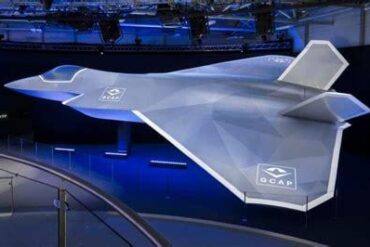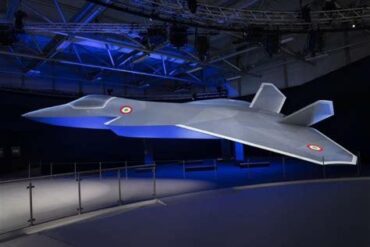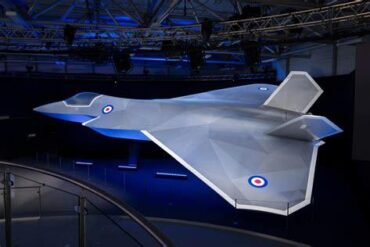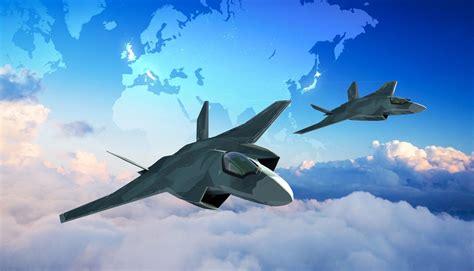
The Global Combat Air Program (GCAP), a joint endeavor by the United Kingdom, Japan, and Italy, has transitioned from ambitious vision to strategic imperative as it accelerates development of a sixth-generation stealth fighter. This multinational project, formalized in 2023, is aimed at delivering a cutting-edge fighter jet by 2035 — one that will outperform fifth-generation mainstays like the F-35 Lightning II in stealth, battlefield networking, and electronic warfare capabilities.
The GCAP is not just a technological venture but a geopolitical countermeasure. Its urgency is underscored by China’s rapid military advancements, which have begun to reshape the balance of air power, particularly in the Indo-Pacific region. This shift became particularly visible during the India-Pakistan skirmishes, where Pakistan’s Chinese-made jets allegedly outmatched India’s French-built Rafales, raising alarms about the pace and effectiveness of Chinese aerial capabilities.
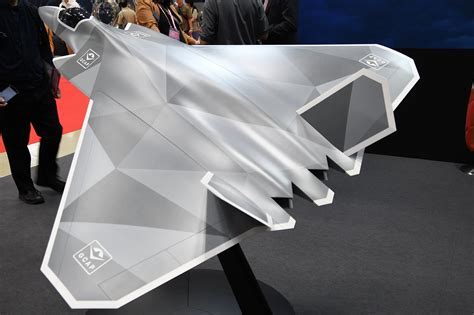
At the Defence and Security Equipment International (DSEI) conference in Tokyo, Brigadier General Edoardo De Santo of Italy’s Leonardo SpA defended the tri-national program’s relevance. He stressed that GCAP is designed to be more than a fighter — it is conceived as an airborne command-and-control node, coordinating both manned and unmanned assets across vast theaters. This vision is essential in the Indo-Pacific, where distance, survivability, and operational autonomy dominate military planning.
Technological Leap: Beyond Fifth Generation
GCAP’s aircraft will integrate stealth technology, sensor fusion, drone coordination, and advanced electronic warfare systems. It is envisioned to provide persistent presence in contested environments, thanks to greater fuel capacity and internal weapons bays that support extended-range missions. The aircraft’s electronic warfare (EW) suite will be capable of withstanding heavy cyber and signal jamming, ensuring operability in degraded environments.
According to Justin Bronk of the Royal United Services Institute (RUSI), this survivability and operational independence will be crucial in the Indo-Pacific, where aerial refueling assets are vulnerable and missions span thousands of kilometers. He asserts that a sixth-generation fighter must have the capacity to complete missions without tanker support, a key difference from legacy platforms like the F-35.
China’s Silent Race: The Threat of the Unknown
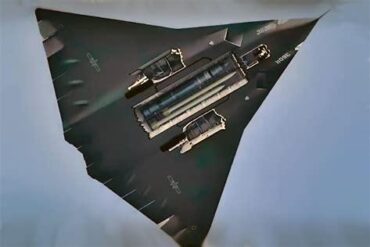
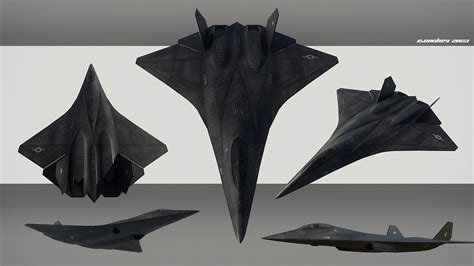
Adding to GCAP’s urgency is the emergence of Chinese sixth-generation prototypes, such as the three-engine J-36 and the tailless J-50, which are rumored to be undergoing early-stage testing. Although details remain speculative, their existence signals Beijing’s intent to leapfrog Western fighter capabilities. While the GCAP project remains transparent and rooted in alliance-building, China’s projects are shrouded in secrecy, creating a psychological and strategic gap.
This situation mirrors the Cold War dynamic, where uncertainty around Soviet weapons prompted rapid Western innovation. Now, the anxiety pivots around China’s defense-industrial ecosystem, which has matured significantly in the last decade, driven by state-led funding and export diplomacy.
Industrial Stakes and Governance Risks
GCAP’s structure is a delicate balance of shared sovereignty. Its UK-based joint venture is equally divided among Leonardo (Italy), BAE Systems (UK), and JAIEC (Japan). This equal partnership helps avoid historical missteps like those seen in the Eurofighter Typhoon, where governance and national interest misalignments led to delays and cost overruns.
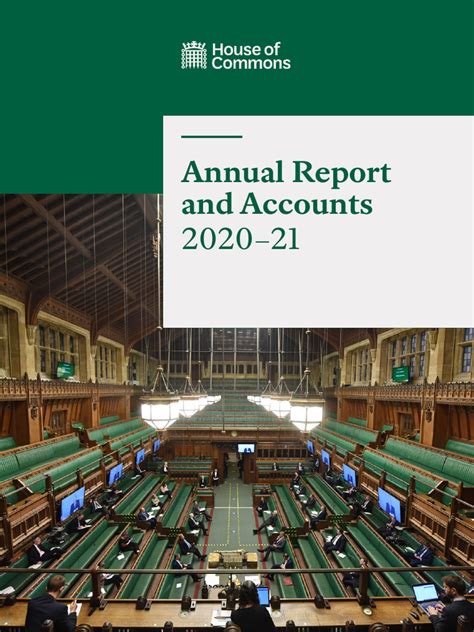
Yet the program is not without vulnerabilities. A January 2025 UK House of Commons report warned that expanding GCAP’s industrial base — particularly to include non-founding partners — could destabilize its internal balance and timeline. The report cites the risk of entering a “cost-death spiral” similar to what undermined previous multilateral ventures.
Saudi Arabia’s Interest: Strategic Boost or Political Gamble?
Saudi Arabia has expressed strong interest in joining GCAP, bringing with it significant capital, potential orders, and strategic reach. Analysts like Bilal Saab argue that Riyadh’s participation could accelerate export readiness, ease financial pressures, and ensure a lucrative foothold in the Middle East fighter market. According to Shigeto Kondo, the kingdom’s deep defense budget virtually guarantees a substantial order, possibly locking out Chinese or Russian competition in the region.
However, integration with Saudi Arabia is fraught with risk. Alessandro Marrone of the Institute of International Affairs (IAI) warns that Saudi participation could dilute the existing trilateral governance. More concerning are the reputational risks, particularly for Japan, whose arms export laws have only recently become more permissive. Incorporating Saudi-specific operational requirements could also cause design disruptions and threaten the 2035 timeline.
India and Australia: Potential Partners, Conflicting Priorities
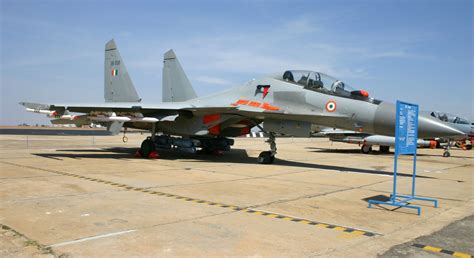
Japan has also extended a formal invitation to India to join GCAP, aligning with New Delhi’s “Make in India” policy. The country’s ambition to scale its defense manufacturing base and reduce reliance on foreign platforms makes GCAP an attractive proposition. However, India’s deep integration with Russian defense systems, including Su-30MKI jets and S-400 air defense systems, presents a severe interoperability and security challenge. Any risk of technology leakage to Russian partners could compromise GCAP’s classified systems and violate export restrictions.
Australia, meanwhile, has shown cautious interest. The Royal Australian Air Force (RAAF), facing an aging F/A-18 Super Hornet fleet, has asked for details about GCAP. Yet, analysts believe Australia’s strong defense alignment with the United States, particularly around the F-35 program, makes it unlikely to fully pivot to GCAP — at least not in its early stages.
The Shadow of the F-35 and Lockheed Martin
Despite GCAP’s lofty goals, it faces formidable competition from the F-35, a mature and battle-proven platform developed by Lockheed Martin. With extensive global integration and massive production infrastructure, the F-35 dominates the fifth-gen fighter market and will likely evolve into a “fifth-plus generation” solution before GCAP reaches production.
Justin Bronk cautions that GCAP may not be export-competitive against the F-35, especially without greater political and industrial support. He suggests that if GCAP funding falters, the UK may need to scale back and pivot toward unmanned combat aerial vehicles (UCAVs) as a cost-effective alternative.
Lessons from the Eurofighter: Avoiding Past Mistakes
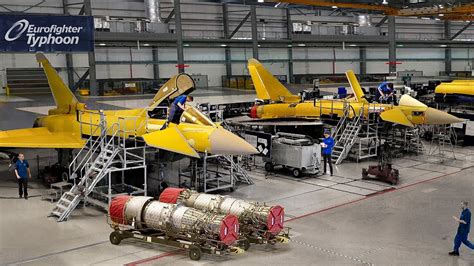
GCAP’s success depends not just on technology, but on learning from past failures. The Eurofighter Typhoon project — while ultimately delivering a capable platform — was plagued by delays, spiraling costs, and disjointed leadership. GCAP must sidestep these pitfalls by enforcing rigid timelines, streamlined design philosophies, and export-oriented adaptability.
Furthermore, transitioning the Eurofighter industrial workforce into the GCAP pipeline is essential for preserving Europe’s aerospace expertise. A disruption here could lead to talent attrition and productivity shortfalls, undermining GCAP’s industrial base.
Conclusion: Strategic Unity or Fragmentation?
GCAP is far more than a stealth fighter project. It is a litmus test for 21st-century defense cooperation — one that will determine whether Europe and its Indo-Pacific allies can build next-generation airpower without falling victim to the economic, political, and industrial traps of the past.
In the race against China’s burgeoning air power, time and unity are as critical as stealth and thrust. If successful, GCAP will not only produce a revolutionary aircraft, but also reaffirm the strategic resolve of democracies to lead in global air dominance. If it fails, the consequences may extend far beyond the factory floor — directly into the balance of power in the skies over Taiwan, the South China Sea, and beyond.