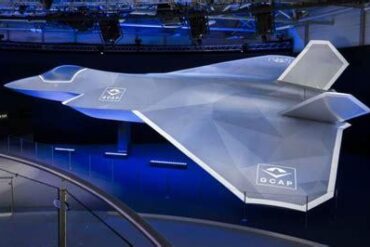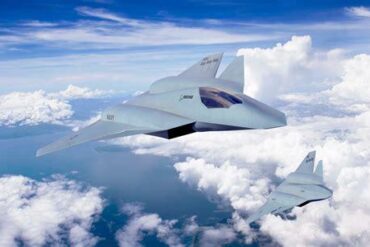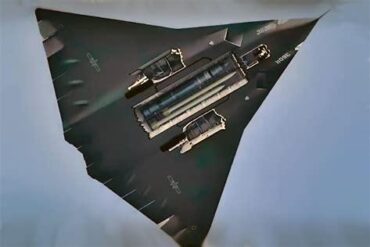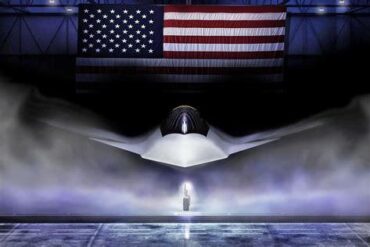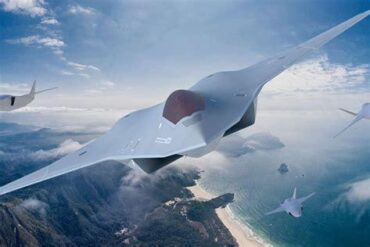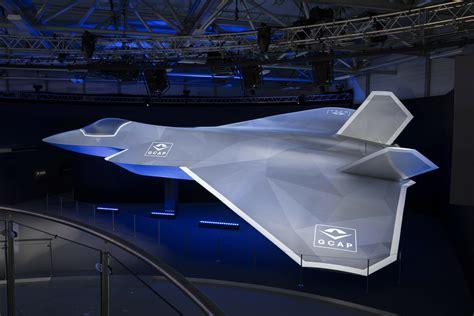
The Global Combat Air Program (GCAP) was supposed to be Europe and Japan’s bold leap into the sixth-generation fighter era—a technological moonshot blending stealth, AI, manned–unmanned teaming, and data-centric warfare into a single airborne system-of-systems. Instead, it is turning into a geopolitical stress test. Italy’s explosive accusations against the United Kingdom, combined with a ballooning price tag and strategic uncertainty across Europe’s parallel fighter program, are exposing the fragile political physics of multinational defense mega-projects.
Behind the glossy concept renders and press releases, the GCAP story is becoming a tale of technology nationalism, spiraling budgets, alliance friction, and the brutal reality of building the world’s most advanced combat aircraft.
GCAP: A Tri-Nation Vision Under Strain
Launched in 2022, GCAP brought together BAE Systems (UK), Leonardo (Italy), and Mitsubishi Heavy Industries (Japan) in a rare trilateral effort bridging Europe and the Indo-Pacific. The ambition was staggering: deliver a sixth-generation fighter around 2035–2040, featuring adaptive engines, sensor fusion, AI-driven battle management, and seamless integration with loyal wingman drones.
For London, GCAP represented a chance to preserve sovereign combat aircraft design capability after Brexit. For Rome, it was a chance to elevate Leonardo into a top-tier aerospace prime contractor. For Tokyo, it was a historic step away from dependence on US-designed fighters.
In theory, the project was a model of strategic alignment. In practice, it is becoming a case study in how national industrial pride collides with coalition engineering.
Italy’s Fury: “Selfishness Is the Worst Enemy of Nations”
Italy’s Defence Minister Guido Crosetto detonated a political bomb when he accused the UK of withholding critical technologies from GCAP partners. His words were not diplomatic murmurs—they were blunt and public, signaling real frustration.
Crosetto argued that Britain’s reluctance to share cutting-edge know-how undermines the collaborative spirit of the program, warning that secrecy could inadvertently benefit adversaries like Russia and China. In his framing, fragmentation among allies creates opportunity for rivals—a strategic logic that resonates deeply in modern great-power competition.
The British Ministry of Defence pushed back, portraying GCAP as a shining example of international cooperation. Yet nearly a year later, Crosetto doubled down, describing British secrecy as “madness” and urging a radical shift toward transparency.
This is not just political theater. Sixth-generation fighters are software-defined war machines, where proprietary algorithms, sensor architectures, and AI frameworks are as sensitive as stealth coatings or engine metallurgy. Sharing that intellectual capital is strategically risky—but refusing to share it undermines multinational development.
That paradox sits at the heart of GCAP’s tension.
A $21.8 Billion Shock: Italy’s Cost Explosion
The political controversy intensified when Italy revealed that its GCAP development spending surged from €6 billion to €18.6 billion, equivalent to roughly $21.8 billion. That figure covers research, design, and development—not procurement.
Italy’s opposition Five Star Movement called it the most expensive military program in the country’s history, surpassing even its F-35 investment. That comparison is telling. The F-35 program involved 90 aircraft deliveries and decades of operational infrastructure. GCAP, by contrast, has yet to produce a single operational jet.
The cost surge reflects a broader truth: sixth-generation fighters are exponentially more complex than fifth-generation platforms. They integrate AI, cloud-based battle management, directed-energy weapons potential, and collaborative autonomous systems. Each subsystem is a research frontier, not a mature technology.
Still, domestic politics rarely care about technical nuance. For Italian taxpayers, €18.6 billion is a psychological threshold that invites scrutiny, skepticism, and populist backlash.
Edgewing: The Industrial Core of the Program
To centralize development, the GCAP partners formed a joint venture called Edgewing, tasked with overseeing design, production, and lifecycle management. The creation of Edgewing was hailed as a milestone, signaling that the program had moved from conceptual alignment to structured engineering governance.
Edgewing’s challenge is unprecedented. It must integrate three national industrial ecosystems, each with different standards, corporate cultures, export regulations, and security frameworks. This is not merely engineering—it is geopolitical choreography.
The engine consortium—Rolls-Royce, Avio Aero, and IHI—expanded collaboration to test advanced combustor technologies, moving toward adaptive-cycle propulsion. These engines are intended to dynamically optimize thrust, efficiency, and thermal management, enabling stealthier profiles and longer ranges.
In theory, GCAP is progressing. In reality, every subsystem requires multinational alignment at a level that aerospace history has rarely achieved.
The Shadow of Delays and Japan’s Anxiety
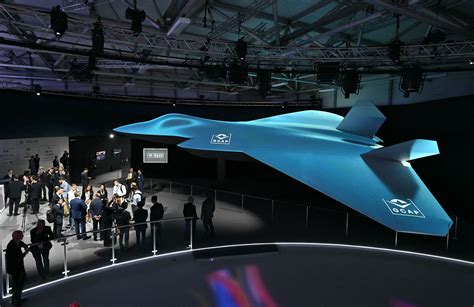
Reports surfaced that Japan was concerned about timeline slippage, suggesting the aircraft might not be ready before 2040. The reasons were not officially confirmed, but insiders pointed to lack of urgency from Britain and Italy, bureaucratic friction, and diverging priorities.
Japan’s anxiety is strategic. The Indo-Pacific security environment is accelerating, with China fielding J-20 and developing its own sixth-generation platforms. Tokyo cannot afford a prolonged capability gap.
In multinational programs, time is a strategic weapon. Delays are not just financial—they shift power balances. If GCAP drifts beyond 2040, it risks becoming obsolete upon arrival.
Europe’s Other Dream: FCAS on the Brink
While GCAP struggles with alliance friction, Europe’s parallel program, Future Combat Air System (FCAS), faces something even more existential: potential collapse.
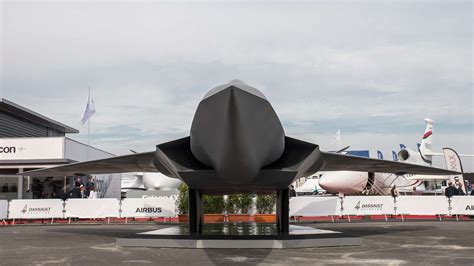
FCAS is a “system of systems” architecture integrating a next-generation fighter (NGF), autonomous drones, and a combat cloud. The program involves France, Germany, and Spain, with Dassault Aviation, Airbus, and Indra leading industrial roles.
The conflict is fundamentally about control and industrial sovereignty. Dassault insists on leading the crewed fighter design, citing decades of fighter development expertise. Airbus and Germany resist, fearing a French-dominated industrial outcome that marginalizes German aerospace industry.
This dispute has stalled progress for years. Germany even threatened to withdraw if a resolution was not reached. Recent statements suggest a possible split path, where France and Germany develop separate aircraft within a shared systems framework.
This would be historically ironic: a program designed to unify European aerospace could instead fracture into national sixth-generation fighters, duplicating costs and diluting interoperability.
Technology Nationalism vs. Alliance Warfare
The GCAP and FCAS dramas highlight a fundamental contradiction in modern defense cooperation: nations want shared costs but sovereign control.
Sixth-generation fighters are not just weapons; they are strategic technology platforms. Whoever controls the AI, sensor fusion, and digital backbone controls the future of air combat doctrine.
Sharing that knowledge risks eroding national technological advantage. Withholding it undermines collaboration and drives allies toward independent projects.
This tension is not unique to Europe. The F-35 program faced similar disputes over source codes and technology transfer. But sixth-generation systems are even more sensitive because software will increasingly define combat outcomes.
Why Sixth-Generation Fighters Are So Politically Explosive
Fighter programs have always been political, but sixth-generation projects amplify every fault line.
These aircraft are not just fighters. They are flying data centers, command nodes, and AI battle managers. They will coordinate swarms of drones, fuse multi-domain data, and potentially deploy directed-energy weapons. They will shape doctrine for decades.
That makes them strategic crown jewels. Governments see them as symbols of sovereignty, technological prowess, and geopolitical relevance. Losing control over such programs is seen as losing strategic autonomy.
Hence Crosetto’s fury. Hence Dassault’s reluctance. Hence Airbus’s resistance. These are not just corporate disputes; they are national identity struggles encoded in titanium and silicon.
The Economics of Complexity: Why Costs Explode
Italy’s €18.6 billion shock is not an anomaly. It is a preview.
Sixth-generation fighters require:
- Adaptive-cycle engines with unprecedented thermal management
- AI-driven sensor fusion architectures
- Stealth materials optimized for multi-spectral signatures
- Secure combat cloud integration
- Autonomous wingman coordination frameworks
Each of these is a moonshot program in itself. When multiplied across three nations, compliance frameworks, export controls, and security vetting, costs grow nonlinearly.
Traditional procurement models struggle with software-driven platforms. Development never truly ends; it becomes continuous. That means budgets become perpetual.
GCAP’s price escalation is not just mismanagement. It is the cost of inventing the future.
Strategic Implications: A Fragmented Western Fighter Ecosystem
If GCAP falters and FCAS fractures, the Western world could enter a new era of fighter fragmentation.
Instead of a unified European sixth-generation platform, there could be multiple national jets with partial interoperability. This would weaken economies of scale and complicate joint operations.
Meanwhile, China and Russia pursue centralized programs with fewer political constraints. That does not guarantee technical superiority, but it enables decisive timelines.
The irony is sharp: democratic collaboration is strategically powerful but structurally slow.
The Geopolitical Chessboard: Who Benefits?
Crosetto warned that secrecy and fragmentation benefit Russia and China. That claim is not rhetorical.
Every delay in Western sixth-generation programs gives rivals time to mature their own platforms, refine doctrine, and deploy operational capabilities. Information warfare thrives on alliance discord.
From a strategic perspective, the biggest risk to Western airpower is not technological failure—it is political failure.
Edgewing’s Quiet Race Against Politics
Inside Edgewing, engineers are likely less concerned with ministerial quotes and more with computational fluid dynamics, digital twins, and AI frameworks. Yet politics shapes budgets, priorities, and export permissions.
Engineering reality collides with parliamentary reality. A breakthrough combustor test means little if legislators slash funding due to public outrage.
Edgewing’s success depends as much on political diplomacy as on aerodynamic performance.
Lessons from History: Tornado, Eurofighter, and the Multinational Curse
Europe has walked this path before. The Panavia Tornado and Eurofighter Typhoon programs were multinational triumphs and nightmares simultaneously. They delivered world-class aircraft but suffered from delays, cost overruns, and political infighting.
GCAP and FCAS are exponentially more complex. History suggests that multinational fighter programs succeed only through painful compromise and relentless political management.
The AI Factor: A New Kind of Strategic Secret
In fifth-generation fighters, stealth coatings and radar cross-section were crown jewels. In sixth-generation fighters, AI algorithms are the crown jewels.
Sharing AI architectures means sharing how your military thinks, prioritizes threats, and manages combat. That is deeply sensitive.
The UK’s alleged secrecy may be less about arrogance and more about algorithmic sovereignty. In an era where AI defines warfare, code becomes classified doctrine.
Where This Leaves Europe and Japan
GCAP still stands as the most stable multinational sixth-generation program outside the US. FCAS remains uncertain. Japan’s stakes are existential. Italy’s patience is strained. Britain’s strategic calculus is opaque.
The future could unfold in several ways:
- GCAP partners resolve technology-sharing disputes and accelerate development.
- Italy increases pressure for transparency, reshaping the collaboration framework.
- Japan pushes for stricter timelines, injecting urgency into the program.
- FCAS splits into national aircraft, creating parallel European sixth-generation jets.
Each path reshapes global airpower balance.
The Deeper Story: Power, Trust, and the Future of Alliances
At its core, the GCAP controversy is not about engineering or budgets. It is about trust in the age of techno-geopolitics.
Alliances were once built on shared values and mutual defense treaties. Now they are built on shared codebases, intellectual property frameworks, and digital sovereignty negotiations.
Trust is harder when technology equals power.
The Long Horizon: 2040 and Beyond
Sixth-generation fighters are expected to dominate skies into the 2070s. Decisions made now will shape air combat doctrine for half a century.
GCAP’s struggles today will echo through future conflicts, export markets, and strategic alliances. Whether it becomes a symbol of international cooperation or a cautionary tale of alliance friction depends on political will as much as engineering genius.
A Program Too Big to Fail, Too Complex to Control
GCAP is simultaneously too important to abandon and too complex to manage without conflict. Italy’s fury, Britain’s secrecy, and Japan’s anxiety are not anomalies—they are structural features of multinational mega-programs.
The next few years will determine whether GCAP becomes a unified sixth-generation masterpiece or another fragmented chapter in Europe’s long aerospace saga.
The skies of the future are being negotiated in ministerial offices as much as in wind tunnels. In that sense, the GCAP fighter is already flying—through corridors of power, through budgets, through geopolitical fault lines.
And its turbulence is just beginning.