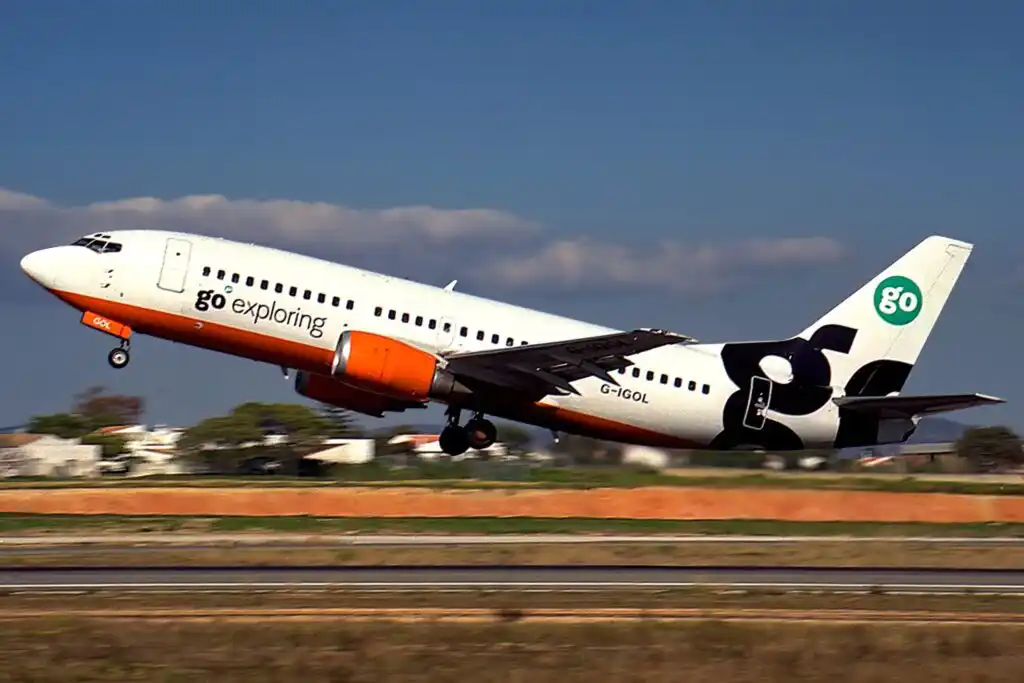
In the fast-evolving landscape of European air travel in the late 1990s, Go Fly emerged as a bold and transformative experiment in low-cost aviation. Originally a subsidiary of British Airways, Go Fly was conceived not merely as a cost-saving venture, but as a strategic response to the growing dominance of no-frills carriers such as Ryanair and EasyJet. Founded in 1998, Go Fly was positioned to capitalize on changing customer expectations, cost-conscious travel, and deregulation in the aviation sector.
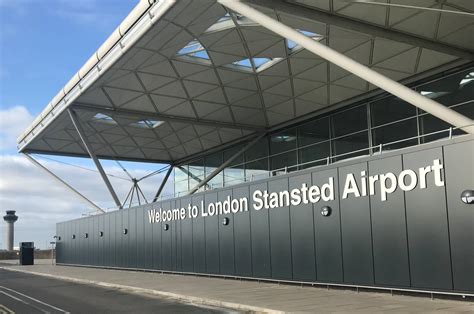
The airline was based at London Stansted Airport, and from the outset, its mission was clear: offer competitive pricing, punctual service, and European connectivity while maintaining the efficiency and innovation of its independent low-cost rivals. With a modern fleet of Boeing 737-300s and routes across mainland Europe, Go Fly swiftly carved out its niche, despite operating in a fiercely competitive environment.
The Strategic Foundations of Go Fly
The genesis of Go Fly can be traced to Bob Ayling, then CEO of British Airways, who initiated a secretive project internally code-named “Operation Blue Sky.” Ayling was inspired—some might say provoked—by the early success of Stelios Haji-Ioannou’s EasyJet. With an eye on replicating that formula, Ayling recruited Barbara Cassani, a high-ranking and respected BA executive, to helm the new airline. Cassani, known for her turnaround expertise in the transatlantic market, brought a vision rooted in operational independence, strategic branding, and financial prudence.
Despite being wholly owned by British Airways, Go Fly operated independently, with its own management, marketing, and operations teams. This autonomy was essential. Cassani built Go’s brand around the core ideas of accessibility, simplicity, and reliability—avoiding the prestige-focused image of its parent.
The airline’s branding was also deliberately distinct. It was stylized as “go”—lowercase, bold, and approachable, reflective of the no-nonsense ethos Cassani aimed to communicate to cost-savvy travelers across Europe.
Early Route Expansion and Competitive Tactics
Go Fly’s maiden voyage took place on May 22, 1998, from London Stansted to Rome Ciampino, a route selected to demonstrate its ambition to serve key European leisure and business destinations. Within days, flights were added to Milan Malpensa, Copenhagen, Lisbon, and Bologna. The airline’s early network reflected its strategic positioning—connect major second-tier cities often underserved by legacy carriers but attractive for low-cost travel.
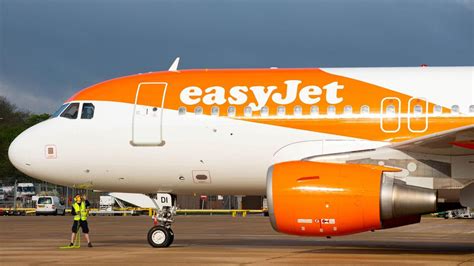
The launch, however, was not without drama. EasyJet, sensing a direct challenge, famously sent a group of staff dressed in orange boiler suits to board Go’s first flight—an audacious act of guerrilla marketing that underscored the cutthroat competition Go had entered.
Fleet expansion was swift. Initially leasing aircraft from Philippine Airlines and other carriers, Go Fly soon secured additional Boeing 737-300s, including six directly from Boeing via GE Commercial Aviation Services. This rapid scaling allowed Go to introduce new routes to Glasgow, Munich, Venice, Málaga, Faro, Bilbao, and later Madrid, tapping into both business and holiday markets.
Financial Challenges and Strategic Realignment
Despite robust growth, Go Fly soon faced the inherent tensions of running a low-cost airline under the shadow of a legacy carrier. While its routes and pricing appealed to a growing base of European travelers, mounting operational losses signaled the need for course correction. In June 1999, the airline shifted its strategy to focus more aggressively on seasonal holiday destinations, launching routes to Alicante, Ibiza, and Palma de Mallorca. The move was mirrored later that year with winter flights to Lyon, Zürich, and Prague, catering to skiers and winter holidaymakers.
By 2001, the decision was made to expand domestically, opening a second hub at Bristol Airport—a pivotal move that brought low-cost flying to South West England, a region previously underserved by budget carriers. The Bristol hub was a commercial success and helped Go Fly solidify its position as a serious national operator.
The Buyout and the Beginning of the End
The internal dynamics at British Airways shifted dramatically following the departure of Ayling. With Cassani still leading Go Fly but without her original sponsor within BA, the airline’s future became uncertain. In 2000, British Airways, facing its own profitability concerns and increasingly worried that Go Fly was cannibalizing its customer base, made the decision to sell the subsidiary.
After several months of speculation, Go Fly was sold in 2001 for £100 million in a management buyout spearheaded by Cassani, with financial backing from 3i, a prominent private equity firm. This marked a critical turning point. Now fully independent, Go Fly began to perform more aggressively in the market, reporting a 57.3% increase in passengers year-over-year by the end of 2001.
However, this momentum attracted the attention of its former rival, EasyJet.
Merger with EasyJet and Brand Absorption
In May 2002, EasyJet announced it would acquire Go Fly for £374 million—a strategic decision aimed at consolidating the UK low-cost market and eliminating its most immediate competitor. The acquisition created operational synergies and allowed EasyJet to expand its aircraft fleet, route network, and customer base overnight.
Although there was brief speculation that Cassani might resist the merger, she ultimately did not contest it. Go Fly was absorbed into EasyJet’s structure by the end of 2003, and its operations fully transitioned under EasyJet’s Air Operator’s Certificate (AOC).
Cassani would later chronicle the airline’s story in her book, Go: An Airline Adventure, providing a rare behind-the-scenes look into the high-stakes world of aviation entrepreneurship and corporate strategy.
Legacy and Impact on the Aviation Industry
Though its operational lifespan was short—just over five years—Go Fly’s legacy endures. The airline proved that it was possible for a traditional carrier to spin off a nimble, independent budget subsidiary that could thrive in a fiercely competitive market. It pioneered practices that would later become standard in the industry: point-to-point routes, secondary airport usage, quick aircraft turnaround, and direct online booking models.
Go Fly also catalyzed broader conversations within the aviation industry about the role of brand autonomy, cost segmentation, and strategic agility. While the ultimate absorption into EasyJet might be seen as a loss of independence, it also signaled validation of Go’s model, which had proven strong enough to be worth acquiring.
In many ways, Go Fly was the missing link between traditional and low-cost models in European aviation. Its success demonstrated that customer satisfaction, innovation, and lean operations could coexist—if only for a time—under the umbrella of a larger legacy brand.
Conclusion: A Pioneering Footnote in Aviation History
Today, Go Fly exists only in the pages of aviation history and in the memories of the millions who flew on its orange and white aircraft. Yet its influence is still visible in how airlines operate, compete, and innovate. It was a bold experiment, expertly executed, and ultimately overtaken not by failure, but by the gravitational pull of its success.
As we look back, Go Fly remains a case study in ambition, innovation, and strategic reinvention—a short-lived brand whose altitude was always aimed at disrupting the status quo.