PLAY, an Icelandic low-cost airline, has carved an audacious path through the competitive skies of global aviation. Born from the ambitions of former Wow Air executives in July 2019, PLAY emerged with a clear vision: to revitalize Iceland’s transatlantic air traffic using lean operations, red branding, and a youthful spirit grounded in efficiency. Operating from Keflavík International Airport, PLAY now connects Iceland to over 35 destinations across Europe, North America, and Africa with a modern fleet of Airbus A320neo family aircraft.
The Genesis of PLAY: From WAB Air to Nasdaq
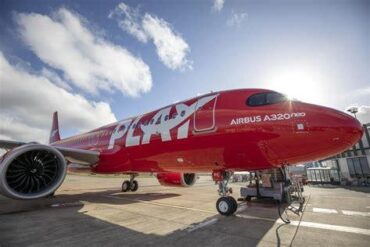
Founded as WAB Air (“We Are Back”), the airline represented a defiant return of Icelandic aviation veterans to the market after the fall of Wow Air. Early on, Avianta Capital, owned by the daughter of Ryanair co-founder Michael Kell Ryan, took a 75% stake in the venture. By November 2019, the brand PLAY was born. Its aesthetic—striking red livery and no-frills approach—reflected both ambition and a nod to Iceland’s bold landscapes.
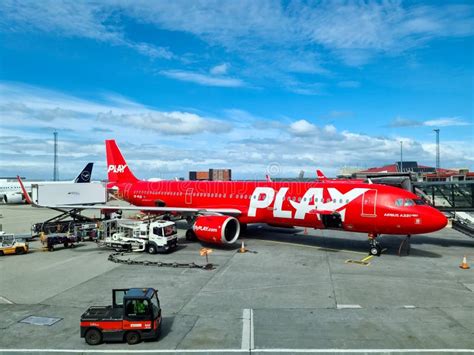
By the end of 2019, PLAY announced plans to operate flights to six European destinations, including London, Paris, Copenhagen, and Berlin, using Airbus A321s with 200-seat configurations. Despite delays and challenges in securing landing permits, momentum resumed in 2021, catalyzed by a successful IPO that raised over $274 million from an oversubscribed offering.
Entering the Skies: Operational Milestones and Expansion
PLAY’s inaugural flight launched on June 24, 2021, from Keflavík to London Stansted, the same day it was listed on Nasdaq Iceland. This synchronized launch signaled not only the beginning of its operations but also the start of a new chapter in Icelandic commercial aviation. PLAY’s initial fleet, which included aircraft formerly operated by Interjet, was expanded swiftly to meet growing demand.
As operations matured, PLAY expanded into transatlantic routes, securing U.S. Department of Transportation approval in August 2021. By April 2022, PLAY was offering flights to Baltimore and Boston, tapping into markets previously dominated by larger legacy carriers. The expansion into Canada followed, with service to Hamilton, Ontario, beginning in June 2023.
Strategic Repositioning: AOC in Malta and a Leisure Focus
While early growth was aggressive and bold, PLAY faced financial headwinds. By 2024, though PLAY had increased its passenger load factor to over 85%, the airline remained unprofitable, recording a $66 million loss despite a $292 million turnover.

In response, PLAY underwent strategic restructuring. A shift in focus prioritized leisure destinations and point-to-point routes, reducing its emphasis on connecting traffic between Europe and North America. In March 2025, PLAY obtained a new Air Operator Certificate (AOC) in Malta for its subsidiary Play Europe, allowing greater regulatory flexibility within the European Union.
This realignment also marked the suspension of underperforming transatlantic routes and an embrace of markets with strong seasonal demand, including Marrakesh (Morocco) and Antalya (Turkey)—the airline’s first ventures into Africa and Asia, respectively.
Fleet Efficiency: A Commitment to the A320neo Family
At the heart of PLAY’s operations lies a consistent fleet strategy built around the Airbus A320neo and A321neo aircraft. As of March 2025, PLAY’s fleet included 10 aircraft, all from the Airbus A320neo family, offering seating capacities between 174 and 214 passengers.
This single-type fleet philosophy enhances operational efficiency, crew training uniformity, and maintenance savings, enabling PLAY to compete effectively in the low-cost sector while maintaining high utilization rates.
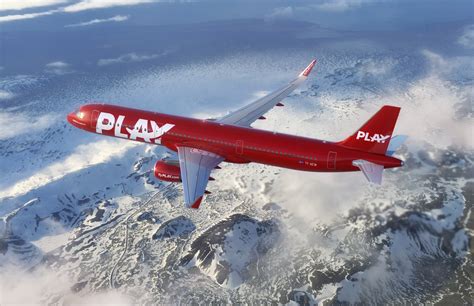
Fleet development saw early adjustments. Originally eyeing the A321LR for longer U.S. routes, PLAY canceled those plans due to fuel cost volatility in 2022, instead pivoting to more fuel-efficient A320neos. By early 2023, the airline began reconfiguring its A321neos to increase seating capacity from 192 to 214, boosting yield per flight.
Network and Partnerships: Expanding Without Overextending
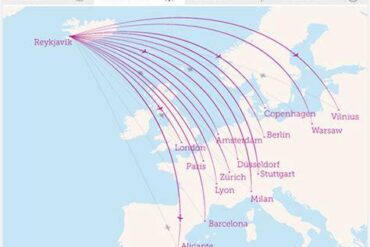
PLAY operates a hub-and-spoke network centered at Keflavík International Airport, with increasing seasonal diversity. As of 2025, it serves 42 destinations across Europe, North America, and Africa. Key markets include Scandinavia, the United Kingdom, the Iberian Peninsula, and North America’s East Coast.
To amplify reach without expanding its own fleet unsustainably, PLAY maintains virtual interlining agreements with airlines like Alaska Airlines, Spirit, easyJet, Vueling, and Norwegian Air Shuttle. These agreements allow seamless bookings for travelers while keeping PLAY’s operational overheads lean.
Corporate Affairs and Financial Trajectory
Despite growing passenger numbers—rising from 100,000 in 2021 to 1.6 million in 2024—PLAY has yet to achieve profitability. Its business model, akin to that of other low-cost carriers, hinges on volume-driven margins, ancillary revenue, and strict cost controls. The airline’s financial reports for 2024 revealed a higher load factor and revenue, but also increased operating costs from fuel, fleet expansion, and international launches.
Leadership transitions also shaped PLAY’s trajectory. In March 2024, Einar Örn Ólafsson assumed the role of CEO, replacing Birgir Jónsson. Under Ólafsson, the company doubled down on restructuring efforts, trimmed non-viable routes, and pivoted toward leisure-heavy growth markets to stabilize margins.
Challenges and the Road Ahead
Like all young airlines, PLAY faces external volatility—ranging from fuel prices to geopolitical uncertainty and regulatory hurdles across different regions. However, its adaptive approach, evident in its swift reconfigurations, realigned routes, and successful capital raises, signals resilience.
PLAY’s decision to reduce its transatlantic ambitions in favor of robust, year-round leisure travel represents a calculated pivot toward sustainability. While the airline may no longer aim to challenge legacy carriers across oceans, its niche—affordable, direct connections to and from Iceland—remains both commercially viable and strategically sound.
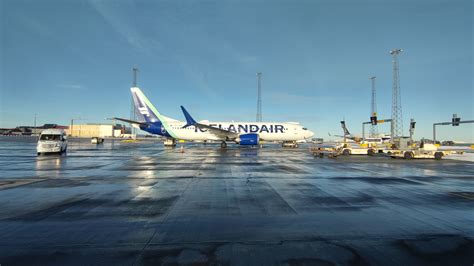
Looking forward, the growth of Play Europe, enhanced European connectivity, and targeted African and Asian routes could restore profitability while reinforcing Iceland’s role as a central aviation node between continents.
Conclusion
PLAY is not merely a resurrection of Wow Air’s low-cost legacy—it is a distinct, evolving venture that reflects modern challenges and ambitions. With a bold brand, a pragmatic fleet strategy, and a sharpened focus on leisure traffic, PLAY is navigating turbulence with strategic agility. As it continues to redefine what it means to be a low-cost carrier based in a small, northern island nation, PLAY holds the potential to become a leading name in Nordic aviation—if not in size, then certainly in strategy, spirit, and style.