Zoom Airlines Inc., once a symbol of innovation in the Canadian aviation market, carved a niche as a low-fare transatlantic airline that connected Canada to Europe, the Caribbean, and parts of South America and the United States. Headquartered in the Place Bell Canada building in Ottawa, Ontario, the airline represented a bold reimagining of budget international air travel. Though its operations were short-lived—from 2002 to 2008—Zoom’s story is a revealing lens into the volatility of aviation markets, the complexities of fuel economics, and the ambition of private entrepreneurial ventures.
Founding Vision: Disrupting the Traditional Leisure Travel Model
The genesis of Zoom Airlines dates back to May 2002, when Scottish brothers John and Hugh Boyle founded the airline to revolutionize the Canadian leisure travel market. The Boyles were not newcomers to the travel industry. In the 1980s, they launched Falcon Holidays in Scotland and later sold it profitably. In 1991, they founded Direct Holidays, which became the UK’s leading direct-sell travel agency, bypassing third-party travel agents to offer significant cost savings to customers.
Following the £84 million sale of Direct Holidays to the MyTravel Group in 1998, Hugh Boyle relocated to Canada and launched GO Travel Direct Vacations, continuing the direct-to-consumer model. Zoom Airlines took this concept even further by eliminating not just travel agents but virtually all intermediaries in the flight booking and travel planning process. This radical approach promised lower costs and greater transparency for passengers.
Expansion and Strategic Partnerships
Zoom Airlines initially operated charter flights to the Caribbean using aircraft leased from FirstAir and Monarch Airlines. It soon evolved into a scheduled transatlantic low-fare carrier, opening up routes from Canada to major European destinations. With a fleet of five aircraft, the airline ran services year-round to destinations across Europe and seasonal charter routes to the Caribbean and South America.
In November 2006, Zoom entered a strategic codeshare agreement with Flyglobespan.com, a UK-based airline. Under this arrangement, Zoom operated two of three weekly Manchester–Toronto flights for Flyglobespan. Zoom’s flights to Belfast, Cardiff, Glasgow, London Gatwick, London Stansted, and Manchester became accessible on Flyglobespan’s platform, in addition to direct Zoom flights from Ottawa to London Gatwick. However, this partnership lasted only for the 2006/2007 winter season, as Flyglobespan eventually launched its own Canadian services.
In the summer of 2006, Zoom established a sister company in the UK, Zoom Airlines Limited, which mirrored its Canadian counterpart’s business model and operational strategy.
Regulatory Green Light for Italian Expansion
Zoom Airlines continued to expand its international footprint and received a critical boost in January 2008, when the Canadian Minister of Transport, Lawrence Cannon, granted the airline approval to operate routes between Canada and Italy. This opened up new European markets and hinted at ambitions for wider continental coverage.
Sudden Collapse Amidst Soaring Fuel Costs
Despite its innovative approach and growing route network, Zoom Airlines could not withstand the harsh realities of rising global fuel prices and tightening economic conditions. On August 27, 2008, a pivotal event marked the beginning of the end. An aircraft leased to Zoom was grounded at Calgary International Airport when the lessor canceled the agreement over unpaid fees. Refueling services were also denied due to outstanding debts.
The following day, August 28, 2008, the situation deteriorated rapidly:
- A Boeing 757 was impounded at Glasgow Airport for unpaid air traffic control charges.
- Another aircraft at Cardiff Airport was grounded after the intended flight equipment was impounded.
- Zoom filed for administration under the Canadian Companies’ Creditors Arrangement Act and ceased all operations.
Almost simultaneously, the UK-based Zoom Airlines Limited also filed for bankruptcy under British jurisdiction. The company cited a failure to hedge pre-sold low-cost fares against skyrocketing aviation fuel prices, and a worsening global economic climate. The last operational flight—a London Gatwick to Bermuda/Fort Lauderdale route—was commanded by Captain Tony Hampson and Senior First Officer Howard Barnard, marking the airline’s final chapter.
Attempted Resurrection: The XPO Airlines Saga
In January 2009, Globe Span Capital, a Kingston, Ontario-based financial firm, acquired the assets of Zoom Airlines Inc. The company announced ambitious plans to relaunch the airline under a new name: XPO Airlines, short for “Cross Pacific Ocean.”
XPO’s strategic blueprint involved moving finance, human resources, and call-center operations to Kingston, while retaining Toronto as the operations hub. On March 25, 2009, a new website was launched, and by May 2009, the company announced a revised market focus on the Canada–Asia corridor, targeting a re-launch in late 2009 or early 2010.
However, the venture struggled to regain momentum. By August 2010, the official XPO website was taken offline. In February 2018, a final attempt was made to revive the brand, with efforts to raise $18 million CAD from investors. Despite the optimism, XPO Airlines never materialized into an operational carrier.
Zoom Airlines’ Global Footprint
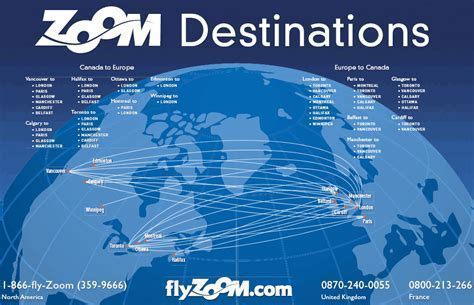
Zoom Airlines served a diverse range of international and domestic destinations, reflecting its ambitious scope:
Europe
- France: Paris (Charles de Gaulle Airport)
- Italy: Rome (Rome Fiumicino Airport) – seasonal
- Netherlands: Amsterdam (Schiphol Airport)
- United Kingdom: London (Gatwick and Stansted), Manchester, Belfast, Glasgow, Cardiff
North America
- Canada: Calgary, Edmonton, Vancouver, Abbotsford, Winnipeg, Halifax, Hamilton, Ottawa, Toronto, Montreal
- United States: Fort Lauderdale (seasonal), New York City, San Diego
Caribbean
- Barbados, Bermuda, Grenada, Jamaica, Trinidad
South America
- Guyana (Cheddi Jagan International Airport)
Fleet Composition and Specifications
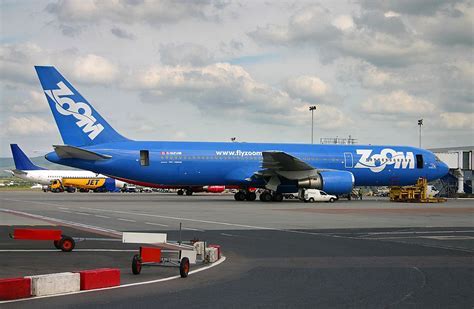
At its peak in September 2008, Zoom Airlines operated a fleet of five aircraft:
Boeing 757-200 (2 Aircraft)
- C-GTSN “City of Montreal” (1990) – 205 passengers (45 Premium Economy / 160 Economy)
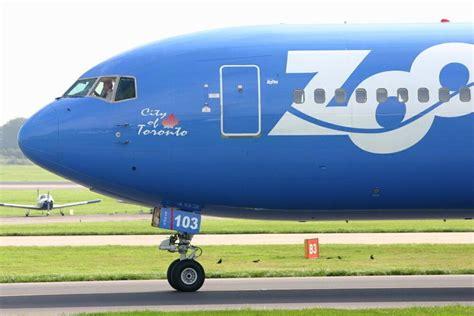
- C-GTDX “City of Toronto” (1990) – 202 passengers (42/160)
Boeing 767-300ER (3 Aircraft)
- C-GZMM “City of Ottawa” (1993) – 269 passengers (62/207)
- C-GZUM “City of Vancouver” (1995) – 270 passengers (63/207)
- C-GZNC “City of Calgary” (1993) – 269 passengers (62/207); operated occasionally from Halifax
Premium Economy seating was available only on select routes. The average fleet age as of August 2008 was 15.9 years, a reflection of the budget model that prioritized cost-efficiency over cutting-edge equipment.
Legacy and Lessons
Zoom Airlines was a pioneering force in introducing direct-sell, low-cost transatlantic travel to the Canadian market. Despite its untimely demise, the airline challenged traditional paradigms and briefly offered affordable international travel to a broad consumer base. Its downfall, triggered by volatile fuel markets and economic pressures, underscores the fragility of aviation ventures in the absence of robust financial hedging strategies.
The brief re-emergence as XPO Airlines highlighted investor confidence in the brand’s concept but also revealed the challenges of regaining market trust and momentum. Though Zoom Airlines no longer flies, its audacious attempt to rewire international travel economics remains a noteworthy chapter in Canada’s aviation history.