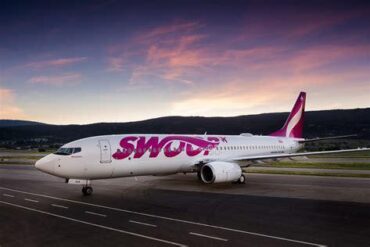
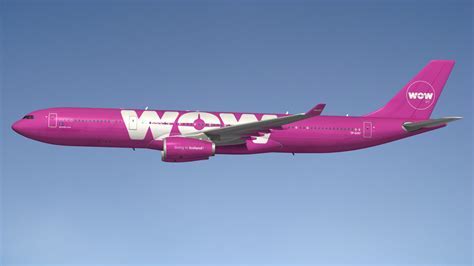
Founded with bold ambition and fueled by the dream of turning Iceland into a global air hub, Wow Air emerged in 2012 as a disruptor in the competitive world of low-cost aviation. With its striking magenta branding and aggressively priced fares, the airline quickly attracted attention from transatlantic travelers and budget-conscious tourists. Operating out of Keflavík International Airport, Wow Air aimed to capitalize on Iceland’s geostrategic position between Europe and North America, pitching itself as a gateway for travelers crossing the Atlantic.
Launched by tech entrepreneur Skúli Mogensen, the airline was built on the premise of minimal fares and maximum connectivity. Mogensen’s vision was as audacious as it was entrepreneurial: to make Iceland the “Dubai of the North“—a bustling transit hub supported by booming tourism and sleek aircraft.
The Genesis of Wow Air: A Low-Cost Dream Born in a Tourism Boom
In the wake of the 2008 financial crisis, Iceland’s economy turned toward tourism as a key pillar for recovery. Mogensen, operating through his investment firm Titan, seized the moment. Ticket sales began in November 2011, and by May 31, 2012, Wow Air’s inaugural flight from Keflavík to Paris Charles de Gaulle marked its official entry into the market.
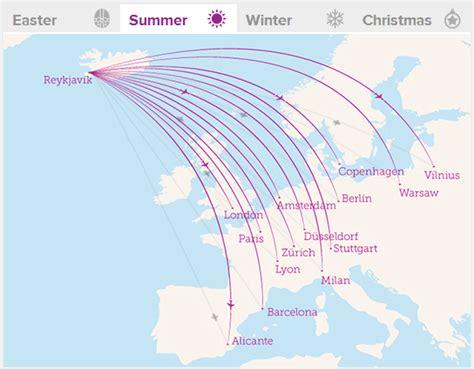
The real boost came just months later when Wow Air acquired the network of Iceland Express in October 2012. This strategic move rapidly expanded its footprint, allowing immediate access to high-traffic routes like London Gatwick and Copenhagen, and new connections to Berlin, Kaunas, Salzburg, and Warsaw. By the end of 2013, Wow Air had carried over 400,000 passengers—a number that surged to 1 million by December 2014, driven by a growing interest in Icelandic landscapes and budget European travel.
Transatlantic Leap: North American Expansion and Growing Ambitions
The airline’s aggressive growth strategy continued with the launch of flights to Boston and Washington D.C. in 2015, marking its entrance into the North American market. This was followed by an expansion to Toronto and Montréal in 2016, and later that year to Los Angeles and San Francisco—served by two leased Airbus A330-300s, the largest aircraft in Wow Air’s fleet.
Annual seat capacity more than doubled to 1.6 million in 2016, positioning Wow Air as a major player among transatlantic low-cost carriers. However, this growth came with rising complexity, stretched operational logistics, and the onset of financial pressure that would soon jeopardize its future.
The Illusion of Ultra Low-Cost: Marketing Criticism and Fare Transparency
In 2017, Wow Air faced scrutiny over its marketing practices, particularly in the UK. Headlines criticized the airline for advertising £99 one-way fares from London Stansted to New York, which were typically only available as part of round-trip bookings. While technically accurate, the practice was condemned by consumer advocates and regulators as misleading.
This controversy highlighted a broader tension in Wow Air’s model. The promise of rock-bottom prices often masked additional fees—for baggage, seat selection, food, and even carry-ons—leaving passengers with a travel experience that often fell short of expectations. These tactics, while not unusual in the low-cost sector, were amplified by the long-haul nature of Wow’s services, making the value proposition more fragile.
Overreach and Instability: Expansion Outpaces Sustainability
Despite a remarkable 58% revenue growth in 2017, Wow Air entered a dangerous phase of overexpansion and thinning margins. At its peak, the airline served 36 destinations with a mixed fleet of narrow-body and wide-body Airbus aircraft. However, infrastructure and support systems failed to keep pace.
Customer service complaints escalated as operational strain mounted. Long delays, missed connections, and erratic communication began to dominate travel forums. Internally, financial stress surfaced, and Wow Air posted a loss by the end of 2017, exposing the fragility of its business model.
The Collapse Begins: Failed Mergers and Last-Minute Rescues
On November 5, 2018, Wow Air announced a preliminary acquisition deal with Icelandair Group. This proposed merger, if successful, would have consolidated Iceland’s aviation market under a single umbrella. But cracks quickly formed. Just weeks later, a failed sale-and-leaseback agreement forced Wow to return four aircraft, slashing capacity during a critical travel period.
On November 29, Icelandair walked away from the deal, citing uncertainties and strategic misalignment. A new lifeline appeared when Indigo Partners—the investment firm behind Wizz Air and Frontier—offered to buy a 49% stake in Wow Air. But confidence had eroded. In December, Wow Air laid off 360 employees, phased out five aircraft, and canceled its order for A330neos.
Even routes to major cities like Delhi, San Francisco, and Los Angeles were abandoned. The financial hemorrhaging was evident. By March 2019, Indigo Partners also withdrew, and a last-ditch attempt to revive talks with Icelandair ended in failure.

The Sudden End: A Shutdown That Shocked a Nation
Between March 25–27, 2019, a series of flight cancellations sparked concern among passengers. Official explanations cited technical issues and repossession of aircraft by lessors, but insiders knew the airline was nearing collapse.
On March 28, 2019, Wow Air ceased all operations without warning. Stranded travelers across Europe and North America scrambled for alternatives. The airline offered vague advice: rebook with other carriers. Skúli Mogensen, still defiant, proposed a $40 million revival using five Airbus A321neos—a plan that never came to fruition.
The fallout was severe. Wow Air had transported more than a quarter of all visitors to Iceland. In the aftermath, tourism declined by 16%, with American arrivals falling by 20%. The ripple effects spread across the hospitality sector, freezing hotel construction, vacation home projects, and weakening an economy built around the expectation of ever-growing tourist numbers.
Legacy and Successors: PLAY and the Ghost of Wow
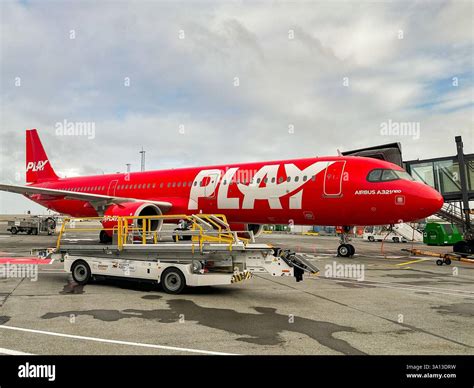
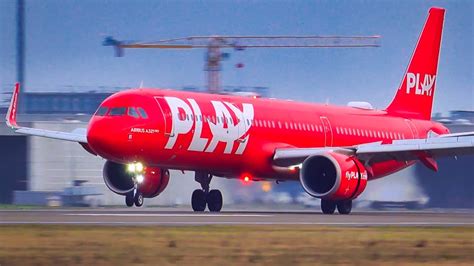
Despite the spectacular failure, Wow Air’s story didn’t end in 2019. Former executives launched a new venture in July: WAB air, later rebranded PLAY in November 2019. By May 2021, PLAY secured its Air Operator’s Certificate (AOC) and began operating with Airbus A321neos, reconnecting Iceland to key European cities by June 24, 2021.
Meanwhile, in September 2019, USAerospace Associates—led by Michele Roosevelt Edwards—claimed to have purchased Wow Air’s assets. Plans were announced for Washington Dulles–Keflavík flights under a U.S. certificate, a proposed Wow Italy subsidiary, and even ten new A321 deliveries. However, these efforts remained speculative, as no formal AOC application was submitted, and no commercial service ever began.
Fleet and Routes: A Snapshot of Wow Air’s Operational Footprint
At the time of its closure in March 2019, Wow Air operated ten Airbus aircraft:
- 5 Airbus A321-200
- 2 Airbus A321neo
- 3 Airbus A321-200 (wet-leased)
Its route network included 20 year-round destinations and 6 seasonal routes, spanning North America and Europe. The earlier fleet had featured A320-200, A320neo, and the long-haul A330-300, with unfulfilled orders for the fuel-efficient A330-900neo.
Following its demise, many of Wow Air’s aircraft found new homes with global operators such as Air Canada Rouge, VietJet Air, Turkish Airlines, Onur Air, Thai AirAsia X, and Citilink.
Conclusion: A Meteoric Rise, A Cautionary Tale
Wow Air remains one of the most dramatic case studies in the history of ultra low-cost aviation. From a modest Icelandic upstart to a bold transatlantic challenger, its rapid rise and equally rapid fall offer lessons in scalability, financial discipline, and market positioning. While it succeeded in reshaping Iceland’s tourism industry and proved the demand for low-cost long-haul travel, its collapse serves as a warning against overextension and opaque business models.
As PLAY and other successors take up the mantle, they do so in the shadow of Wow Air’s magenta-colored legacy—aware of both its potential and its peril.