Founded amid shifting political landscapes and aspirations of national pride, Air Zimbabwe has journeyed through an intricate history marked by ambitious expansions, debilitating economic crises, and dogged efforts to reclaim its legacy. Once a respected name in African aviation, the airline’s trajectory from hopeful beginnings to financial collapse and tentative resurgence encapsulates the broader socio-economic challenges faced by Zimbabwe itself.
In this article, we explore the deeply intertwined fate of Air Zimbabwe and its home country, analyzing the airline’s evolution, fleet development, economic missteps, and ongoing efforts at revival.
The Early Ascent: Post-Colonial Emergence and Regional Growth
Air Zimbabwe was born from the ashes of colonial-era aviation under the name Air Rhodesia Corporation on 1 September 1967, inheriting equipment and infrastructure from the defunct Central African Airways. The airline’s transition to Air Zimbabwe Rhodesia in 1978 and ultimately to Air Zimbabwe in April 1980 mirrored Zimbabwe’s own transformation to independence.
On 2 April 1980, the newly renamed carrier inaugurated scheduled long-haul operations with a London–Gatwick service, using leased Boeing 707-320Bs, which were later purchased. That same fiscal year, the airline registered a £220,000 profit, signaling a promising start. Air Zimbabwe rapidly expanded its operations, adding Frankfurt to its international map, while integrating a bold national-flag livery that asserted its identity.
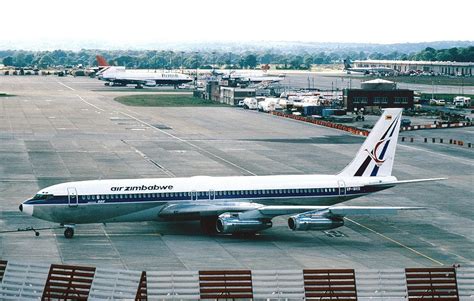
The 1980s proved to be the airline’s golden decade. A partnership with Qantas opened routes from Harare to Perth and Sydney using the long-range 747SPs, while a merger with Affretair added cargo capabilities. Membership in IATA further legitimized its global standing. Regionally, Air Zimbabwe expanded into Nairobi, Lusaka, Gaborone, and Lilongwe, and developed a domestic hub network between Harare, Bulawayo, and Victoria Falls.
Fleet Modernization and Continental Expansion
By the mid-1980s, Air Zimbabwe’s ambitions translated into tangible assets. A fleet renewal program brought in modern aircraft suited for both domestic and long-haul operations:
- Boeing 737-200s arrived in 1986–1987, enhancing short-haul efficiency.
- Routes extended to Dar es Salaam, Maputo, and Mauritius, deepening regional ties.
- A BAe 146-200 was introduced for domestic service.
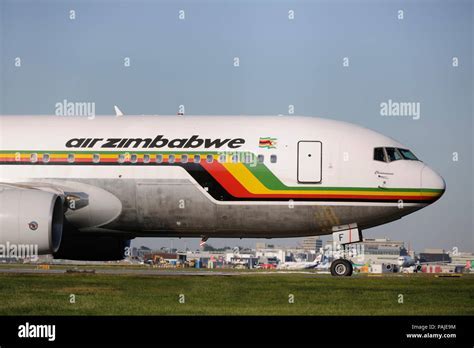
- In 1989–1990, the airline added two Boeing 767-200ERs capable of supporting long-haul ambitions.
- Fokker 50s joined the fleet in 1995, providing needed versatility.
By the early 1990s, Air Zimbabwe had grown into a respected African flag carrier, operating intercontinental routes to Athens, London, and Frankfurt, while maintaining a robust domestic presence. This period marked the zenith of the airline’s operational strength and reputational prestige.
Financial Descent and Operational Collapse
The turn of the millennium heralded the airline’s decline. The early 2000s saw Air Zimbabwe falling prey to Zimbabwe’s worsening economic crisis. In 2004, the IATA suspended the airline due to unpaid debts, cutting it off from global ticketing and settlement systems.
By 2006, hyperinflation and foreign currency shortages pushed ticket prices up by 500%, pricing out ordinary citizens and drastically lowering load factors. Multiple suspensions of service between 2005 and 2013 reflected the scale of operational instability. Despite government recapitalizations in November 2011 and March 2012, Air Zimbabwe faced repeated groundings.
When services resumed in April 2013, the airline operated only domestic routes and Johannesburg flights. Even then, fleet availability, fuel shortages, and staff unrest marred service reliability. By 2017, its accumulated debts reached a staggering US$330 million, and the European Union banned Air Zimbabwe for failing to meet safety standards.

Corporate Restructuring and Ownership
Since 2012, Air Zimbabwe has been wholly owned by the Zimbabwean government through Air Zimbabwe Private Limited, created to replace the former parastatal structure. Despite this, leadership instability continued to plague the airline. CEO and COO appointments were marred by accusations of nepotism and mismanagement.
Privatization discussions surfaced regularly but failed to yield actionable reforms. Instead, the carrier drifted further into insolvency. A formal entry into administration in October 2018 was intended to restructure the airline’s bloated debt but also indicated the dire state of its finances.
COVID-19 Shutdown and Tentative Restart
The onset of the COVID-19 pandemic in March 2020 forced Air Zimbabwe to suspend all services. While other African airlines leveraged alliances and cargo contracts to maintain limited operations, Air Zimbabwe remained mostly grounded. A phased restart in September 2020 focused solely on domestic routes.
By March 2023, the airline had cleared IATA debts, regaining access to essential clearing and booking systems. Efforts were underway to relaunch services to London, a strategic route it had once proudly operated.
Shrinking Network and Aged Fleet
Once spanning Asia, Europe, and Southern Africa, Air Zimbabwe’s network is now confined to:
- Domestic Hubs: Harare, Bulawayo, Victoria Falls
- Regional Link: Johannesburg
As of September 2019, its operational fleet included:
- Airbus A320-200s
- Boeing 737-200Adv
- Boeing 767-200ERs
- Boeing 777-200ERs (mostly unused)
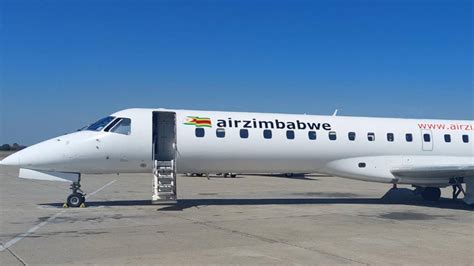
- Embraer ERJ-145s
- Stored Xian MA60s
Legacy aircraft such as the BAe 146, Boeing 707, and Fokker 50 are long retired. Meanwhile, planned acquisitions of Airbus A340-500s were quietly shelved amid budgetary constraints.
Business Trends: Losses and Inefficiencies
Audited financial statements have not been published since 2008, yet internal reports and reconstruction audits from 2014 to 2018 reveal troubling patterns:
- Turnover fluctuated from US$32.9 million to US$95.3 million
- Annual losses exceeded US$33.1 million in 2017
- Load factors remained worryingly low, between 41% and 60%
- Workforce shrank from 799 to 232 employees
Poor route profitability, lack of strategic alliances, and reliance on government bailouts contributed to an unsustainable model. Rebuilding trust with both passengers and investors remains a formidable challenge.
Safety Record and Public Perception
To its credit, Air Zimbabwe has not recorded a fatal accident under its name since 1980. The only significant incident occurred in July 1984, when a Viscount aircraft was damaged beyond repair on the ground. A 1999 Chicago Tribune report, later retracted, falsely alleged a co-pilot was locked out of the cockpit—a claim successfully contested by the airline in court.
Despite operational chaos, the absence of fatal accidents has bolstered the airline’s basic reputation for airworthiness, even as it struggled with regulatory compliance in Europe and elsewhere.
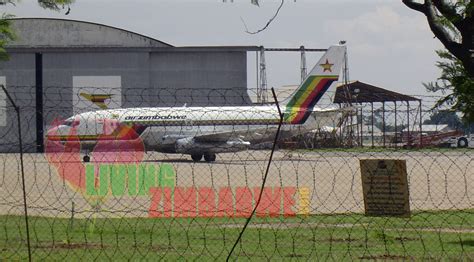
Conclusion: Navigating an Uncertain Sky
Air Zimbabwe’s journey mirrors the arc of Zimbabwe itself—rising from colonial shackles, aspiring toward international recognition, only to be humbled by financial mismanagement, political instability, and economic hardship. Its resilience, however, cannot be understated.
As of 2023, the airline is once again at a crossroads. It has cleared critical debts and re-established some domestic credibility. But the path to renewed international relevance requires more than operational tinkering—it demands transparent leadership, strategic investment, and modern infrastructure.
Until then, Air Zimbabwe remains a symbol of both national pride and missed potential, waiting for the winds of reform to lift its wings once more.