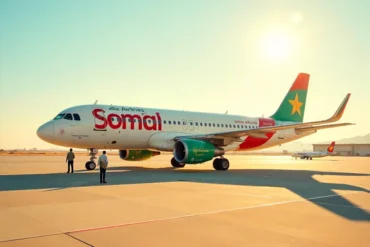
Somali Airlines was not just a mode of transport — it was a national emblem, the pride of the Horn of Africa. Established in March 1964, Somali Airlines emerged as the official flag carrier of the newly independent Somali Republic. Operating under the IATA code HH and ICAO designation SOM, it was headquartered in Mogadishu, with its main hub at Mogadishu International Airport and a secondary base at Hargeisa. For nearly three decades, the airline stitched Somalia into the fabric of global aviation, connecting cities across Africa, the Middle East, and Europe.
Its cessation in 1991 marked more than the end of commercial air travel; it signaled the beginning of a long silence in Somali civil aviation. Yet, its legacy continues to inspire aspirations of revival.
A Diplomatic Takeoff: The Joint Venture Years (1964–1967)
Founded through a joint venture between the Somali government and Alitalia, Somali Airlines was more than a business deal. It symbolized a budding nation’s intent to join the world stage. Alitalia held a 49% stake, offering technical support, aircraft, and crew training. Operations began in July 1964 with a modest fleet — three Douglas DC-3s and two Cessna 180s, including donations from the United States.
In March 1965, Somali Airlines took over the Mogadishu–Aden route. A direct flight to Nairobi launched in January 1966, only to be banned months later following political tensions triggered by Radio Mogadishu’s broadcast criticizing Kenyan President Jomo Kenyatta.
Fleet and Route Expansion (1967–1973)
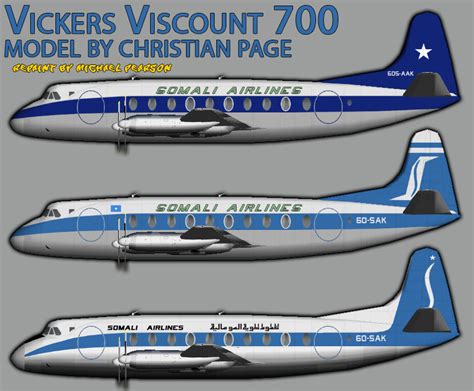
As the 1960s progressed, Somali Airlines began expanding its reach. By October 1967, it had introduced a weekly service to Dar es Salaam. By March 1970, its fleet had grown to include:
- 2 Cessna 185s
- 3 DC-3s
- 4 Vickers Viscount 700s
However, tragedy struck on 6 May 1970, when a Viscount 700 (registration 6O-AAJ) crashed during landing in Mogadishu due to a cargo fire and nose-gear collapse, killing five of the 30 passengers onboard.
Nationalization and the Jet Age (1974–1980)
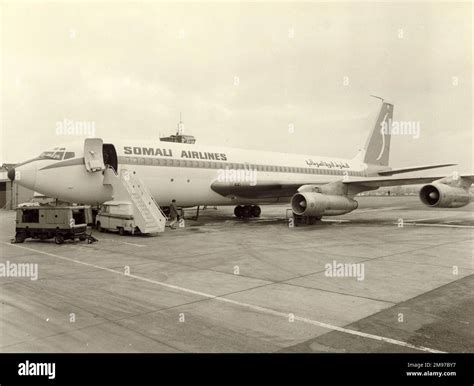
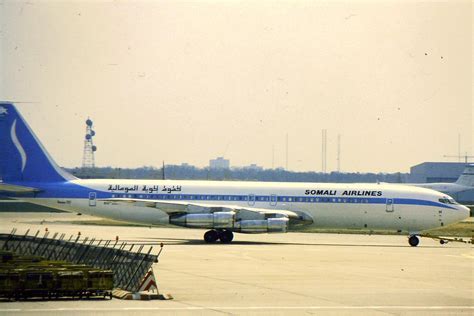
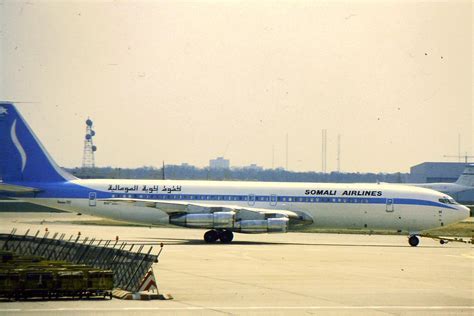
The mid-1970s saw a transition to jet-powered aviation. In April 1974, the airline signed a contract to lease a Boeing 720B, enabling flights to London, major African capitals, and Middle Eastern destinations. Somali Airlines also acquired two Fokker F27s in 1975 and purchased two Boeing 720Bs in 1976, followed by an order for two Boeing 707s.
By 1977, the Somali government had purchased Alitalia’s 49% stake, making Somali Airlines a fully state-owned enterprise. By July 1980, its diverse fleet included:
- 2 Boeing 707-320C
- 2 Boeing 720B
- 2 Fokker F27-600
- 2 DC-3s
- 1 Cessna 402
- 1 Cessna 180
These acquisitions allowed Somali Airlines to become a credible international player, with routes stretching across Europe and the Middle East.
Peak Operations Under New Leadership (1983–1987)
The airline reached its operational peak under the leadership of Colonel Mohamoud Gulaid, who became CEO in 1983. At its height in 1985, Somali Airlines employed 714 staff members and maintained a robust fleet serving destinations including Abu Dhabi, Cairo, Frankfurt, Jeddah, Nairobi, and Rome.
In February 1987, a new Banjul–Conakry route was launched. The same year, Somali Airlines placed an order for an Airbus A310-300, with an option for a second unit, to replace the aging Boeing 707s. This move indicated a desire to modernize the fleet and improve fuel efficiency and service quality.
Tragedy and Decline (1989–1991)
Despite growth, Somali Airlines was plagued by tragic incidents. The deadliest accident occurred on 20 July 1981, when a Fokker F27-600RF (6O-SAY) suffered a structural failure in turbulence, killing all 50 passengers aboard.
Another blow came on 28 June 1989, when an F27-200RF (6O-SAZ) was reportedly shot down by rebel forces over Hargeisa, killing all 30 people on board. These incidents highlighted the growing volatility of Somali airspace.
In early 1991, the outbreak of the Somali Civil War forced the complete suspension of operations. Aircraft were grounded, routes abandoned, and employees scattered. Somali Airlines vanished from the skies.
Legacy and the Rise of Private Carriers
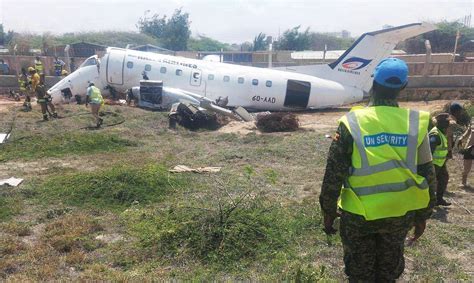
Following Somali Airlines’ collapse, a vacuum was created in Somalia’s aviation landscape. This gave rise to private carriers such as Jubba Airways, Daallo Airlines, and Puntair, which stepped in to provide essential connectivity within the country and abroad. These companies operated with varied success, but none carried the same national symbolism or historical significance as Somali Airlines.
Efforts Toward Revival (2012–2013)
More than two decades after its closure, serious attempts to revive Somali Airlines surfaced. In April 2012, a group of former Somali Airlines pilots met with Lufthansa Flight Training in Germany to seek pilot-training support. This was followed in July 2012 by a pivotal conference in Montreal, where Somali government officials, representatives of the Somali Civil Aviation Steering Committee (SCASC), ICAO, and the UNDP designed a three-year aviation rehabilitation plan.
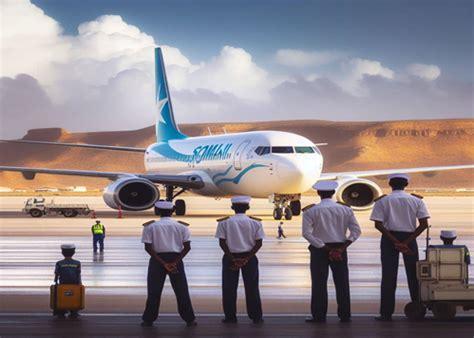
By November 2013, signs of progress emerged. A Boeing 737-400 was reported to have been transferred and repainted in national colors, with another aircraft under construction in Mogadishu. These developments rekindled hope of a national carrier relaunch, though no concrete operational schedule has since been published.
Network and Destinations
At its zenith, Somali Airlines served a wide array of destinations, which included:
- Africa: Mogadishu, Hargeisa, Kismayo, Berbera, Nairobi, Djibouti, Banjul, Conakry, Cairo, Jeddah
- Middle East: Abu Dhabi, Dubai, Aden, Doha
- Europe: Frankfurt, Rome
- Indian Ocean: Mahé (Seychelles)
These connections facilitated not only tourism and business but also political and cultural exchanges between Somalia and the broader world.
Fleet Composition Over the Years
Somali Airlines operated a variety of aircraft suited to its evolving operational needs. The fleet over its operational life included:
- Airbus A310-200/300
- Boeing 707-120B/320/B/320C
- Boeing 720B
- Boeing 727-200
- Douglas C-47A (DC-3 variant)
- Fokker F27-200/600
- Vickers Viscount 742D
This diverse fleet allowed Somali Airlines to tailor its services across long-haul and regional routes, balancing cargo capacity with passenger comfort.
Aviation Safety Record
Throughout its operational span, Somali Airlines experienced six recorded incidents, with five hull losses, three of which resulted in fatalities:
- 6 May 1970: Viscount 700 (6O-AAJ), Mogadishu – Fire and nose-gear collapse, 5 deaths
- 16 Aug 1975: C-47A (6O-SAC), Bosaso – Engine failure, no deaths
- 20 July 1981: F27-600RF (6O-SAY), Balad – Turbulence dive and wing failure, 50 deaths
- 17 May 1989: 707-320B (6O-SBT), Nairobi – Runway overrun, no deaths
- 28 June 1989: F27-200RF (6O-SAZ), Hargeisa – Claimed shot down, 30 deaths
- 6 March 1991: Gunfire at parked aircraft in Mogadishu – No injuries
These events underscored the challenges of operating in a politically unstable and infrastructurally limited environment.
Conclusion: A Legacy Awaiting Rebirth
Somali Airlines remains a symbol of national aspiration. It connected a newly sovereign country to the global community, projected a message of peace and professionalism, and brought pride to generations of Somalis. While decades have passed since its last commercial flight, the idea of a renewed Somali Airlines continues to resonate — as both a practical necessity and a potent national symbol.
Its return would not merely restore flights; it would signify Somalia’s re-emergence onto the global stage. The runway may be quiet, but the story of Somali Airlines is far from over.