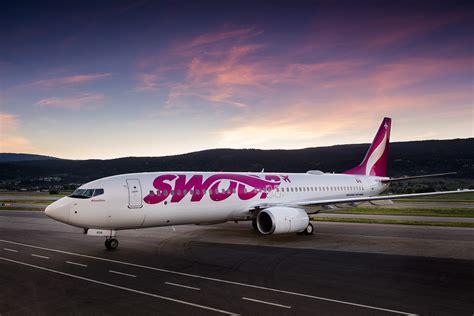
Founded with a bold ambition to reshape Canadian air travel, Swoop entered the aviation scene on September 27, 2017, as a wholly owned subsidiary of WestJet. The airline was designed to embrace the ultra low-cost carrier (ULCC) model, promising fares up to 40% cheaper than its parent company. Headquartered in Calgary, Alberta, Swoop aimed to “swoop” into the market by offering Canadians a no-frills, budget-friendly alternative. After commencing operations on June 20, 2018, the airline swiftly expanded its footprint across North America and the Caribbean before being fully integrated back into WestJet on October 28, 2023.
Strategic Launch Amid Competitive Pressures
The conception of Swoop was no accident. In April 2017, WestJet declared its intention to confront emerging ULCCs like NewLeaf (later rebranded as Flair Airlines) by launching a subsidiary that would redefine affordability in the Canadian skies. The initial launch, scheduled for late 2017, was delayed to June 2018 to accommodate a new booking system and reconfiguration of aircraft.
By February 2018, tickets went on sale, with John C. Munro Hamilton International Airport declared as the primary eastern base and Edmonton International Airport taking the western flank. The very first flight, a symbolic journey from Hamilton to Abbotsford, cost passengers an average of $103 CAD, showcasing the new pricing philosophy Swoop was determined to uphold.
A Business Model Built on Affordability
Swoop didn’t simply adopt the ULCC model—it embodied it. Every element of its operational strategy was geared toward cost minimization and price transparency. The base fare included only the seat; customers paid extra for carry-on bags, checked luggage, seat selection, in-flight refreshments, and even printing boarding passes at the airport.
This unbundled pricing model allowed Swoop to present dramatically lower base fares while maintaining financial sustainability through ancillary revenues. With a lean workforce, tight aircraft turnaround times, and focused point-to-point routing, Swoop trimmed the operational fat that bogs down traditional carriers.
Expanding Horizons: Domestic and International Growth
Swoop wasted no time scaling its operations. After launching with two Boeing 737-800 aircraft, the fleet grew to six by the end of 2018, eventually reaching 16 aircraft by 2022, including six Boeing 737 MAX 8s. From domestic strongholds like Winnipeg, Abbotsford, and Toronto, Swoop reached international destinations including:
- United States: Las Vegas, Orlando, Phoenix (Mesa), Fort Lauderdale, Tampa
- Mexico & Caribbean: Puerto Vallarta, Cancun, Mazatlán, Montego Bay, Los Cabos
- New Canadian Routes: Victoria, Kamloops, Kelowna, Charlottetown, Moncton, St. John’s

These routes were served with no connecting flights, reflecting Swoop’s strict adherence to a point-to-point model. The strategy, while cost-effective, meant fewer conveniences for passengers expecting the flexibility of hub-and-spoke networks.
Operational Infrastructure and Route Network
At its peak, Swoop operated from multiple key bases across Canada:
- Hamilton (ON)
- Edmonton International Airport
- Winnipeg James Armstrong Richardson International Airport
- Toronto Pearson International Airport
- Abbotsford International Airport
Toronto Pearson eventually replaced Hamilton as the airline’s eastern hub in October 2020, signaling a shift toward higher-traffic airports to better support growth ambitions. Swoop also partnered with Sunwing Travel Group, allowing passengers in select cities to book vacation packages using Swoop flights.
Fleet Composition and Branding Identity
Swoop’s fleet was simple yet efficient. As of October 2023, it comprised:
- 10 Boeing 737-800s (189 passengers each)
- 6 Boeing 737 MAX 8s
These aircraft were later transferred to WestJet as part of the integration.
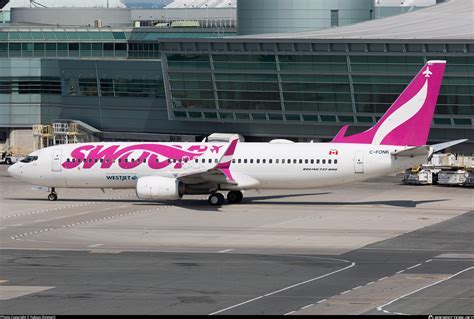
Swoop’s visual identity was vibrant and bold. The planes featured an oversized Swoop logo across the fuselage, complemented by bright pink tails and winglets adorned with white stripes. Each aircraft bore a unique name beneath the cockpit windows, further enhancing brand distinctiveness in a sea of conservative airline liveries.
Challenges and Regulatory Hurdles
Despite its aggressive expansion, Swoop faced notable obstacles. In October 2018, its much-anticipated launch into the U.S. market was delayed due to a lack of federal regulatory approvals. The delay hindered momentum, but the airline quickly rebounded, commencing international service just a week later.
The airline’s reliance on a simplified ULCC structure also meant limited customer service touchpoints, which drew criticism from travelers used to more comprehensive support. Flight cancellations and customer complaints regarding hidden fees occasionally marred its reputation. Nonetheless, the airline maintained strong load factors and continued to grow its destination roster year over year.
The WestJet Integration and Closure
On June 9, 2023, WestJet announced that Swoop would cease operations on October 28, 2023, effectively reintegrating the ULCC into the parent brand. The decision was part of WestJet’s broader strategy to streamline operations and consolidate resources under a unified brand to improve efficiency, particularly as post-pandemic recovery efforts demanded tighter control over capacity and labor.
The shutdown was methodical: Swoop’s bases in Edmonton and Winnipeg were closed on October 20, followed by Toronto Pearson on October 25. The final flight marked not only the end of Swoop’s operations but also the close of a significant chapter in Canadian aviation history.
Legacy and Impact on Canadian Aviation
Though Swoop’s lifespan was just over five years, its impact was substantial. It disrupted pricing norms, opened new travel opportunities for price-sensitive Canadians, and forced competitors like Flair Airlines and Lynx Air to recalibrate their strategies. By proving that ULCCs could function in the Canadian regulatory and economic environment, Swoop carved out a niche that reshaped market dynamics.
Its integration back into WestJet wasn’t a failure but a strategic pivot—acknowledging that ULCC operations could be more profitably managed under a single umbrella rather than as a separate brand. In doing so, WestJet preserved the best aspects of the ULCC model—efficiency, fleet simplicity, and competitive pricing—while phasing out the redundancies of a multi-brand structure.

Conclusion
Swoop’s journey from bold upstart to retired brand was a masterclass in ultra low-cost aviation tailored to the Canadian market. Its formation challenged traditional airline pricing. Its expansion pushed boundaries into the U.S., Mexico, and the Caribbean. And its conclusion offered insights into the limitations of running a standalone ULCC brand under the umbrella of a full-service airline.
In the grand narrative of Canadian aviation, Swoop will be remembered not just as a defunct carrier, but as a catalyst of change—one that redefined what it meant to fly affordably in Canada.