The Future Attack Reconnaissance Aircraft (FARA) program represented a bold initiative by the United States Army to redefine aerial reconnaissance and attack capabilities for the 21st century. Launched in 2018 as part of the broader Future Vertical Lift (FVL) program, FARA sought to develop a cutting-edge replacement for the venerable Bell OH-58 Kiowa scout helicopter, which had been a critical component of the Army’s aerial fleet for decades. However, after years of design competitions, billions of dollars invested, and ambitious technological promises, the FARA program was abruptly canceled in 2024, marking yet another chapter in the Army’s tumultuous history with armed scout rotorcraft.
Origins of the FARA Program
The FARA initiative was born from the need to replace the OH-58 Kiowa, a light observation helicopter that had become increasingly outdated by the early 21st century. The Kiowa, retired in 2017, had served as the backbone of the Army’s armed reconnaissance force since the Vietnam War. However, its retirement left a significant capability gap that the Army sought to address through a series of replacement programs. These included the Light Helicopter Experimental (LHX), which ran from 1982 to 2004 and resulted in the canceled RAH-66 Comanche, as well as the Armed Reconnaissance Helicopter (ARH) and Armed Aerial Scout (AAS) programs, both of which failed to reach full production despite substantial investment.
The Army’s desire to fill this gap led to the creation of FARA, intended to produce a nimble, highly maneuverable aircraft that could operate effectively in contested environments and provide real-time battlefield intelligence to ground commanders. This program aimed to deliver an aircraft with high speed, agility, and survivability, capable of outperforming existing platforms like the Boeing AH-64 Apache in close combat.
Design and Technical Specifications
The FARA program’s technical requirements reflected the Army’s vision for a versatile, future-proof platform. Key design goals included:
- Speed and Agility: FARA was envisioned as the “knife-fighter” of Army Aviation, requiring high speed and maneuverability to operate in contested airspace.
- Compact Size: The aircraft’s rotor diameter and fuselage width were limited to 40 feet (12 meters), ensuring it could navigate tight urban and forested environments.
- Engine Performance: FARA designs would rely on the General Electric T901 turboshaft engine, selected through the Improved Turbine Engine Program (ITEP) for its superior power-to-weight ratio and fuel efficiency.
- Advanced Avionics and Survivability Systems: Cutting-edge electronic warfare capabilities and reduced radar cross-sections to enhance survivability in high-threat environments.
The Competitive Landscape
In April 2019, the Army awarded initial design contracts to five manufacturers: AVX/L3 Harris, Bell, Boeing, Karem, and Sikorsky. Each team brought unique design philosophies and technological approaches to the competition:
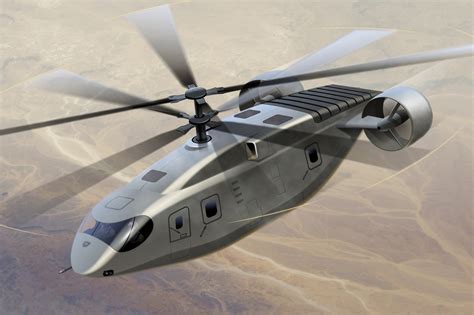
- AVX/L3: Developed the Compound Coaxial Helicopter (CCH), featuring side-by-side cockpit seating and ducted fans for improved forward and reverse thrust.
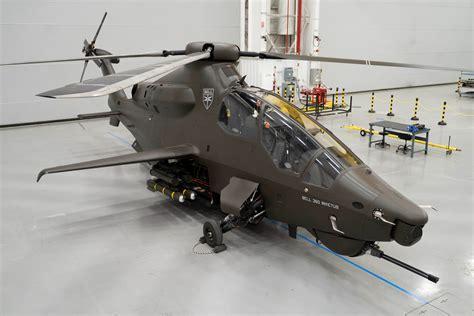
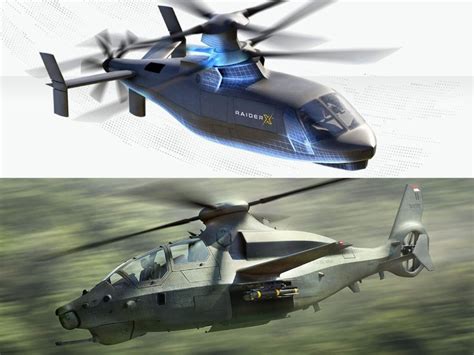
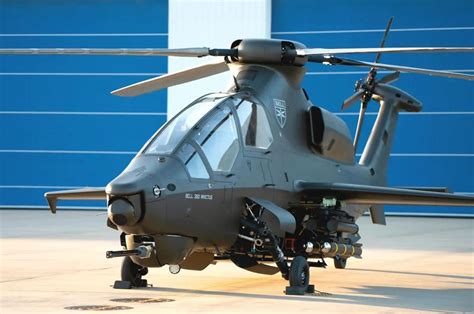
- Bell: Introduced the 360 Invictus, a sleek, winged helicopter with a single rotor and ducted tail rotor, optimized for speed and agility.
- Boeing: Created a stealth-focused design with three rotors and tandem seating, intended to reduce radar signature while maximizing maneuverability.
- Karem Aircraft: Partnered with Northrop Grumman and Raytheon to design the AR40, a compound helicopter with a rigid rotor system and swiveling tail rotor.
- Sikorsky: Entered the Raider X, a scaled-up version of its S-97 Raider, incorporating the company’s proven coaxial rotor and pusher propeller technology.
From Promise to Cancellation
Despite the initial excitement surrounding the FARA program, it faced significant challenges as global defense priorities shifted. By 2024, the Army announced it would cancel FARA, citing a reassessment of modern battlefield requirements. This decision was influenced by the growing role of unmanned aerial systems (UAS) and the successful deployment of low-cost, high-impact drones in conflicts like the Russo-Ukrainian War. The emergence of these technologies rendered many of FARA’s intended roles obsolete, leading Army leaders to refocus their investments on more versatile, multi-role platforms like the Bell V-280 Valor under the Future Long-Range Assault Aircraft (FLRAA) program.
Legacy and Lessons Learned
The cancellation of FARA marked the fourth major setback in the Army’s decades-long pursuit of a next-generation scout helicopter, following the failures of the RAH-66 Comanche, ARH-70 Arapaho, and AAS programs. The decision sparked intense debate within defense circles, highlighting the challenges of developing cutting-edge military technology in an era of rapid technological change and fiscal constraint. While the FARA program itself will not produce an operational aircraft, it has nonetheless driven significant advances in rotorcraft technology, which may shape the next generation of military aviation.
As the Army looks to the future, the lessons learned from FARA will likely influence its approach to future rotary-wing platforms, ensuring that America’s soldiers remain equipped with the best possible tools for the challenges ahead.