Boeing’s order pipeline reached a historic milestone in the second quarter of 2026, with the company’s total backlog climbing beyond the $715 billion mark. The record figure highlights strong long-term demand for Boeing aircraft across commercial aviation, defense, and global services, even as the manufacturer continues working through production challenges and financial pressures.
The latest financial results show that Boeing ended Q2 2026 with a total backlog valued at $715.3 billion, including $674.5 billion in contractual commitments and $40.8 billion in unobligated orders. Commercial aircraft represented the overwhelming majority of this figure, accounting for $596.7 billion, or more than 83% of the company’s total backlog.
The commercial backlog also increased by approximately 5% compared with late 2025, reflecting continued airline demand for new-generation aircraft. More than 6,200 commercial jets remain in Boeing’s order book, creating a production schedule that could extend for many years. The strength of this backlog demonstrates that airlines worldwide continue to rely on Boeing’s narrowbody and widebody aircraft families despite recent industry disruptions.
Boeing President and CEO Kelly Ortberg said the company was making progress in stabilizing operations and improving execution. He noted that production activities were becoming more consistent while important certification programs remained on schedule, signaling confidence that Boeing is moving toward a more reliable manufacturing environment.
Commercial Aircraft Drive Boeing’s Record Backlog Growth
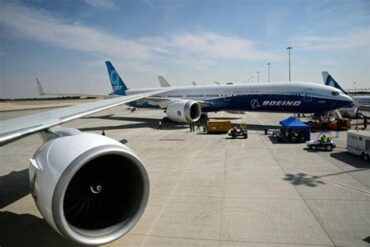
The commercial aviation sector remains the foundation of Boeing’s financial recovery. The company’s commercial aircraft backlog reached $596.7 billion, supported by strong demand for models such as the 737 MAX, 787 Dreamliner, and upcoming widebody programs.
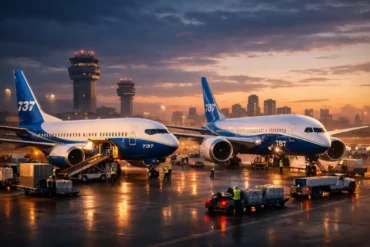
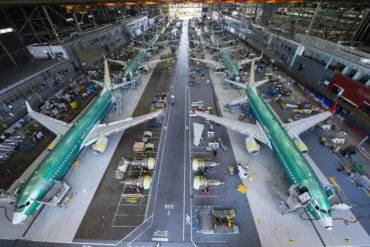
The 737 family continues to be the most important contributor to Boeing’s production activity. Airlines are still seeking efficient single-aisle aircraft capable of supporting expanding short- and medium-haul networks, particularly as global passenger demand continues to recover.
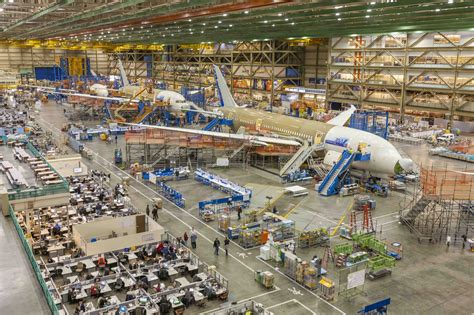
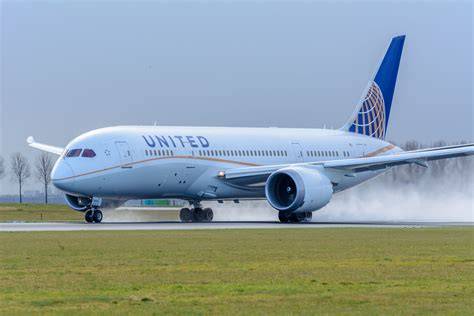
Widebody aircraft also played an important role in Boeing’s future growth strategy. The 787 Dreamliner remains popular among international carriers because of its fuel efficiency, long-range capability, and operational flexibility. Recent commitments from airlines and leasing companies have further strengthened Boeing’s position in the long-haul aircraft market.
Boeing Commercial Deliveries Increase in Q2 2026
Alongside its growing backlog, Boeing recorded a stronger delivery performance during the second quarter of 2026. The company delivered 171 commercial aircraft between April and June, representing a 14% year-on-year increase compared with the 150 aircraft delivered during Q2 2025.
For the first half of 2026, Boeing delivered 314 commercial aircraft, a 12% improvement over the 280 aircraft delivered during the same period a year earlier. This marked the manufacturer’s strongest first-half delivery performance since 2018, showing progress in rebuilding production momentum.
The 737 family accounted for 129 deliveries during the quarter, representing nearly three-quarters of Boeing’s commercial output. The 787 followed with 25 deliveries, while the 767 and 777 families contributed 10 and 7 aircraft respectively.
Beyond commercial aviation, Boeing’s Defense, Space & Security division delivered 35 aircraft during Q2. These included helicopters, fighter jets, tanker aircraft, and a patrol aircraft, highlighting the continued importance of government contracts within Boeing’s overall business structure.
Revenue Growth Continues Despite Financial Challenges
Boeing’s commercial aircraft business generated stronger revenue during Q2 2026. Commercial revenues increased 8% year-on-year, rising from $10.874 billion in Q2 2025 to $11.71 billion in the latest quarter.
However, the company still reported an operating loss as it continued absorbing costs related to production improvements, certification programs, and previous operational difficulties. Boeing recorded an operating loss of $322 million, an improvement from the $557 million loss reported during the same period in 2025.
The company’s operating margin also improved, moving from -5.1% in Q2 2025 to -2.7% in Q2 2026. Although profitability remains a challenge, the reduced losses suggest that Boeing’s recovery strategy is beginning to produce measurable results.
Farnborough Orders Provide Additional Momentum
Boeing’s strong Q2 performance was further supported by major aircraft agreements announced around the 2026 Farnborough International Airshow. Several large customers strengthened their commitments to Boeing aircraft, creating additional confidence for future production.
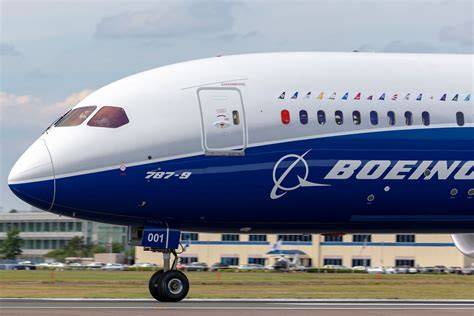
Among the notable agreements was Riyadh Air’s expansion of its Boeing 787 commitment, including the conversion of options from the 787-9 to the larger 787-10 variant. Philippine Airlines also placed an order for 15 Boeing 787-10 Dreamliner aircraft, with additional options, reinforcing demand for widebody aircraft.
Aircraft leasing company AerCap added another commitment for 15 Boeing 787-9 aircraft, while SMBC announced a major agreement for 100 Boeing 737 MAX jets. These deals further expanded Boeing’s already substantial backlog heading into the second half of 2026.
Boeing’s Backlog Signals Long-Term Industry Confidence
Boeing’s record $715.3 billion backlog represents more than a financial statistic. It reflects continued confidence from airlines, leasing companies, and governments that the manufacturer will remain a major force in global aerospace.
The company still faces challenges, including improving manufacturing consistency, completing aircraft certifications, and restoring profitability. However, rising deliveries, stronger revenues, and record demand provide Boeing with a solid foundation for the next phase of its recovery.
With thousands of aircraft waiting to enter production and new orders continuing to arrive, Boeing enters the second half of 2026 with one of the largest aerospace backlogs in history. The challenge now is transforming that demand into timely deliveries while maintaining the quality and reliability expected from one of the world’s leading aircraft manufacturers.