Boeing’s latest earnings release marks a decisive shift in narrative for one of the aerospace industry’s most scrutinized manufacturers. After several turbulent years defined by production halts, regulatory pressure, and deep financial losses, the company closed 2025 with a fourth-quarter performance that surprised even optimistic analysts. Q4 revenue surged 57% year-on-year to $23.9 billion, compared with $15.2 billion in the same quarter of 2024, signaling that Boeing’s long recovery arc is finally bending upward.
The financial rebound was not cosmetic. Boeing reported net profit of $8.22 billion for the quarter, a dramatic reversal from the $3.86 billion loss recorded a year earlier. This swing reflects a combination of operational improvement, stronger commercial aircraft deliveries, and a strategically timed portfolio divestment. While challenges remain embedded across several business units, the numbers themselves represent Boeing’s strongest quarterly showing in years.
The momentum carried through to the full-year results. Boeing posted annual revenue of $89.5 billion, up 34% from 2024, alongside full-year net earnings of $2.2 billion. That figure stands in stark contrast to the $11.8 billion loss reported the previous year and offers tangible evidence that the company’s financial bleeding has been stemmed.
Operational Gains Meet Strategic Financial Engineering
A major contributor to Boeing’s Q4 profit surge was the sale of key assets from its Digital Aviation Solutions division. Finalized in the fourth quarter after regulatory approval, the $10.55 billion all-cash transaction with Thoma Bravo included well-known aviation software brands such as Jeppesen, ForeFlight, AerData, and OzRunways. The divestiture provided a one-time earnings boost while sharpening Boeing’s focus on its core manufacturing businesses.
Even with this boost, the underlying operational picture tells a more nuanced story. Boeing’s Commercial Airplanes unit posted a $632 million loss in Q4, while the Defense, Space & Security segment recorded a $507 million quarterly loss. These figures underscore that the recovery is uneven and still fragile. Yet, the strength of the overall result suggests Boeing now has enough financial oxygen to address these structural issues without existential pressure.
CEO Kelly Ortberg struck a deliberately balanced tone in his remarks, emphasizing progress without declaring victory. He acknowledged that while there is “a lot to be optimistic about,” Boeing must continue rebuilding trust with regulators, customers, and suppliers while stabilizing production and completing long-delayed certification programs.
Commercial Aircraft Sales Regain Altitude
The most encouraging signal for Boeing’s long-term outlook came from its commercial aircraft performance in 2025. After years of trailing Airbus in both orders and deliveries, Boeing reclaimed ground with a resurgent order book and improved production cadence.
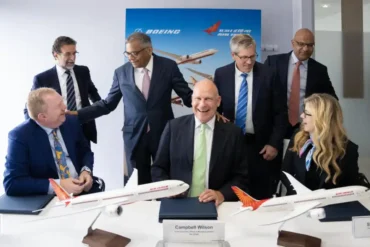
During the fourth quarter alone, Boeing booked 336 net orders, including high-profile deals such as 105 737-10 and five 787-9 aircraft for Alaska Airlines, and 65 777-9 widebodies for Emirates. These wins helped Boeing close the year with 1,173 net orders, surpassing Airbus’s 889 and marking the first time since 2018 that Boeing has led the global order race.
The order momentum translated into a swelling backlog of more than 6,100 commercial aircraft, valued at a record $682 billion. This backlog provides long-term revenue visibility, but only if Boeing can deliver at scale and on schedule.
Deliveries Accelerate as Production Stabilizes
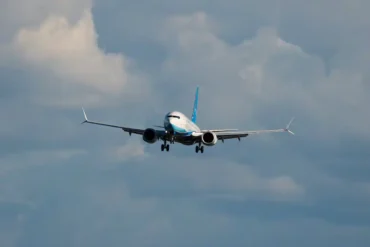
Boeing’s delivery performance in 2025 showed meaningful improvement. The company delivered 600 aircraft during the year, a 72% increase from the 348 aircraft handed over in 2024. Of these, 447 were 737 MAX family jets, with the remainder split across the 767, 777, and 787 widebody programs.
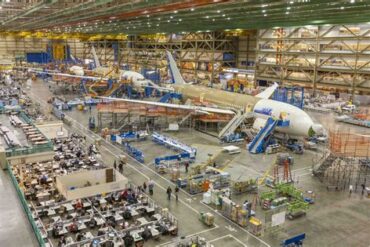
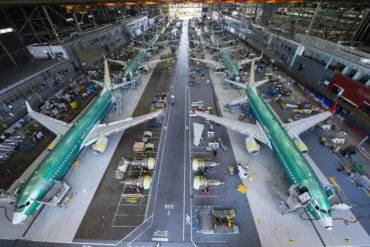
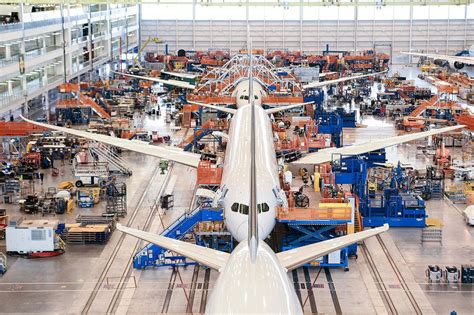
Production discipline played a central role in this progress. By the fourth quarter, the 737 program reached a production rate of 42 aircraft per month, while the 787 program transitioned toward eight aircraft per month, with management focused on stabilizing that level in early 2026. These rates remain below historical peaks, but they reflect a deliberate strategy to prioritize quality, regulatory confidence, and supply chain resilience over aggressive ramp-ups.
2026: Progress With Pressure Attached
Despite the headline-grabbing rebound, Boeing enters 2026 under intense scrutiny. Airlines, investors, and regulators will be watching closely to see whether recent gains can be sustained without new disruptions. A key variable remains the Federal Aviation Administration, whose approval is required before Boeing can increase 737 MAX production beyond the current 42-per-month cap. Any delay in that approval would have a direct impact on cash flow and delivery schedules.
Certification timelines also loom large. Stakeholders are pressing for clearer schedules on the long-delayed 737 MAX 7 and MAX 10, as well as the much-anticipated 777X, which Boeing reaffirmed is still expected to enter service next year. Each program carries reputational weight, particularly after years of missed targets.
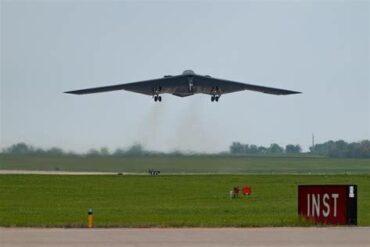
On the defense side, Boeing continues to face questions over cost overruns and delays, including the high-profile Air Force One replacement program, where two modified 747s remain behind schedule. While defense losses did not derail the Q4 results, they remain a persistent drag on margins.
A Measured Revival, Not a Victory Lap
Boeing’s Q4 and full-year 2025 results mark a genuine inflection point. Revenue growth, restored profitability, rising deliveries, and a record backlog collectively suggest that the company has exited survival mode. Yet this is a recovery built on discipline, not exuberance. The numbers tell a story of progress earned slowly, under regulatory oversight and public skepticism.
For Boeing, the challenge now is consistency. The market has seen rebounds before, only to watch them falter. What makes this moment different is not just the size of the revenue jump, but the alignment of production stability, customer demand, and financial restructuring. If Boeing can maintain that alignment through 2026, the narrative may finally shift from recovery to renewal.