
Boeing is sending a message that resonates far beyond office addresses and executive seating charts. By relocating the headquarters of Boeing Defense, Space & Security (BDS) from Arlington, Virginia, back to St. Louis, Missouri, the aerospace giant is recalibrating its center of gravity. The decision is less about geography and more about governance, execution, and credibility at a time when performance discipline matters more than political proximity.
For years, Boeing’s defense leadership operated from the Washington, D.C. area, close to the Pentagon and federal policymakers. That arrangement offered visibility and influence. But influence does not build aircraft. Production lines, engineering labs, and advanced manufacturing cells do. The relocation reflects a deliberate shift: fewer miles between executives and factory floors, fewer layers between decisions and delivery.
This move restores St. Louis as the formal home of BDS leadership, a role it held from 1997 to 2017. Corporate headquarters will remain in Arlington, preserving Boeing’s institutional access to federal stakeholders. Yet the symbolic weight of the shift is unmistakable. Boeing is choosing proximity to performance.
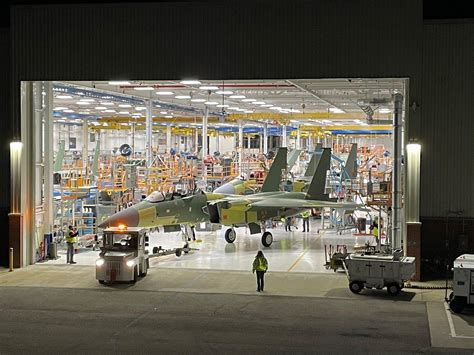
Re-Centering Boeing Defense in Its Industrial Core
St. Louis is not a peripheral site in Boeing’s defense portfolio. It is one of the company’s largest and most critical defense manufacturing hubs, employing more than 18,000 personnel across business units. The region supports advanced fighter programs, next-generation combat aircraft development, and key aerospace systems integration efforts. It is also the focal point of a multi-year, multi-billion-dollar expansion of combat aircraft production facilities.
Aligning BDS leadership with this industrial base is a strategic act. Complex military programs demand relentless oversight. Fighter aircraft development, AI-enabled systems integration, secure communications, and space architectures require constant synchronization between engineers, program managers, quality control specialists, and senior decision-makers. When leadership is embedded in that ecosystem, feedback loops compress. Problems surface faster. Course corrections accelerate.
The decision also signals continuity in capital allocation. Boeing is not merely relocating offices; it is reinforcing a long-term investment thesis in Missouri’s aerospace infrastructure. Facilities modernization, digital engineering adoption, and advanced manufacturing upgrades are not abstract initiatives. They are physical, capital-intensive commitments. Placing headquarters alongside that investment aligns authority with accountability.
From Beltway Distance to Factory-Floor Focus
Boeing has faced sustained scrutiny over management structure and oversight practices in recent years. Critics have pointed to geographic separation between corporate decision-makers and operational realities as a structural weakness. While proximity alone does not guarantee excellence, distance can dilute urgency.
Boeing’s rationale is managerial at its core. Leadership embedded within manufacturing operations can observe production bottlenecks firsthand. They can assess quality-control routines without mediation. They can evaluate learning curves—the gradual efficiency gains achieved as production volumes increase—without relying solely on filtered reporting. These granular insights influence schedule adherence, cost performance, and contract margins.
Defense programs, particularly those involving advanced fighter jets and next-generation systems, operate under rigid government contracts. Delays or quality escapes can trigger significant financial charges. Execution discipline is not optional; it is existential. By co-locating executives with engineers and production teams, Boeing is attempting to shorten the distance between accountability and outcome.
At the same time, the company is maintaining a presence in Virginia and keeping its global headquarters in Arlington. Access to policymakers and military stakeholders remains intact. The shift is not an abandonment of Washington. It is a recalibration of priorities.
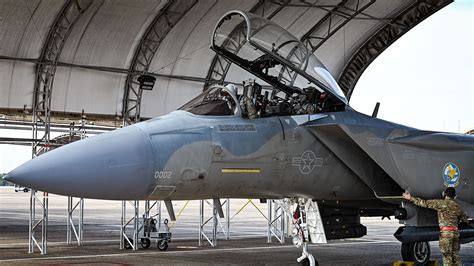
Strategic Implications for Defense Programs and AI Integration
Modern defense systems are no longer defined solely by airframes and propulsion. They are increasingly shaped by software-defined capabilities, artificial intelligence integration, sensor fusion, and secure data architectures. These elements demand cross-functional collaboration between software engineers, systems integrators, cybersecurity specialists, and traditional aerospace designers.
Physical proximity can accelerate that collaboration. AI-enabled systems integration requires iterative testing, rapid prototyping, and constant validation against hardware constraints. Leaders who are present in the same ecosystem as those executing these tasks can identify friction points early, allocate resources decisively, and remove bureaucratic bottlenecks.
St. Louis also benefits from a robust regional aerospace ecosystem. Suppliers, subcontractors, and defense-related institutions form an interconnected industrial network. Embedding BDS leadership within this cluster enhances coordination across the supply chain, which is particularly critical during periods of heightened defense demand and supply chain volatility.
This is not merely operational fine-tuning. It is an attempt to reinforce franchise strength in combat aviation and advanced defense systems. Boeing’s legacy in military aircraft, including assets acquired through the 1996 Rockwell acquisition, remains central to its long-term competitive position. Consolidating leadership near the heart of that capability underscores its strategic weight.
Investor Signal: Governance, Execution, and Capital Discipline
For investors, the relocation is not about shifting revenue streams. It is about signaling governance priorities. Boeing is explicitly emphasizing execution discipline, oversight rigor, and program accountability within its defense segment.
Defense contracts are complex and often inflexible. Cost overruns can erode margins quickly. Schedule slips can cascade across fiscal periods. If closer oversight improves cost control, reduces quality escapes, and enhances schedule reliability, the long-term financial impact could be substantial. Steadier cash conversion and fewer surprise charges would strengthen confidence in forward projections.
In the near term, management has indicated that daily operations will remain unchanged and has not specified a precise number of relocating roles. That suggests limited immediate financial disruption. The more significant effect lies in culture and structure. By repositioning leadership, Boeing is attempting to embed a performance-first ethos into the architecture of its defense business.
There are risks. Relocation can introduce friction. Organizational change can distract. Symbolic gestures can outpace measurable gains. Markets will ultimately judge the move not by geography but by results: on-time deliveries, disciplined cost control, and improved program performance.
A Cultural Reset with Structural Consequences
Beyond logistics and finance, the relocation functions as a cultural statement. It asserts that leadership should stand where metal is cut, code is written, and systems are assembled. It narrows the psychological gap between strategic decision-making and industrial execution.
In aerospace manufacturing, credibility is built on performance under pressure. Advanced fighter programs, space systems, and secure defense platforms leave little margin for error. Embedding senior leadership within the operational core is an attempt to institutionalize vigilance.
The shift from Washington’s policy corridors to Missouri’s production floors reflects a broader strategic recalibration. Boeing is not retreating from influence; it is reinforcing execution. In an industry where contracts are long, capital commitments are massive, and reputations are hard-earned, that distinction matters.
The headquarters move does not guarantee transformation. It does, however, realign the company’s defense leadership with the physical infrastructure that defines its competitive edge. In aerospace, gravity matters. Boeing has chosen to bring its leadership back to the center of industrial mass.