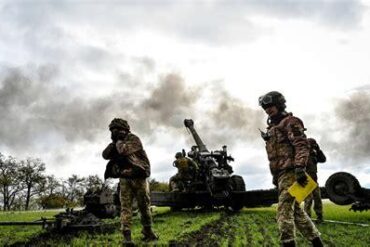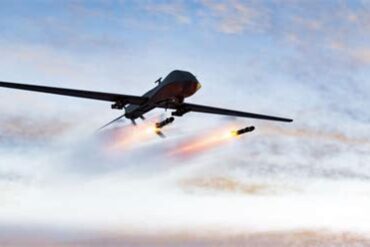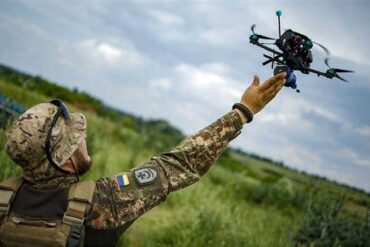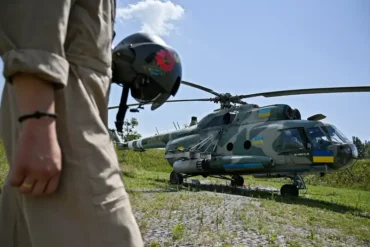
Ukraine’s audacious Operation Spiderweb, launched on June 1, 2025, marks a turning point in modern aerial warfare, signaling that Russia’s strategic bomber fleet is no longer untouchable, even deep within its own territory. The operation, involving 117 coordinated drones, struck multiple high-value airfields across the Russian Federation, laying bare systemic vulnerabilities in the Kremlin’s defense posture and forcing the mass relocation of bombers and accelerated construction of hardened aircraft shelters.
Spiderweb’s Stealth and Scale: Ukraine’s Most Daring Drone Assault
What makes Operation Spiderweb extraordinary is not only its range but its unprecedented precision and planning. Ukrainian drones reached as far as Belaya airbase in Irkutsk, over 4,000 kilometers from the Ukrainian border, and struck Russia’s Olenya base in the Arctic, nearly 2,000 kilometers away. These were not symbolic strikes—they were operationally effective, destroying or damaging several Tupolev-95 strategic bombers, which are integral to Russia’s long-range nuclear and conventional strike capabilities.
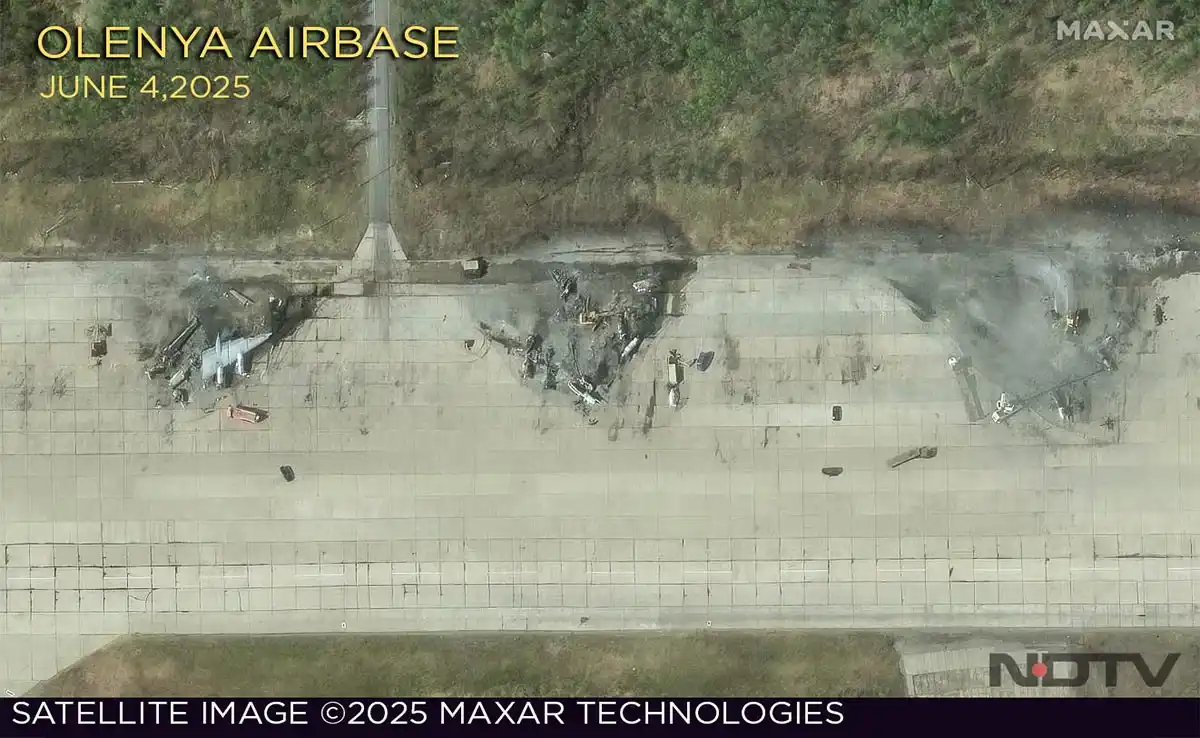
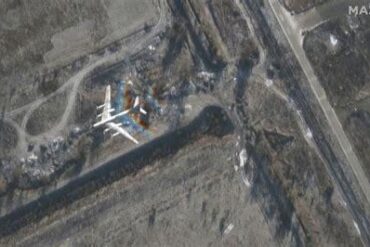
According to satellite analysis from open-source intelligence (OSINT) researchers like Def Mon and MT Anderson, nearly a third of Russia’s strategic bomber fleet was either destroyed or rendered non-operational in a single night. Photographic evidence from Planet Labs confirmed the devastation at the Belaya air base, where aircraft sat burned and scattered in wide craters of scorched asphalt.
No Sanctuary: Ukraine Redefines the Battlefield
For decades, Russia’s deep interior was considered a safe zone, protected by distance and an extensive air defense network. Operation Spiderweb has shattered that assumption. As Minna Alander, defense analyst at the Center for European Policy Analysis, emphasized, Ukraine has effectively nullified the sanctuary doctrine, striking aircraft stationed thousands of kilometers from the front lines.
This is not the first time Ukraine has reached into the Russian heartland. The 2023 Engels base drone attacks forced Russia to relocate its strategic bombers to more remote airfields like Olenya and Belaya. But Spiderweb has demonstrated that there is now no airfield far enough to guarantee safety.
The response was immediate. Satellite imagery captured hasty construction of shelters and hardened aircraft hangars at airfields including Kirovskoe, Sevastopol, Gvardiyskoye, and Saki in Crimea. On June 7, all Tu-95 bombers had been evacuated from Olenya, a once-critical base in Russia’s Arctic zone. The Engels airbase, long regarded as the crown jewel of Russian strategic aviation, is again being reinforced with additional defenses.
A Psychological Masterstroke: Fear as a Weapon
While the physical toll of Spiderweb is significant, experts argue its psychological impact may be even greater. According to Keir Giles of Chatham House, the operation sent a clear, chilling message to Russian command: no region is immune to Ukrainian retaliation.
The strike showcased Ukrainian ingenuity in leveraging low-cost, high-impact tactics. Using modified drones that piggybacked on Russia’s own cellphone and radio networks, Ukraine achieved simultaneous surprise attacks without relying on GPS or conventional communications. Giles suggested the presence of Ukrainian or sympathetic operatives inside Russia, who staged and pre-assembled drones near the targeted airfields and departed undetected before launch.
“It’s asymmetric genius,” noted Seth Krummrich, a former U.S. Army colonel. “These cheap drones, costing thousands of dollars, destroyed multi-million-dollar Russian assets. Ukraine is not just fighting—it’s outsmarting Russia at every turn.”
Strategic Aircraft Lost: A Blow to Russian Air Dominance
The losses inflicted in Operation Spiderweb go beyond hardware—they cut into Russia’s strategic air operations infrastructure. At the Ivanovo airfield, a rare A-50 early warning and targeting radar aircraft was destroyed. This aircraft type serves as an aerial command hub for Russian operations, enhancing targeting and coordinating attacks across vast battlefields.
The Dyagilevo airbase in Ryazan, a mere 175 kilometers from downtown Moscow, also came under attack. Its proximity to the capital added insult to injury, demonstrating that even Russia’s central command nodes are within Ukraine’s reach.
In Olenya, satellite analysts confirmed that aircraft were fueled and potentially armed, suggesting they were minutes from being deployed. This detail underscores how timely and precise the operation was—Ukraine struck moments before those aircraft could be used in offensive operations.
A Pattern of Escalation: From Crimea to the Arctic
Operation Spiderweb fits into a broader Ukrainian strategy of incremental escalation, designed to degrade Russian air and naval superiority by shifting the war’s geography. It mirrors Ukraine’s 2022 Neptune missile strike on the Moskva, the Black Sea Fleet flagship, and subsequent drone attacks that forced Russia’s naval retreat from Crimea to Novorossiysk.
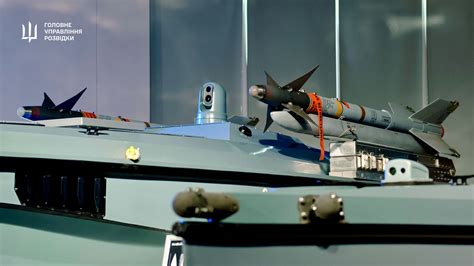
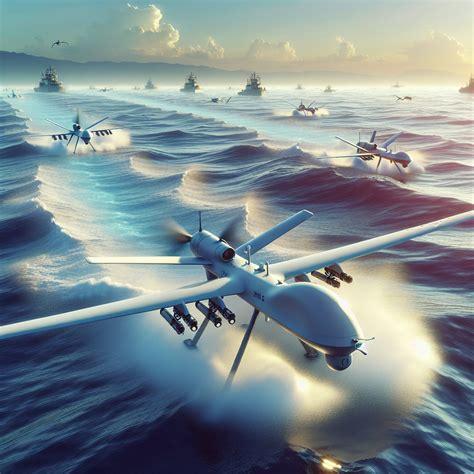
In early 2025, Ukraine’s Magura V7 drones made history by shooting down two Sukhoi-30 fighter jets, using AIM-9 Sidewinder air-to-air missiles adapted for surface launch. No military had ever pulled off such a feat. In December 2024, these same drones were modified to fire rockets, successfully downing two Russian helicopters over the Black Sea.
This continued innovation sends a clear message: Ukraine is not only defending—it is reshaping the rules of warfare.
The Zelenskyy Doctrine: Bring the War Home
In the days leading to Spiderweb, President Volodymyr Zelenskyy gave a veiled warning about Ukraine’s offensive capabilities. “Russia must clearly feel the consequences of what they are doing against Ukraine,” he said. “They will.”
Zelenskyy’s vision is clear—take the war to Russia. Operation Spiderweb is the strategic embodiment of that doctrine, joining previous counter-invasion campaigns like the Kursk raid in August 2024, where Ukrainian forces briefly occupied Russian territory, catching Kremlin forces completely off guard.
By attacking far beyond the frontlines, Ukraine is not merely retaliating. It is dictating the tempo of war, leveraging its agility and innovation to offset Russia’s overwhelming scale.

Nuclear Triad vs Tactical Reality: Putin’s Rhetoric Tested
On June 11, President Vladimir Putin responded by touting Russia’s “modern nuclear triad.” While intended as a show of strength, many experts saw it as a defensive bluff, aimed more at domestic reassurance than strategic deterrence.
According to Fabian Hoffman, a missile expert, Ukraine targeted aircraft that were not under maintenance and already prepped for missions. This reinforces that the attack was not opportunistic—it was deeply informed, surgically timed, and strategically devastating.
Russia’s nuclear arsenal may remain untouched, but its credibility as an air power has been seriously undermined. More critically, the illusion of strategic reach without consequence has been broken.
The Future of Drone Warfare: Cost-Effective Disruption
While drones alone will not win the war, as Krummrich stated, they have become a critical enabler of Ukraine’s broader war effort. They allow Ukraine to disrupt logistics, degrade offensive capacity, and strike symbolic blows that resonate far beyond the battlefield.
Drone warfare enables Ukraine to fight a war of attrition without equal attrition, bleeding Russian resources and morale at a fraction of the cost. The drones used in Spiderweb reportedly cost less than $20,000 each, while the aircraft destroyed cost tens of millions.
This disproportionate economic impact, combined with mass psychological dislocation, could prove to be the defining feature of modern hybrid warfare.
Conclusion: Strategic Disruption as National Defense
Operation Spiderweb demonstrates that Ukraine is no longer defending passively—it is leveraging technology, intelligence, and psychological warfare to fundamentally alter the strategic balance. Russia, once confident in the invulnerability of its deep-air assets, is now scrambling to defend what it believed was untouchable.
The next phase of this war will be defined not just by artillery duels and territorial gains, but by who can outthink, outmaneuver, and outlast the other in the invisible battlefields of technology, stealth, and resolve.
In that contest, Ukraine has just drawn a new web—one that stretches across thousands of kilometers and binds even the most remote Russian airbase within its reach.