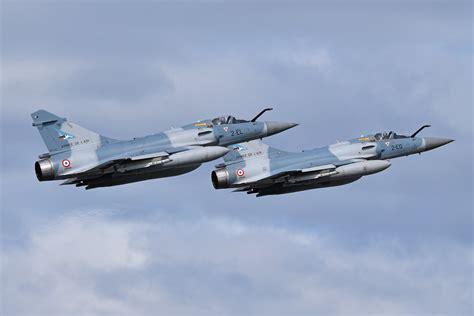
As the war in Ukraine grinds toward its fourth year, both sides have accelerated a new battlefront: a high-stakes information war centered on air superiority, fighter-jet capability, and the shifting balance of power in contested skies. The Kremlin and Kyiv released sharply conflicting narratives on November 26, each framing its frontline aircraft—the Russian Su-35S Flanker-E and the Ukrainian-operated Mirage 2000-5—as dominant in ongoing air operations. The dueling storylines reflect competing strategic aims, but they also reveal the evolving reality of a war shaped by long-range missiles, stand-off engagements, and the constant threat of attrition.
Russia used its national media channels to amplify claims that the Su-35S has effectively reshaped Ukrainian flight behavior, forcing Western-supplied F-16s and Mirages into low-altitude, rear-area operations. At the same time, the Ukrainian Air Force published an upbeat video featuring Mirage 2000 pilots who described near-perfect success intercepting Russian missiles and drones. Each narrative serves a purpose: Russia seeks to project dominance and resilience, while Ukraine highlights reliability, adaptability, and the need for continued Western support.
Moscow’s Bold Claims: Su-35S as Master of Long-Range Air Combat
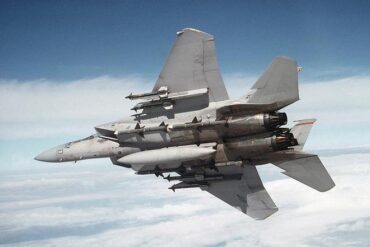
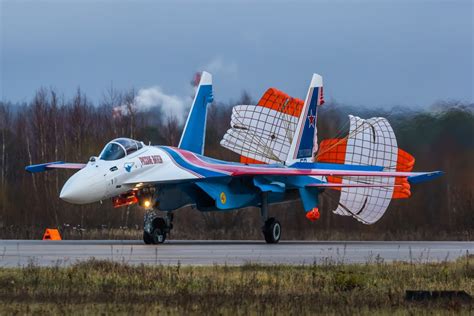
The Russian narrative rests heavily on the Su-35S—a 4.5-generation multirole fighter that Russia portrays as its most capable air-superiority platform. Sergey Chemezov, the CEO of Rostec, declared that the jet has pushed enemy aircraft into defensive profiles by leveraging long-range detection and long-range missile engagements. The claim aligns with the Su-35’s technical design philosophy: spot early, shoot early, and deny opponents the chance to contest the airspace.
Chemezov emphasized that the Su-35S “engages targets at distances of hundreds of kilometers,” leveraging its Irbis-E passive electronically scanned array (PESA) radar. This powerful system, capable of detecting targets out to 400 kilometers under optimal conditions, allows the aircraft to operate as a hunter-killer platform far beyond visual range. Paired with long-range missiles—especially the R-77-1 and R-37M—the aircraft becomes a persistent threat to any Ukrainian fighter climbing high enough to be visible on Russian radar.
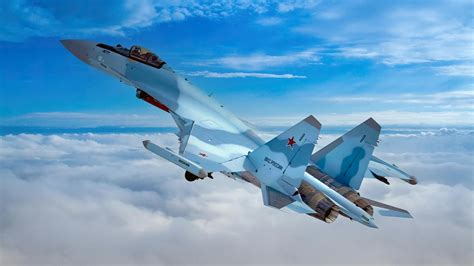
Russia released additional footage showing Su-35 pilots performing defensive patrols, supporting ground forces, and executing stand-off strikes on Ukrainian air-defense sites. These curated clips reinforce the message that the Su-35 remains active, lethal, and unchallenged in contested airspace. The aircraft’s technical advantages—including thrust-vectoring AL-41F1S engines and high-endurance flight capabilities—play well into this narrative.
The Su-35S Loadouts and Tactics: A ‘Long Arm’ Strategy
Military analysts monitoring the conflict note that Su-35S patrols often include mixed air-superiority and suppression-of-enemy-air-defense (SEAD) missions. These combined sorties typically follow a predictable but effective pattern: Su-35S fighters patrol ahead of Su-34 bombers, using long-range missiles and electronic warfare assets to keep Ukrainian jets away from the strike groups. Guy Plopsky, a respected defense analyst, recently highlighted imagery showing Su-35S loadouts that included a single R-37M, multiple R-77-1s, and a Kh-31PM anti-radiation missile, a configuration ideal for both air dominance and anti-SAM operations.
This system of complementary tactics—“the Su-34 strikes, the Su-35S protects”—gives Russian pilots a tactical framework designed to overwhelm Ukrainian air defenses while restricting opposing fighters from approaching engagement zones. In theory, the R-37M’s 200-plus-kilometer reach allows Russian pilots to influence Ukrainian flight paths before the latter even peek above low-altitude cover.
Yet, Russian confidence meets a clear obstacle: attrition. Independent researchers at Oryx, who only document visually confirmed losses, report that Russia has lost eight Su-35S fighters this year. Ukrainian F-16 AM jets were rumored to have downed one in June 2025—an event Kyiv highlighted, though Moscow declined to confirm. These occasional but meaningful losses reveal the aircraft’s vulnerability in a battlespace dense with mobile SAMs, Western radars, and evolving Ukrainian tactics.
Ukraine Counters: The Mirage 2000’s ‘98% Success’ in Intercepts
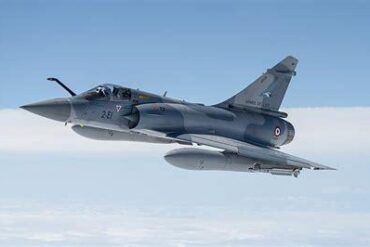
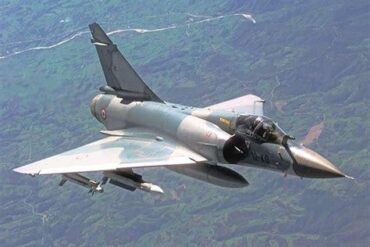
Kyiv responded to Russia’s bold claims with a sharply contrasting narrative spotlighting the resilience and precision of its Mirage 2000-5 fleet. A Ukrainian Air Force video released on November 26 featured an anonymous Mirage pilot describing a startling 98% success rate in intercepting incoming Russian missiles and drones. This claim, while difficult to independently verify, underscores Kyiv’s broader narrative: its Western-supplied aircraft are not merely surviving but delivering tactical value despite shortages in numbers and long-range munitions.
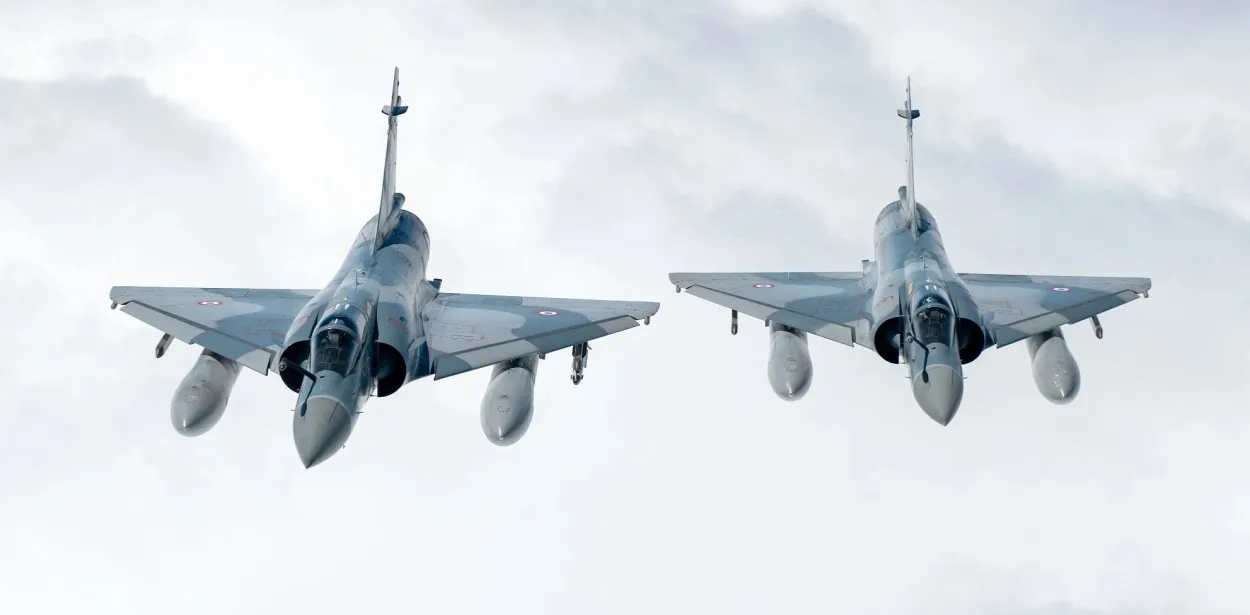
The Mirage 2000-5, a fourth-generation French fighter introduced in 1999, is optimized for multi-target tracking, rapid response, and high-precision air-to-air engagements. Ukrainian technicians in the video showcased the aircraft’s Magic-2 missile loadouts, emphasizing their effectiveness against low-flying, maneuvering aerial threats. These details serve to highlight Ukraine’s agility and adaptability, especially as the country continues rotating its Mirage detachments among forward airstrips to evade Russian surveillance and missile strikes.
One pilot described relocating his aircraft three times in a single week. The mobility underscores a fundamental reality of Ukrainian air operations: survival depends on dispersion, unpredictability, and the ability to launch sorties with minimal warning. Russian aircraft, the pilot noted, constantly search for Ukrainian jets, requiring extreme caution during takeoff, landing, and patrol cycles.
But Ukrainian officials are candid about constraints. They emphasize the urgent need for long-range air-to-air missiles, more modern fighter jets, and expanded industrial support. While the Mirage 2000-5 offers excellent performance in interception roles, it cannot fully counter Russia’s long-range missile dominance, leaving Kyiv reliant on a patchwork of Western support.
The Strategic Importance of Mirage Deliveries and Future Procurement
France delivered the first batch of Mirage 2000-5 fighters to Ukraine in February 2025, marking a symbolic and strategic milestone in European support. Kyiv’s first loss came in July when a Mirage pilot reported an equipment failure before ejecting safely—a reminder that even modern aircraft cannot escape the violent attrition of war.
Still, every Mirage remains a valuable asset. Ukraine operates them in small numbers, meaning each airframe represents significant capability and training investment. Losing even one tightens already strained operational margins. This scarcity has pushed Kyiv to pursue an ambitious expansion of its fighter fleet.
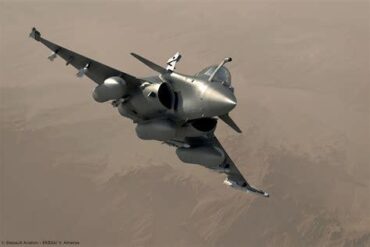
In recent months, Ukraine signed a Letter of Intent paving the way for the acquisition of up to 100 Rafales and 150 Saab Gripens, ambitious figures that signal a long-term commitment to renewing its air forces with NATO-compatible platforms. The pilot interviewed in the video made clear that Ukrainian aviators stand ready to transition quickly: whether Rafale, Gripen, or even F-35, training pipelines have already been streamlined to accelerate proficiency.
Air Superiority Without Air Superiority: The Strange Balance of 2025
Both Russia and Ukraine are waging the war without achieving true air superiority. The skies remain lethal, fragmented, and contested. Russia retains numerical and long-range advantages, but Ukraine counters with mobility, Western precision systems, and an ever-increasing network of ground-based air defenses. The resulting stalemate has forced both sides into asymmetric air strategies:
- Russia leans on long-range missiles, layered radar networks, and high-end fighters like the Su-35S.
- Ukraine relies on dispersal tactics, rapid relocations, and Western aircraft used in specialized roles.
This equilibrium has produced a battlefield where neither side can afford to expose its aircraft at medium or high altitudes for long. Every climb risks radar detection, and every radar ping risks missile lock. The result is a surreal modern air war fought mostly below the clouds, often at treetop height, and increasingly through long-range engagements where opposing pilots never see one another.
The Information War: Why Both Sides Need to Claim Dominance
The contrasting claims—Russian air dominance versus Ukrainian reliability and precision—reveal deeper goals. For Russia, portraying the Su-35S as the uncontested master of Ukrainian skies reinforces a narrative of technological superiority and battlefield inevitability. For Ukraine, emphasizing the Mirage 2000’s effectiveness highlights resilience, Western partnership, and the urgent need for additional jets and munitions.
Neither narrative can be taken at face value. Both contain kernels of truth mixed with political objectives. Yet they reflect genuine aspects of the evolving air war: Russia’s long-range missiles do constrain Ukrainian flight paths, and Ukraine’s Western jets do successfully intercept a significant volume of incoming threats.
The strategic question moving into 2026 is whether Ukraine can acquire enough advanced aircraft—and enough long-range missiles—to challenge Russia’s stand-off advantage, or whether Russia can sustain Su-35 operations amid growing attrition and sanctions-driven production hurdles.
The information war, like the air war itself, is far from over. Both sides continue shaping perceptions, rallying supporters, and messaging strength to domestic and international audiences. As the conflict enters another year, the skies above Ukraine remain a volatile frontier where technology, tactics, and propaganda collide in equal measure.