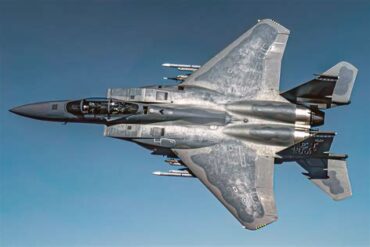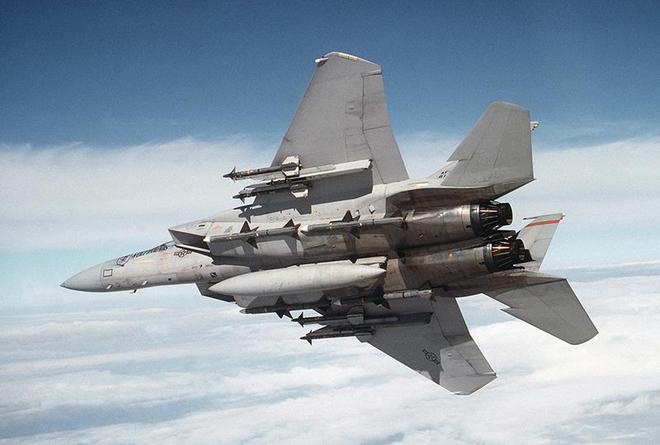
The F-15 Eagle and MiG-25 Foxbat represent two distinct philosophies in Cold War aerial combat. The United States developed the F-15 as a direct response to the Soviet Union’s MiG-25, which had alarmed Western military strategists with its blazing speed and extreme altitude capabilities. These aircraft became icons of their respective air forces, embodying different design priorities and operational doctrines. Below, we examine their technical specifications, combat performance, and long-term impact on air warfare.
Design Origins and Objectives
F-15 Eagle: Born to Counter the MiG-25
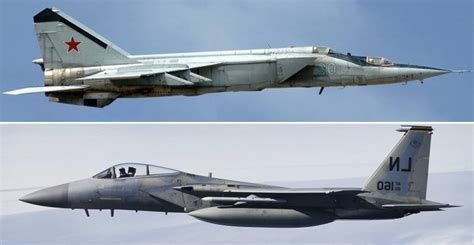
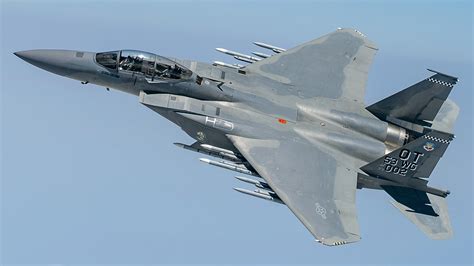
By the late 1960s, intelligence reports indicated that the Soviet MiG-25 could achieve speeds exceeding Mach 3.2 and operate at altitudes above 27,000 meters. This posed a serious threat to Western air superiority and reconnaissance operations. In response, the United States Air Force (USAF) launched the F-X program, which led to the development of the F-15 Eagle by McDonnell Douglas. Unlike earlier interceptors, the F-15 was designed with both speed and exceptional maneuverability to dominate within visual range and beyond.
MiG-25 Foxbat: The Soviet Speed Demon
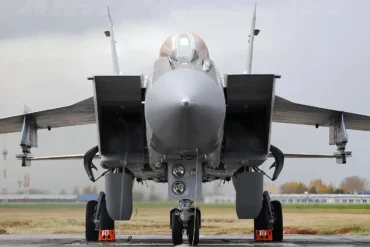
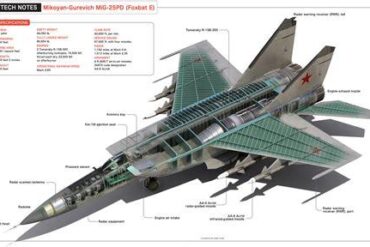
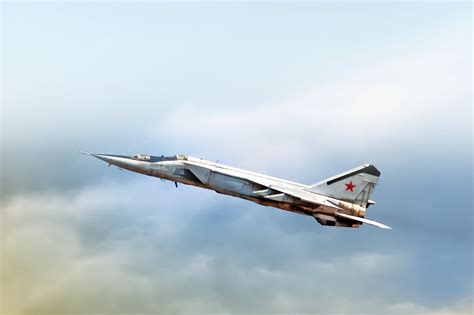
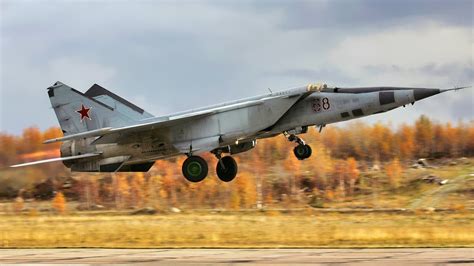
The Soviet Union developed the MiG-25 primarily as an interceptor to counter high-speed threats like the SR-71 Blackbird. The aircraft featured a stainless steel fuselage, built to withstand extreme temperatures at high speeds. However, to achieve its performance goals, the MiG-25 sacrificed agility and advanced avionics, relying heavily on ground-controlled interception (GCI).
Technical Performance Comparison
| Feature | F-15C Eagle | MiG-25PD Foxbat |
|---|---|---|
| Max Speed | Mach 2.5 | Mach 3.2 (Recon variant) |
| Service Ceiling | 20,000 meters | 27,000 meters |
| Radar System | APG-63 Pulse-Doppler Radar | Older radar, reliant on GCI |
| Primary Weapons | AIM-7 Sparrow (early variants), AIM-120 AMRAAM | R-40 long-range missile |
| Maneuverability | High thrust-to-weight ratio, superior in dogfights | Designed for straight-line speed, poor turn performance |
Key Differences and Strategic Implications
- Speed vs. Agility: The MiG-25’s superior straight-line speed made it difficult to intercept, but it lacked the agility needed for close-range engagements. The F-15, on the other hand, was designed for high-energy maneuvering, allowing it to dictate the terms of combat.
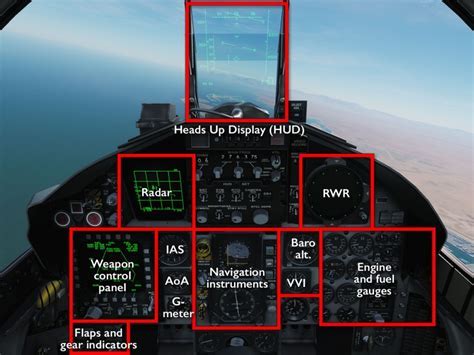
- Radar and Avionics: The F-15 featured advanced multi-mode radar, which provided superior beyond-visual-range (BVR) engagement capabilities. The MiG-25 relied on ground-based guidance, limiting its autonomy in combat.
- Weapons Effectiveness: Early F-15s used AIM-7 Sparrow missiles, which were less effective in high-speed engagements. The MiG-25’s R-40 missiles had longer range and larger warheads, but lacked precision against maneuvering targets.
Combat Engagements and Real-World Performance
MiG-25’s Performance in the Gulf War
During Operation Desert Storm (1991), Iraqi MiG-25s engaged USAF F-15s in combat. Notably, a MiG-25PD reportedly hit an F-15C with an R-40 missile, though US officials claimed the aircraft returned safely. The MiG-25 also successfully shot down a US Navy F/A-18 Hornet, proving its continued lethality in limited scenarios.
F-15’s Air Superiority Record
The F-15 has an unmatched combat record of 104 aerial victories with zero losses. During the Gulf War, F-15s destroyed several Iraqi MiG-25s using AIM-7 and AIM-120 missiles. However, reports suggest that many of these victories occurred when the MiG-25s were not at optimal altitude and speed, diminishing their ability to evade attacks.
Evolution and Legacy
F-15: Continuous Modernization
The F-15 has evolved into the F-15EX, featuring AIM-120D missiles, advanced radar systems, and an expanded weapons payload. Today, it remains a cornerstone of US air dominance, capable of engaging both fighters and strategic targets.
MiG-25: The Birth of the MiG-31
While the MiG-25’s limitations became apparent, its design influenced the development of the MiG-31 Foxhound, which addressed its avionics and endurance shortcomings. The MiG-31 remains Russia’s premier high-speed interceptor, incorporating improved radar, weapons, and autonomy.
Final Assessment
The F-15’s adaptability and superior avionics allowed it to maintain relevance decades beyond its introduction. The MiG-25, though once a technological marvel, suffered due to its limited maneuverability and outdated avionics. While the MiG-25 was a speed-oriented interceptor, the F-15 was designed as an agile, multi-role air superiority fighter, making it the more versatile platform in modern warfare.
FAQ Section
1. Could the MiG-25 Outrun an F-15?
Yes, in a straight-line high-speed chase, the MiG-25 had a significant speed advantage over the F-15. However, high-speed operations required constant monitoring of engine temperatures, limiting sustained Mach 3+ flight. Additionally, the F-15’s superior radar and missile systems allowed it to engage the MiG-25 at longer ranges.
2. Why Did the MiG-25 Have Such a Basic Avionics System?
The Soviet design philosophy prioritized raw performance over sophistication. The MiG-25’s avionics were deliberately simple to enhance ease of maintenance and durability under extreme conditions. However, this made it dependent on ground-based control, reducing its effectiveness in independent operations.
3. What Lessons Did the USA and USSR Learn from This Rivalry?
The USAF learned that speed alone was not enough, leading to a focus on multi-role adaptability and avionics advancements. The Soviets, in turn, refined their interceptor doctrine, resulting in the MiG-31, which addressed the MiG-25’s weaknesses with advanced radar and improved weapons systems.
The F-15 vs. MiG-25 rivalry exemplifies the Cold War arms race, illustrating how differing design philosophies shaped aerial combat strategies. While the MiG-25 shocked the West with its speed, the F-15 ultimately proved the superior platform through versatility, advanced avionics, and continuous modernization.