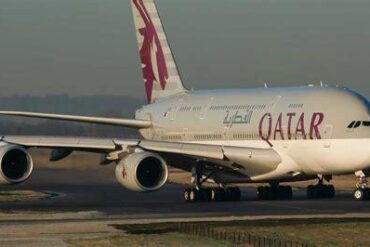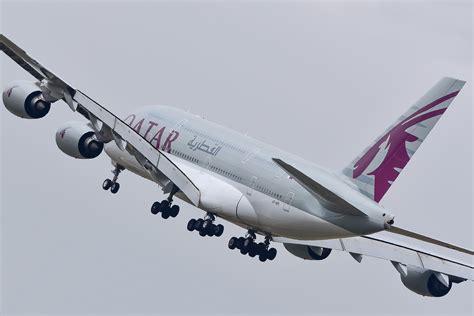
Qatar Airways is preparing for a major widebody comeback as the airline restores Airbus A380 service on two of its most important long-haul routes beginning June 16. After months of operational uncertainty tied to regional instability and fluctuating travel demand across the Middle East, the return of the world’s largest passenger aircraft signals renewed confidence from the Doha-based carrier.
The airline will once again deploy the double-decker Airbus A380 between Doha Hamad International Airport and two flagship international destinations: London Heathrow and Bangkok Suvarnabhumi. The move marks the first significant reactivation of Qatar Airways’ superjumbo fleet since the carrier temporarily pulled the aircraft from active operations during recent geopolitical disruptions.
For aviation enthusiasts and premium travelers alike, the return of the A380 is more than a scheduling adjustment. It represents the revival of one of commercial aviation’s most recognizable luxury experiences.
Qatar Airways Restarts Airbus A380 Flights To London And Bangkok
According to updated scheduling data from aviation analytics provider Cirium, Qatar Airways plans to operate two daily Airbus A380 flights to both London Heathrow Airport and Bangkok starting June 16. The decision immediately restores substantial seat capacity on two routes that historically perform well for the airline.
Flights between Doha and London Heathrow will feature two morning departures operated by the A380. Flight QR103 departs Doha at 1:15 AM, followed by QR3 at 8:00 AM. London has consistently ranked among Qatar Airways’ highest-demand premium markets, making it a natural choice for the aircraft’s return.
Bangkok will also regain double daily A380 operations. Flight QR834 departs Doha at 2:00 AM, while QR836 follows only 30 minutes later at 2:30 AM. The close sequencing highlights the enormous passenger demand still flowing between Qatar and Thailand, particularly as Asian tourism and transit markets continue recovering strongly.
The Airbus A380 offers Qatar Airways a unique ability to transport more than 500 passengers per flight while maintaining a premium-heavy cabin configuration. On routes where demand remains intense but airport slot availability is limited, the superjumbo continues to provide a strategic advantage.
The airline described the onboard experience as a defining element of its brand identity, emphasizing personalized service, gourmet dining, and advanced entertainment systems throughout the aircraft.
The Current Status Of Qatar Airways’ Airbus A380 Fleet
Qatar Airways currently has 10 Airbus A380 aircraft registered in its fleet, although only part of that fleet is expected to return to regular service immediately. Two aircraft have remained in long-term storage since April 2020, while the remaining eight were recently placed in short-term storage during the latest operational reshuffle.
Fleet data from ch-aviation indicates the aircraft maintain an average age of approximately 10.8 years. In aviation terms, that leaves the jets relatively young, especially for long-haul widebody operations. Despite growing industry pressure to retire four-engine aircraft due to fuel efficiency concerns, Qatar Airways appears confident the A380 still has an important role to play within its network strategy.
The global Airbus A380 fleet has experienced a turbulent decade. Several airlines permanently retired their superjumbos during the pandemic, while Airbus itself ended production after manufacturing only 251 commercial units. By April 2025, 27 A380 aircraft had already exited service permanently across multiple carriers.
Yet Qatar Airways continues to view the aircraft as valuable on capacity-heavy trunk routes where premium demand remains exceptionally strong.
Inside Qatar Airways’ Airbus A380 Cabin Experience
Unlike several international competitors that introduced premium economy cabins on their Airbus A380 fleets, Qatar Airways continues operating a traditional three-class configuration consisting of economy class, business class, and first class.
The layout includes:
- 8 First Class seats
- 48 Business Class seats
- 461 Economy Class seats
This gives the aircraft a total passenger capacity of 517 seats.
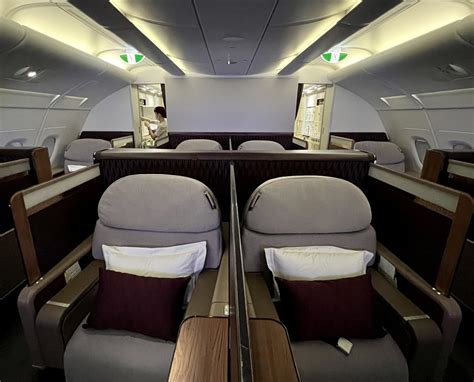
The most exclusive section remains the first class cabin positioned on the upper deck. The product regained attention following the aircraft’s recent return plans because it remains one of the few genuine international first class offerings still available in the Gulf region.
Business class passengers continue to enjoy direct aisle access seating and Qatar Airways’ acclaimed premium service standards, while economy passengers benefit from the spaciousness that has long made the A380 popular among travelers. Compared with narrower long-haul aircraft, the superjumbo’s quieter cabin environment and larger onboard social areas still stand out even years after its introduction.
Geopolitical Tensions Forced Qatar Airways Into Operational Changes
The temporary suspension of Qatar Airways’ A380 operations did not happen in isolation. Escalating regional tensions in the Middle East, including military exchanges involving Iran, Israel, and the United States earlier this year, forced several airlines across the region to reconsider route planning, aircraft allocation, and fleet utilization.
For Qatar Airways, the uncertainty affected both passenger demand and operational flexibility. The airline responded by adjusting schedules and temporarily parking high-capacity aircraft while monitoring market conditions.
Now, the reintroduction of the A380 suggests demand on major intercontinental routes has stabilized sufficiently to justify the aircraft’s high operating costs.
The decision also reflects broader recovery trends across global aviation. International premium travel demand continues strengthening in 2026, especially between Europe, Asia, and the Gulf region. Airlines capable of offering large premium cabins are increasingly restoring flagship aircraft to capitalize on that rebound.
More Airbus A380 Destinations Planned Later In 2026
Qatar Airways’ long-term schedule indicates the airline intends to expand A380 operations beyond London and Bangkok later this year. Current planning data shows the carrier could operate the aircraft to five destinations across Europe, Asia, and Australia by the end of 2026.
London Heathrow will eventually scale back from double daily A380 service to a single daily rotation around mid-September. However, that capacity reduction will allow Qatar Airways to introduce daily Airbus A380 flights to Paris.
At roughly the same time, the airline plans to restart A380 operations to Singapore and Sydney. Bangkok frequencies are expected to gradually reduce to one daily A380 flight by November as seasonal demand patterns evolve.
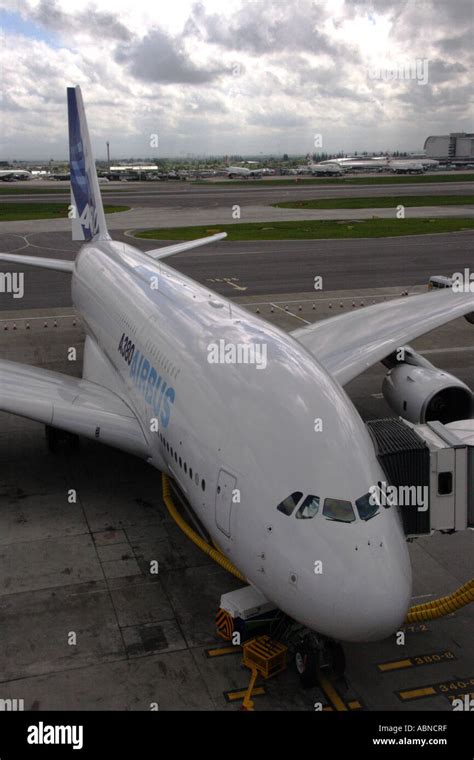
The gradual network expansion demonstrates that Qatar Airways is not merely testing the aircraft’s viability. Instead, the airline appears committed to strategically deploying the superjumbo where passenger demand, premium revenue, and airport slot limitations create the strongest commercial opportunities.
For the Airbus A380 program itself, every restored route carries symbolic importance. Once considered an endangered aircraft after the pandemic reshaped global aviation economics, the giant double-decker continues finding new life on routes where scale and luxury still matter.